Ernesto Fontana (1837-1918) - Ritratto Femminile - NO RESERVE


16
days
19
hours
40
minutes
18
seconds
Current bid
€ 1
No reserve price

Expert
Selected by Caterina Maffeis
Master in early Renaissance Italian painting with internship at Sotheby’s and 15 years' experience.
Estimate € 2,500 - € 3,500
15 other people are watching this object
 Bidder 1745 Bidder 1745 | €1 |
|---|
Catawiki Buyer Protection
Your payment’s safe with us until you receive your object.View details
Trustpilot 4.4 | 122385 reviews
Rated Excellent on Trustpilot.
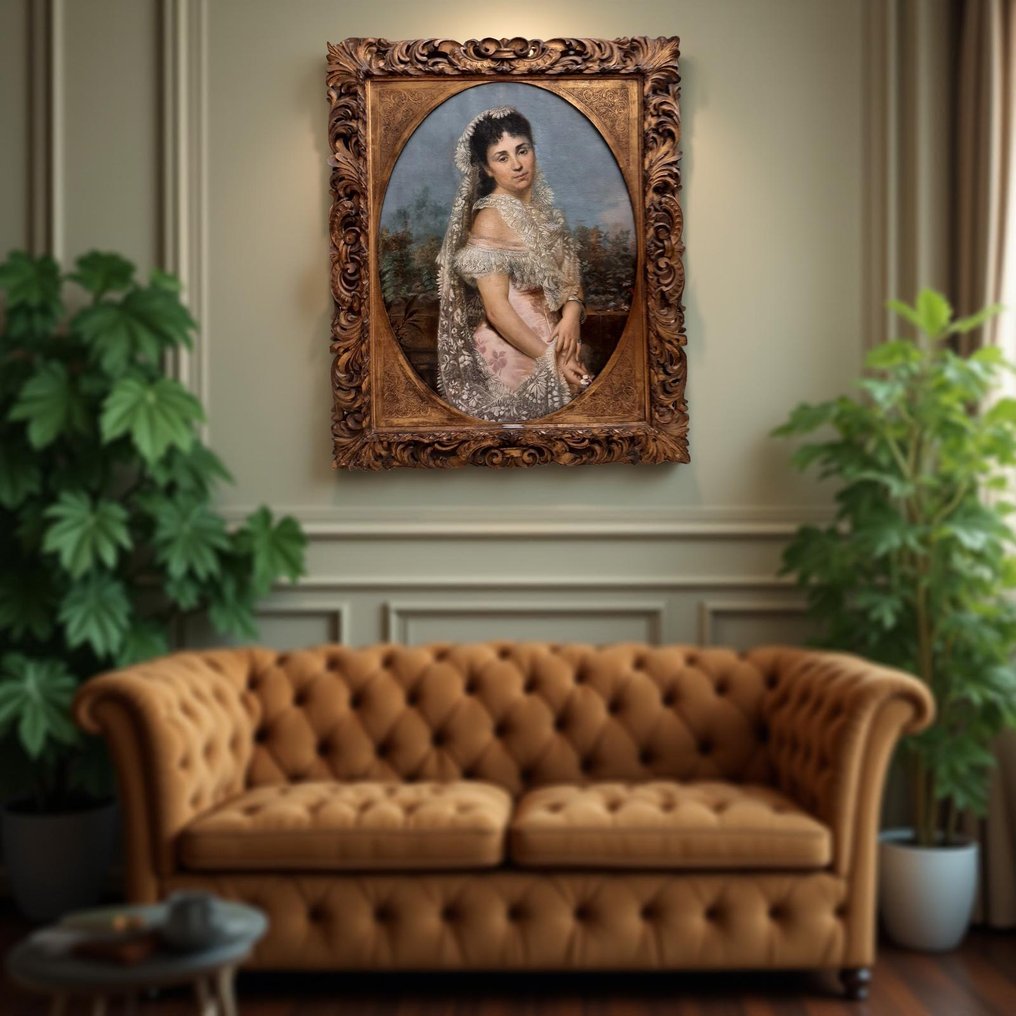
Ritratto Femminile - NO RESERVE, an oil painting from the 19th century by Ernesto Fontana (Italy), sold with frame.
AI-assisted summary
Description from the seller
Author
Ernesto Fontana (1837-1918) was an Italian painter. Born in Milan, he completed his studies at the Brera Academy in 1863, where he attended the courses of G. Bertini. Following in his master's footsteps, he initially focused on the themes of historical romanticism, winning the Canonica competition in 1860 with his painting Gerolamo Morone, Grand Chancellor of Duke Francesco Sforza. After winning another academy award in 1862, he shared a studio with Mosè Bianchi, marking the beginning of his professional career.
Fontana subsequently distanced himself from historical themes, borrowing sentimentalist attitudes from the Scapigliatura movement, which he translated into light-hearted, easily accessible subjects. He successfully devoted himself to genre scenes and sketches, gaining great popularity at the turn of the century, especially thanks to his "graceful and mischievous female figures." He exhibited regularly in various cities, including Turin and Milan, and his fame was consolidated by works such as La Carmen and La Mignon (1887), which were widely distributed through copies and oleographs.
Fontana was a versatile artist, also dedicating himself to the fresco decoration of palaces and churches, particularly his work at the Villa Olmo in Como. His skill in drawing led him to work as an illustrator for periodicals, including caricatures for satirical magazines such as Lo Spirito folletto and Il Pasquino. He was also a notable portraitist, with works preserved at the Galleria d'Arte Moderna in Milan. He spent his final years in seclusion, now forgotten, in Cureglia, in the Canton of Ticino, where he died on July 25, 1918.
Description
"Female Portrait," oil on canvas, 119*98cm with frame, 96*75cm canvas only, circa 1885, signed lower right. Fine contemporary gilded wooden frame in Neo-Renaissance style.
A half-length female portrait, framed in an oval. The subject is an elegant woman, depicted in a three-quarter pose, her face and gaze directed directly at the viewer. Dressed in a pink dress, she wears a sumptuous mantilla (or shawl) of finely worked white lace, which covers her head and falls softly over her shoulders and left arm. In her jeweled left hand, she holds a small bouquet of flowers. The setting is outdoor, perhaps a terrace, suggested by a balustrade and an atmospheric backdrop of vegetation and a blue sky. The floral element serves as a unifying thread in the scene, evident in the vegetation and the embroidery of her veil and dress.
The painting is characterized by exceptional technical skill and an academic style typical of the second half of the 19th century. The workmanship is polished and meticulous, evident in the artist's virtuosity in rendering the complex transparency and detailed texture of the lace, a true pictorial tour de force. The light is soft and diffuse, delicately modeling the woman's complexion and highlighting the figure against the softer background. The palette is refined, dominated by delicate shades of pink and white, contrasting with the woman's dark hair and the blue of the sky.
The work is emblematic of Ernesto Fontana's best-known and most appreciated production, perfectly aligned with the bourgeois taste of the fin de siècle. It is an iconic example of those "graceful and mischievous female figures," as contemporary critics described them, which ensured the painter great popularity at the close of the century. Abandoning the historical themes of his early works, Fontana here embraces the lighter, more sentimental aspects of the Scapigliatura movement, translating them into an image of easy and immediate appeal. Both in subject matter and technique, the canvas belongs to Fontana's highly successful style, similar to "La Carmen" and "La Mignon" by the same artist. A finely crafted painting with a powerful and refined aesthetic impact.
Condition Report
The overall condition is excellent, with every detail intact and vivid, clearly legible color. Before being put up for auction, the painting underwent professional cleaning and conservative restoration. The frame is included free of charge.
Tracked and insured shipment with adequate packaging.
Author
Ernesto Fontana (1837-1918) was an Italian painter. Born in Milan, he completed his studies at the Brera Academy in 1863, where he attended the courses of G. Bertini. Following in his master's footsteps, he initially focused on the themes of historical romanticism, winning the Canonica competition in 1860 with his painting Gerolamo Morone, Grand Chancellor of Duke Francesco Sforza. After winning another academy award in 1862, he shared a studio with Mosè Bianchi, marking the beginning of his professional career.
Fontana subsequently distanced himself from historical themes, borrowing sentimentalist attitudes from the Scapigliatura movement, which he translated into light-hearted, easily accessible subjects. He successfully devoted himself to genre scenes and sketches, gaining great popularity at the turn of the century, especially thanks to his "graceful and mischievous female figures." He exhibited regularly in various cities, including Turin and Milan, and his fame was consolidated by works such as La Carmen and La Mignon (1887), which were widely distributed through copies and oleographs.
Fontana was a versatile artist, also dedicating himself to the fresco decoration of palaces and churches, particularly his work at the Villa Olmo in Como. His skill in drawing led him to work as an illustrator for periodicals, including caricatures for satirical magazines such as Lo Spirito folletto and Il Pasquino. He was also a notable portraitist, with works preserved at the Galleria d'Arte Moderna in Milan. He spent his final years in seclusion, now forgotten, in Cureglia, in the Canton of Ticino, where he died on July 25, 1918.
Description
"Female Portrait," oil on canvas, 119*98cm with frame, 96*75cm canvas only, circa 1885, signed lower right. Fine contemporary gilded wooden frame in Neo-Renaissance style.
A half-length female portrait, framed in an oval. The subject is an elegant woman, depicted in a three-quarter pose, her face and gaze directed directly at the viewer. Dressed in a pink dress, she wears a sumptuous mantilla (or shawl) of finely worked white lace, which covers her head and falls softly over her shoulders and left arm. In her jeweled left hand, she holds a small bouquet of flowers. The setting is outdoor, perhaps a terrace, suggested by a balustrade and an atmospheric backdrop of vegetation and a blue sky. The floral element serves as a unifying thread in the scene, evident in the vegetation and the embroidery of her veil and dress.
The painting is characterized by exceptional technical skill and an academic style typical of the second half of the 19th century. The workmanship is polished and meticulous, evident in the artist's virtuosity in rendering the complex transparency and detailed texture of the lace, a true pictorial tour de force. The light is soft and diffuse, delicately modeling the woman's complexion and highlighting the figure against the softer background. The palette is refined, dominated by delicate shades of pink and white, contrasting with the woman's dark hair and the blue of the sky.
The work is emblematic of Ernesto Fontana's best-known and most appreciated production, perfectly aligned with the bourgeois taste of the fin de siècle. It is an iconic example of those "graceful and mischievous female figures," as contemporary critics described them, which ensured the painter great popularity at the close of the century. Abandoning the historical themes of his early works, Fontana here embraces the lighter, more sentimental aspects of the Scapigliatura movement, translating them into an image of easy and immediate appeal. Both in subject matter and technique, the canvas belongs to Fontana's highly successful style, similar to "La Carmen" and "La Mignon" by the same artist. A finely crafted painting with a powerful and refined aesthetic impact.
Condition Report
The overall condition is excellent, with every detail intact and vivid, clearly legible color. Before being put up for auction, the painting underwent professional cleaning and conservative restoration. The frame is included free of charge.
Tracked and insured shipment with adequate packaging.
Details
Artist
Ernesto Fontana (1837-1918)
Sold with frame
Yes
Title of artwork
Ritratto Femminile - NO RESERVE
Technique
Oil painting
Signature
Hand signed
Country of Origin
Italy
Year
1885
Condition
Excellent condition
Height
119 cm
Width
98 cm
Depiction/Theme
Portrait
Style
Romanticism
Period
19th century
Sold by
