Scevolini - Astrologia - 1565



05
days
23
hours
16
minutes
15
seconds
Current bid
€ 800
Reserve price met

Expert
Selected by Ilaria Colombo
Specialist in old books, specialising in theological disputes since 1999.
Estimate € 900 - € 1,800
9 other people are watching this object
 Bidder 9200 Bidder 9200 | €800 | |
|---|---|---|
| Bidder 9200 | €400 |
Catawiki Buyer Protection
Your payment’s safe with us until you receive your object.View details
Trustpilot 4.4 | 122630 reviews
Rated Excellent on Trustpilot.
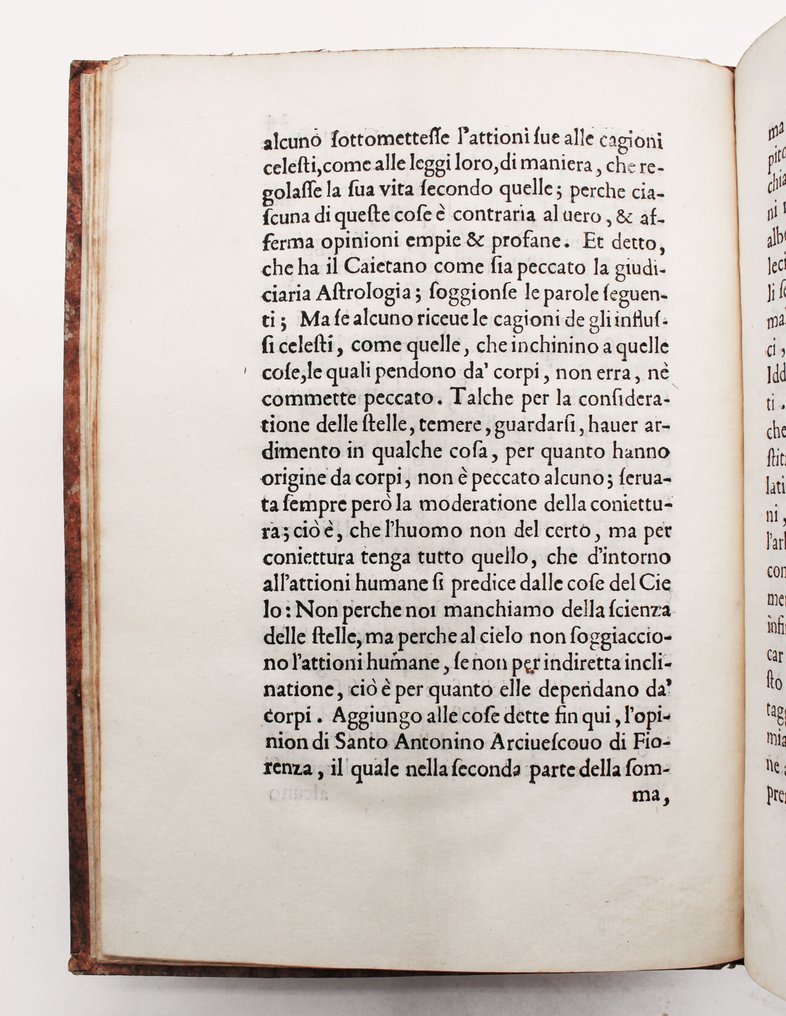
Astrologia by Domenico Scevolini, in its 1st edition in this format, published in Venice in 1565 by Giordano Ziletti, bound in hard cover, 66 pages, in Italian (original language: true).
AI-assisted summary
Description from the seller
Interrogating the stars is not a sin: The book that saved astrology from the fire.
Very rare first posthumous edition of the astrological treatise by Domenico Scevolini, printed in Venice by Giordano Ziletti in 1565. A fundamental work for understanding judicial astrology in the Renaissance, the Discourse takes a clear stance against predictive abuses of the discipline, while defending it as a legitimate science and an integral part of the liberal arts. An exemplary document of the tension between faith, scientific knowledge, and moral responsibility in a century of transition.
Market value
Currently offered for sale at $1,667.50. The rarity of the edition and its historical significance make it highly sought after in the scientific and humanistic collectibles market. Cited in the main specialized repertoires: Riccardi, Thorndike, Houzeau-Lancaster, Cantamessa.
Physical description and condition
Binding in cardboard with marbled boards from the 19th century. Woodcut titles, historiated initials, white endpapers. Some stains and marginal browning. Thick paper, good quality printing. Overall well preserved. Pages (2); 2nn. 58; (4).
Full title and author
Discourse by Domenico Scevolini in which, with the authorities of both good and Catholic gentlemen, he demonstrates that judicial astrology is true and very useful.
In Venice, Giordano Ziletti, 1565
Domenico Scevolini
Context and Significance
Scevolini clearly defines the scope of judicial astrology: a predictive practice based on celestial aspects and configurations, which can, however, degenerate if misunderstood or manipulated. The treatise defends astrology as the science of secondary causes, acknowledging its legitimacy if kept within rational and moral limits. Published posthumously, the Discourse fits into the lively sixteenth-century debate among astrology, theology, and mathematical sciences, and is distinguished by its rigor and moderation.
Biography of the Author
Giovanni Domenico Scevolini (Bertinoro, ... – circa 1560) was an Italian mathematician, astrologer, and thinker of the 16th century. Little is known about his biography: after ecclesiastical approval of his works, he undertook long journeys across Europe and was also active as a founder of convents, including one in Bologna, of which he was a guide. His reflections on astrology were characterized by balance and fidelity to scientific reasoning, during a time of increasing tension between science and dogma.
Printing history and circulation
Printed in Venice in 1565 by Giordano Ziletti, known for publishing specialized and controversial texts. The work did not have reprints or widespread circulation and remains very rare. Its posthumous printing was probably favored by a small circle of Scevolini supporters and testifies to the survival of a learned and cautiously defensive astrology in the Counter-Reformation climate.
BIBLIOGRAPHY AND REFERENCES
Riccardi I, col. 432
Thorndike VI, 124 and following
Houzeau-Lancaster 4893
Cantamessa, Astrology, No. 4069
Ziletti – ICCU
Seller's Story
Luxury Books: Your Go-To Guide for Nabbing Literary Treasures!
Embarking on the thrilling journey of collecting rare and timeless printed works? Here's your snappy rundown, "The Collector's Cheat Sheet," to ensure you're not just flipping pages but stacking up the value:
1. Edition and Rarity: Rarity is the name of the game. First editions, limited printings, and books flaunting unique features like eye-catching illustrations or mind-blowing bindings? Consider them the VIPs of the collector's world.
2. Condition & Dimension: Picture this – a book in mint condition, untouched by the woes of wear and tear. Now, flip the script: wear, foxing, discoloration – they're the villains here. And don't forget to size up the dimensions, because a book's size matters in the collector's universe.
3. Authenticity: In a world of replicas and forgeries, verifying a book's authenticity is your superhero move. Expert examination and authentication – your trusty sidekicks in this quest.
4. Provenance: Who owned it before you? If the book has hobnobbed with famous figures or danced through historical events, its value skyrockets. Every book has a story, but some have blockbuster tales.
5. Demand and Market Trends: Think of book values as the stock market of the literary world. Stay savvy on collector trends and market shifts to ride the waves of value.
6. Subject Matter: Some topics are like fine wine – they get better with time. Dive into subjects with a timeless appeal or ride the wave of emerging cultural and historical relevance.
7. Binding and Design: Beauty is more than skin deep. Intricate bindings, stunning covers, and illustrations – these are the accessories that make a book runway-ready in the collector's eyes.
8. Association Copies: Books with a personal touch – whether it's a connection to the author or a famous personality – elevate the historical vibes. A book with a backstory? Count us in.
9. Investment Potential: Passion is the engine, but some collectors eye future returns. Keep in mind, though, that the book market can be as unpredictable as a plot twist.
10. Expert Advice: New to the game? Don't play solo. Seek wisdom from the book gurus, hit up book fairs, and join collector communities. We at Luxury Books are the Yodas of the rare book galaxy, helping you build collections that scream sophistication and cultural clout.
Because collecting rare books isn't just about dollar signs – it's a journey of preserving heritage and embracing literary treasures. Happy collecting!
Translated by Google TranslateInterrogating the stars is not a sin: The book that saved astrology from the fire.
Very rare first posthumous edition of the astrological treatise by Domenico Scevolini, printed in Venice by Giordano Ziletti in 1565. A fundamental work for understanding judicial astrology in the Renaissance, the Discourse takes a clear stance against predictive abuses of the discipline, while defending it as a legitimate science and an integral part of the liberal arts. An exemplary document of the tension between faith, scientific knowledge, and moral responsibility in a century of transition.
Market value
Currently offered for sale at $1,667.50. The rarity of the edition and its historical significance make it highly sought after in the scientific and humanistic collectibles market. Cited in the main specialized repertoires: Riccardi, Thorndike, Houzeau-Lancaster, Cantamessa.
Physical description and condition
Binding in cardboard with marbled boards from the 19th century. Woodcut titles, historiated initials, white endpapers. Some stains and marginal browning. Thick paper, good quality printing. Overall well preserved. Pages (2); 2nn. 58; (4).
Full title and author
Discourse by Domenico Scevolini in which, with the authorities of both good and Catholic gentlemen, he demonstrates that judicial astrology is true and very useful.
In Venice, Giordano Ziletti, 1565
Domenico Scevolini
Context and Significance
Scevolini clearly defines the scope of judicial astrology: a predictive practice based on celestial aspects and configurations, which can, however, degenerate if misunderstood or manipulated. The treatise defends astrology as the science of secondary causes, acknowledging its legitimacy if kept within rational and moral limits. Published posthumously, the Discourse fits into the lively sixteenth-century debate among astrology, theology, and mathematical sciences, and is distinguished by its rigor and moderation.
Biography of the Author
Giovanni Domenico Scevolini (Bertinoro, ... – circa 1560) was an Italian mathematician, astrologer, and thinker of the 16th century. Little is known about his biography: after ecclesiastical approval of his works, he undertook long journeys across Europe and was also active as a founder of convents, including one in Bologna, of which he was a guide. His reflections on astrology were characterized by balance and fidelity to scientific reasoning, during a time of increasing tension between science and dogma.
Printing history and circulation
Printed in Venice in 1565 by Giordano Ziletti, known for publishing specialized and controversial texts. The work did not have reprints or widespread circulation and remains very rare. Its posthumous printing was probably favored by a small circle of Scevolini supporters and testifies to the survival of a learned and cautiously defensive astrology in the Counter-Reformation climate.
BIBLIOGRAPHY AND REFERENCES
Riccardi I, col. 432
Thorndike VI, 124 and following
Houzeau-Lancaster 4893
Cantamessa, Astrology, No. 4069
Ziletti – ICCU
Seller's Story
Luxury Books: Your Go-To Guide for Nabbing Literary Treasures!
Embarking on the thrilling journey of collecting rare and timeless printed works? Here's your snappy rundown, "The Collector's Cheat Sheet," to ensure you're not just flipping pages but stacking up the value:
1. Edition and Rarity: Rarity is the name of the game. First editions, limited printings, and books flaunting unique features like eye-catching illustrations or mind-blowing bindings? Consider them the VIPs of the collector's world.
2. Condition & Dimension: Picture this – a book in mint condition, untouched by the woes of wear and tear. Now, flip the script: wear, foxing, discoloration – they're the villains here. And don't forget to size up the dimensions, because a book's size matters in the collector's universe.
3. Authenticity: In a world of replicas and forgeries, verifying a book's authenticity is your superhero move. Expert examination and authentication – your trusty sidekicks in this quest.
4. Provenance: Who owned it before you? If the book has hobnobbed with famous figures or danced through historical events, its value skyrockets. Every book has a story, but some have blockbuster tales.
5. Demand and Market Trends: Think of book values as the stock market of the literary world. Stay savvy on collector trends and market shifts to ride the waves of value.
6. Subject Matter: Some topics are like fine wine – they get better with time. Dive into subjects with a timeless appeal or ride the wave of emerging cultural and historical relevance.
7. Binding and Design: Beauty is more than skin deep. Intricate bindings, stunning covers, and illustrations – these are the accessories that make a book runway-ready in the collector's eyes.
8. Association Copies: Books with a personal touch – whether it's a connection to the author or a famous personality – elevate the historical vibes. A book with a backstory? Count us in.
9. Investment Potential: Passion is the engine, but some collectors eye future returns. Keep in mind, though, that the book market can be as unpredictable as a plot twist.
10. Expert Advice: New to the game? Don't play solo. Seek wisdom from the book gurus, hit up book fairs, and join collector communities. We at Luxury Books are the Yodas of the rare book galaxy, helping you build collections that scream sophistication and cultural clout.
Because collecting rare books isn't just about dollar signs – it's a journey of preserving heritage and embracing literary treasures. Happy collecting!
Translated by Google TranslateDetails
Number of Books
1
Subject
Astrology
Book Title
Astrologia
Author/ Illustrator
Scevolini
Condition
Good
Publication year oldest item
1565
Height
209 mm
Edition
1st Edition Thus
Width
148 mm
Language
Italian
Original language
Yes
Publisher
In Venetia, Giordano Ziletti, 1565
Binding/ Material
Hardback
Number of pages
66
Sold by
