Noh mask - Wood - Korobase 崑崙八仙 Autographed (No reserve price)



06
days
02
hours
06
minutes
14
seconds
Current bid
€ 77
No reserve price

Expert
Selected by Marion Oliviero
Holds a master's in Chinese archaeology with extensive expertise in Japanese art.
Estimate € 200 - € 250
18 other people are watching this object
 Bidder 3790 Bidder 3790 | €77 | |
|---|---|---|
 Bidder 7687 Bidder 7687 | €75 | |
| Bidder 3790 | €70 | |
Catawiki Buyer Protection
Your payment’s safe with us until you receive your object.View details
Trustpilot 4.4 | 122529 reviews
Rated Excellent on Trustpilot.
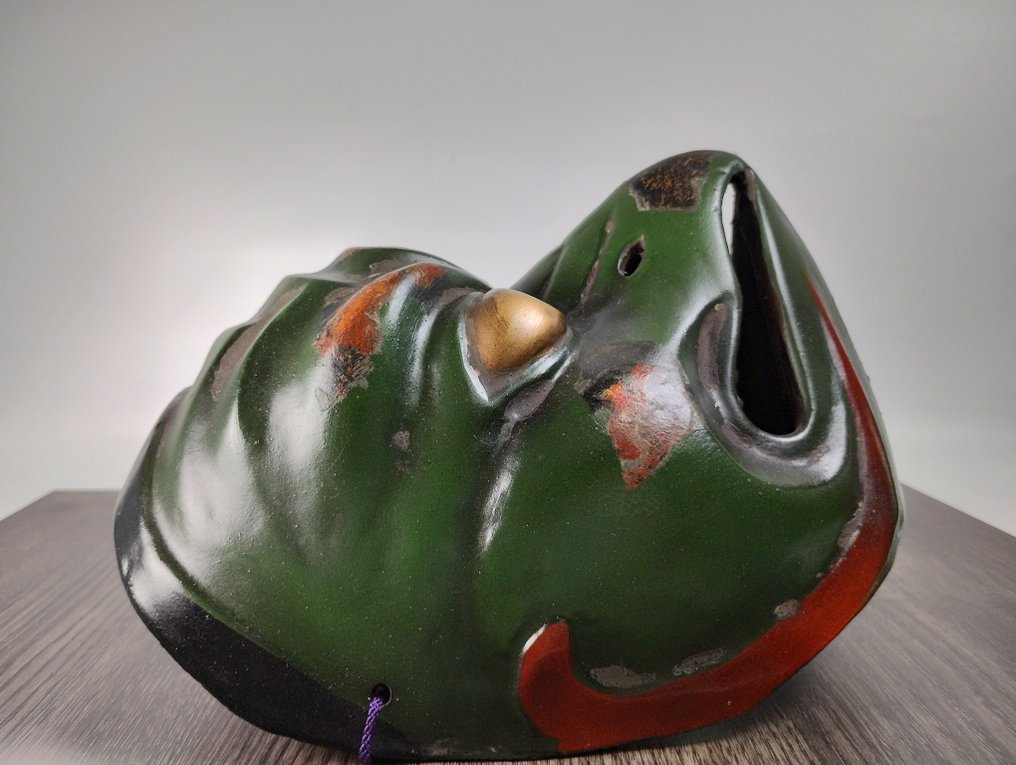
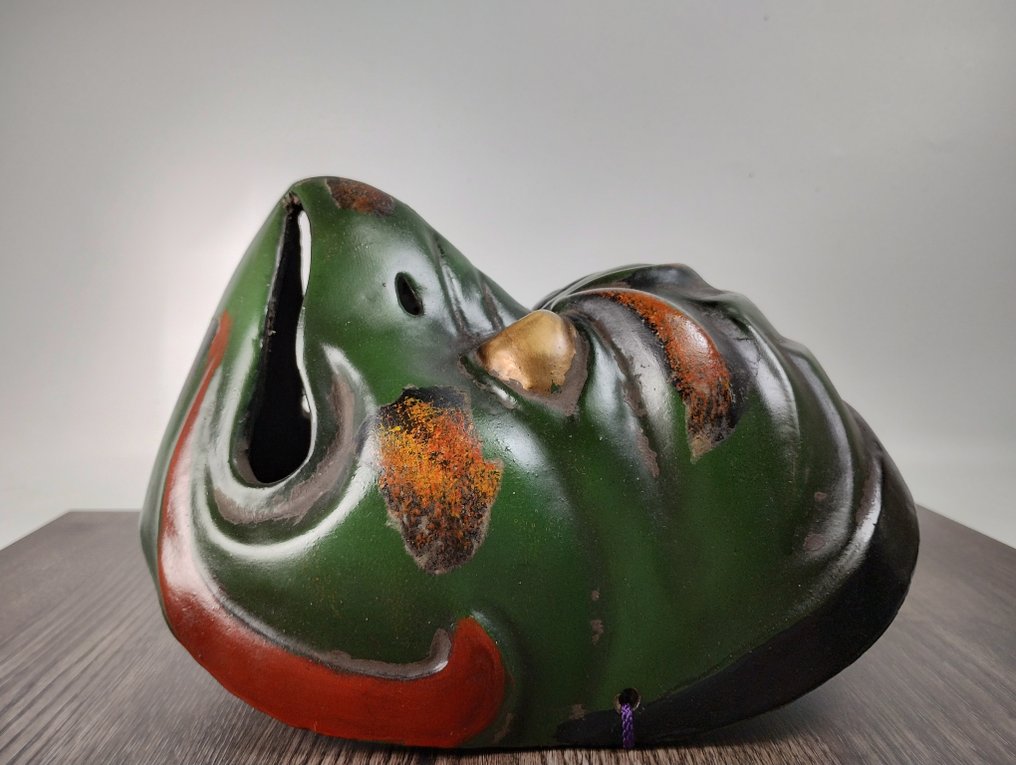
A wooden Noh mask titled Korobase ~Eight Immortals of Kunlun~, autographed by Tamahide Ishidu, made in Japan, believed to have been produced in the 1900s, with dimensions about 24 cm high by 18 cm wide, weight 529 g, in excellent condition.
AI-assisted summary
Description from the seller
This is a ”Korobase ~Eight Immortals of Kunlun~ 崑崙八仙” Noh mask made by Tamahide Ishidu.
>
The Dance of the Eight Immortals of Kunlun is a traditional performance that depicts eight immortals living on Mount Kunlun dancing in the form of cranes.
This dance is derived from the Tang dynasty poet Du Fu's poem "Song of the Eight Immortals of the Wine Cup" and honors eight wine-loving immortals, specifically referring to the Tang dynasty poets He Zhizhang, Li Jin, Li Bai, Zhang Xu, Su Jin, Su Jin, Li Bai, and Li Bai.
It can also refer to the eight Taoist immortals who were esteemed disciples of Liu An, the King of Huainan, or to the Han dynasty immortals Zhongli Quan, Zhang Guolao, Han Xiangzi, Li Tieguai, Cao Guojiu, Lü Dongbin, Lan Caihe, and He Xiangu.
These eight figures are believed to bring good health and longevity and are worshipped as Taoist immortals.
>
Tamahide Ishizu is a traditional craftsman specializing in ancient musical masks, with particular expertise in dry lacquer and Noh mask creation.
His works combine the high quality and beauty of traditional craftsmanship and are loved by many collectors.
Tamahide Ishizu's pieces are highly regarded both in Japan and abroad as symbols of traditional craftsmanship.
This mask, believed to have been made in the 1900s.
There are no noticeable scratches or stains.
Shipping method: DHL for overseas, Sagawa or Yamato for Japan
This is a ”Korobase ~Eight Immortals of Kunlun~ 崑崙八仙” Noh mask made by Tamahide Ishidu.
>
The Dance of the Eight Immortals of Kunlun is a traditional performance that depicts eight immortals living on Mount Kunlun dancing in the form of cranes.
This dance is derived from the Tang dynasty poet Du Fu's poem "Song of the Eight Immortals of the Wine Cup" and honors eight wine-loving immortals, specifically referring to the Tang dynasty poets He Zhizhang, Li Jin, Li Bai, Zhang Xu, Su Jin, Su Jin, Li Bai, and Li Bai.
It can also refer to the eight Taoist immortals who were esteemed disciples of Liu An, the King of Huainan, or to the Han dynasty immortals Zhongli Quan, Zhang Guolao, Han Xiangzi, Li Tieguai, Cao Guojiu, Lü Dongbin, Lan Caihe, and He Xiangu.
These eight figures are believed to bring good health and longevity and are worshipped as Taoist immortals.
>
Tamahide Ishizu is a traditional craftsman specializing in ancient musical masks, with particular expertise in dry lacquer and Noh mask creation.
His works combine the high quality and beauty of traditional craftsmanship and are loved by many collectors.
Tamahide Ishizu's pieces are highly regarded both in Japan and abroad as symbols of traditional craftsmanship.
This mask, believed to have been made in the 1900s.
There are no noticeable scratches or stains.
Shipping method: DHL for overseas, Sagawa or Yamato for Japan
Details
Era
1900-2000
Material
Wood
Country of Origin
Japan
Condition
Excellent condition: barely used with minimal signs of wear
Designer/Artist/Maker
Tamahide Ishidu 石津玉秀
Height
24 cm
Width
18 cm
Weight
529 g
Estimated Period
1900-1910, 1910-1920, 1920-1930, 1930-1940, 1940-1950, 1950-1960, 1960-1970, 1970-1980, 1980-1990, 1990-2000
Title additional information
Korobase 崑崙八仙 Autographed
Sold by
