N. 105338064

Non più disponibile
Tracia, Eno half Mnaieion / Tetradrachm
Offerte chiuse
1 giorno fa

Tracia, Eno half Mnaieion / Tetradrachm

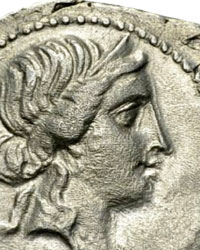
THRACE, Ainos. Circa 415/4-413/2 BC. AR Tetradrachm. Head of Hermes right, wearing petasos / Goat standing right; ivy branch to right; all within incuse square. Ainos came rather late to currency production, striking its first tetradrachms only after the expulsion of the Persians from northern Greece following Xerxes’ defeat at Salamis. Its first period ended with the Athenian coinage decree of 449 BC, but the mint was in operation again by circa 435 BC, tapering off rapidly until disappearing with the conquest of the city by Philip of Macedon in 342 BC. Its uniform types throughout its history were Hermes and the goat, the latter the symbol of the pasture land that provided what prosperity Ainos had. Hermes was the patron deity of Ainos, dating from the time of the Trojan War. According to a poem by Kallimachos, the sculptor Epeios, who constructed the Trojan Horse, also made a wooden statue (ξοανον) of Hermes, which was washed out to sea and recovered by fishermen by the Hebros river. The fishermen, thinking it just a piece of driftwood, tried to burn it in their bonfire. When it failed to burn they took fright and threw it back into the sea, which promptly cast it back again. The natives accepted it as a relic of the gods, and erected the sanctuary of Hermes Perpheraios (the Wanderer) at the future site of Ainos. The later coins of Ainos, with their splendid facing head of Hermes, showcase some of the finest numismatic art of the Greek world. Nevertheless, Ainos never became an important city or trading center. The climate might have had something to do with it; according to Athaneus, Ainos had two seasons, eight months of cold and four months of winter. At least the goats liked it. Weight: 16,55 gr Diameter: 25,2 mm Condition: Very Fine

N. 105338064

Non più disponibile
Tracia, Eno half Mnaieion / Tetradrachm

Tracia, Eno half Mnaieion / Tetradrachm

THRACE, Ainos. Circa 415/4-413/2 BC. AR Tetradrachm. Head of Hermes right, wearing petasos / Goat standing right; ivy branch to right; all within incuse square.
Ainos came rather late to currency production, striking its first tetradrachms only after the expulsion of the Persians from northern Greece following Xerxes’ defeat at Salamis. Its first period ended with the Athenian coinage decree of 449 BC, but the mint was in operation again by circa 435 BC, tapering off rapidly until disappearing with the conquest of the city by Philip of Macedon in 342 BC. Its uniform types throughout its history were Hermes and the goat, the latter the symbol of the pasture land that provided what prosperity Ainos had. Hermes was the patron deity of Ainos, dating from the time of the Trojan War. According to a poem by Kallimachos, the sculptor Epeios, who constructed the Trojan Horse, also made a wooden statue (ξοανον) of Hermes, which was washed out to sea and recovered by fishermen by the Hebros river. The fishermen, thinking it just a piece of driftwood, tried to burn it in their bonfire. When it failed to burn they took fright and threw it back into the sea, which promptly cast it back again. The natives accepted it as a relic of the gods, and erected the sanctuary of Hermes Perpheraios (the Wanderer) at the future site of Ainos. The later coins of Ainos, with their splendid facing head of Hermes, showcase some of the finest numismatic art of the Greek world. Nevertheless, Ainos never became an important city or trading center. The climate might have had something to do with it; according to Athaneus, Ainos had two seasons, eight months of cold and four months of winter. At least the goats liked it.

Weight: 16,55 gr
Diameter: 25,2 mm

Condition: Very Fine

Offerte chiuse
Carmen Vera Gutiérrez
Esperto
Stima  € 3.900 - € 4.300

Oggetti simili

Per te in

Monete antiche

Imposta un’allerta di ricerca
Imposta un’allerta di ricerca per ricevere una notifica quando sono disponibili nuove corrispondenze.

Questo oggetto era presente in


Come fare acquisti su Catawiki

Scopri di più sulla nostra Tutela degli acquirenti

      1. Scopri oggetti speciali

      Esplora migliaia di oggetti speciali selezionati da esperti. Osserva le foto, i dettagli e il valore stimato di ogni oggetto speciale. 

      2. Fai l’offerta più alta

      Trova qualcosa che ti interessa e fai l’offerta migliore. Puoi seguire l’asta fino alla fine o lasciare che il nostro sistema faccia le offerte per te. Non devi fare altro che impostare un’offerta per l’importo massimo che desideri pagare. 

      3. Paga in tutta sicurezza

      Effettua il tuo pagamento e noi lo terremo al sicuro finché il tuo oggetto speciale non sarà arrivato a destinazione sano e salvo. Utilizziamo un sistema di pagamento affidabile per gestire tutte le transazioni. 

Hai qualcosa di simile da vendere?

Possiamo aiutarti a guadagnare di più dai tuoi oggetti speciali, che tu venda professionalmente o sia nuovo nel mondo delle aste online.

Vendi il tuo oggetto