N. 108556604

Venduto
Bisonte - Animale fossilizzato - Bison sp. - 42 cm - 20 cm  (Senza prezzo di riserva)
Offerta finale
€ 27
Senza prezzo di riserva
23 h fa

Bisonte - Animale fossilizzato - Bison sp. - 42 cm - 20 cm (Senza prezzo di riserva)

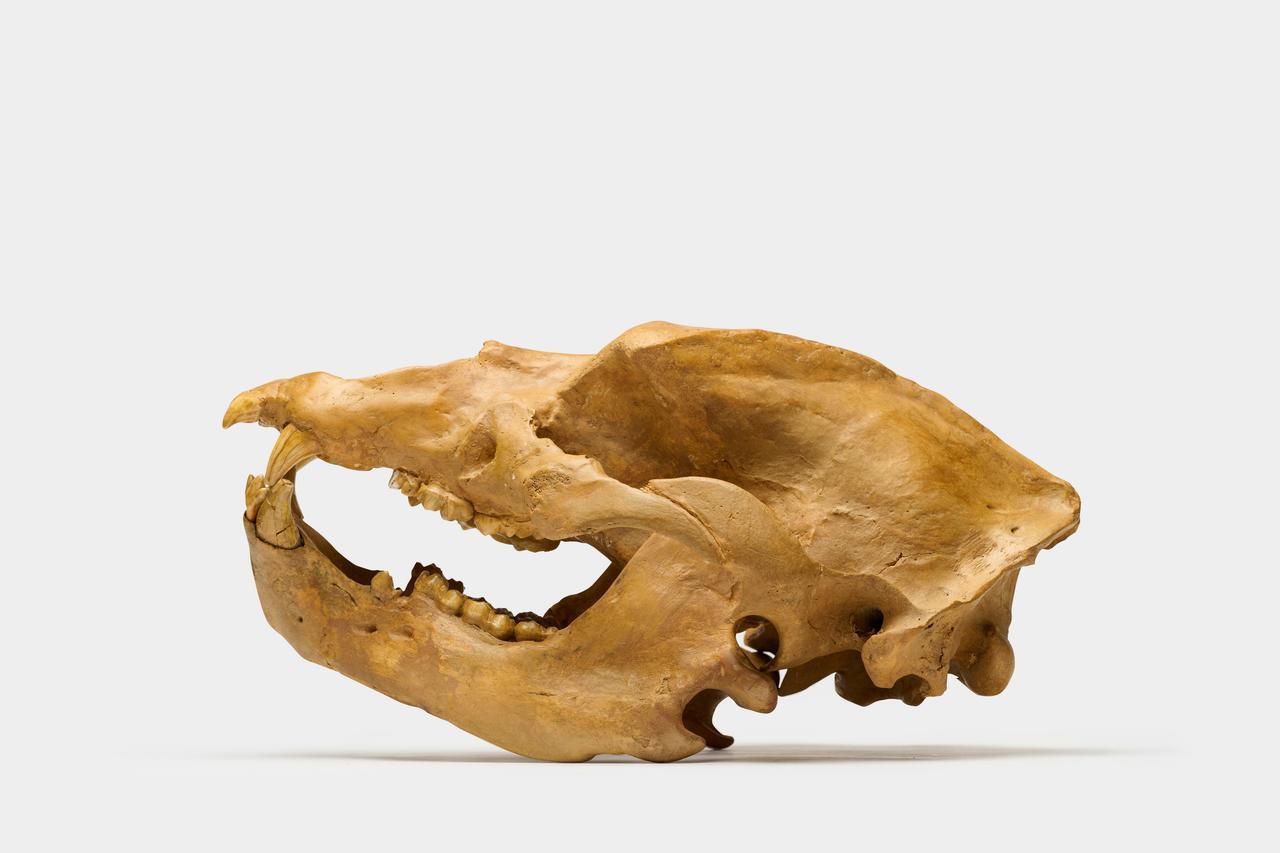
The teeth are gone. The sockets are not. For most fossils that would be a loss. Here it is the opposite: with the crowns out of the way, you can see the architecture the teeth were set into — the alveolar bone along the top of the jaw, the thin partitions between the roots, the shape of the holes themselves. Each socket is a cast of a tooth that no longer exists. What you are looking at is the negative space of something that stood here tens of thousands of years ago. It tells you more than a full row would. A socket shows where a tooth was rooted, how deep it went, how the bone wrapped it. A few worn stumps and a scatter of fragments remain along the row; the rest of the jaw is bone. The bone itself is grey-brown rather than the warm ochre you get in some beds — greyer, closer to stone, with the surface split into a fine network of cracks and the original grain still readable across the body of the jaw. The flange at the rear rises into a hooked, forked process. It measures 42 × 20 cm and weighs 1000 g exactly. Look at it: Exposed tooth sockets — the empty architecture of the tooth row, partitions and all. A few worn stumps remaining — plus fragments along the row. Grey-brown fossil bone — cooler in tone than ochre, surface cracked into a fine network. Hooked, forked flange at the rear — the muscle process, intact. 42 × 20 cm, 1000 g — a large, evenly weighted piece. This is a cabinet specimen — the one fossil in a group that shows you how a jaw is built rather than what was in it. Honest note: this is a fossilised bison mandible from the Ice Age, identified as bison on the basis of the bone and the dentition, and listed at genus level (Bison sp.); the exact species is not claimed. Most teeth are missing and only worn stumps and fragments remain, as shown. It is a Late Pleistocene fossil, roughly 10,000 to 50,000 years old depending on the deposit it came from. Measurements and weight as measured. Specifications: Type: Fossilised bison mandible (lower jaw) Species: Bison sp. — Ice Age bison Size: 42 × 20 cm Weight: 1000 g Teeth: mostly missing; worn stumps and fragments remain Age: Late Pleistocene, approx. 10,000–50,000 years BP Condition: as shown It is a jaw with the seats empty and the structure showing. You get to display it.

N. 108556604

Venduto
Bisonte - Animale fossilizzato - Bison sp. - 42 cm - 20 cm  (Senza prezzo di riserva)

Bisonte - Animale fossilizzato - Bison sp. - 42 cm - 20 cm (Senza prezzo di riserva)

The teeth are gone. The sockets are not.
For most fossils that would be a loss. Here it is the opposite: with the crowns out of the way, you can see the architecture the teeth were set into — the alveolar bone along the top of the jaw, the thin partitions between the roots, the shape of the holes themselves. Each socket is a cast of a tooth that no longer exists. What you are looking at is the negative space of something that stood here tens of thousands of years ago.
It tells you more than a full row would. A socket shows where a tooth was rooted, how deep it went, how the bone wrapped it. A few worn stumps and a scatter of fragments remain along the row; the rest of the jaw is bone.
The bone itself is grey-brown rather than the warm ochre you get in some beds — greyer, closer to stone, with the surface split into a fine network of cracks and the original grain still readable across the body of the jaw. The flange at the rear rises into a hooked, forked process. It measures 42 × 20 cm and weighs 1000 g exactly.
Look at it:
Exposed tooth sockets — the empty architecture of the tooth row, partitions and all.
A few worn stumps remaining — plus fragments along the row.
Grey-brown fossil bone — cooler in tone than ochre, surface cracked into a fine network.
Hooked, forked flange at the rear — the muscle process, intact.
42 × 20 cm, 1000 g — a large, evenly weighted piece.
This is a cabinet specimen — the one fossil in a group that shows you how a jaw is built rather than what was in it.
Honest note: this is a fossilised bison mandible from the Ice Age, identified as bison on the basis of the bone and the dentition, and listed at genus level (Bison sp.); the exact species is not claimed. Most teeth are missing and only worn stumps and fragments remain, as shown. It is a Late Pleistocene fossil, roughly 10,000 to 50,000 years old depending on the deposit it came from. Measurements and weight as measured.
Specifications:
Type: Fossilised bison mandible (lower jaw)
Species: Bison sp. — Ice Age bison
Size: 42 × 20 cm
Weight: 1000 g
Teeth: mostly missing; worn stumps and fragments remain
Age: Late Pleistocene, approx. 10,000–50,000 years BP
Condition: as shown
It is a jaw with the seats empty and the structure showing. You get to display it.

Offerta finale
€ 27
Senza prezzo di riserva

Oggetti simili

  • ​
    ​
    ​
  • ​
    ​
    ​
  • ​
    ​
    ​
  • ​
    ​
    ​
  • ​
    ​
    ​
  • ​
    ​
    ​
  • ​
    ​
    ​
  • ​
    ​
    ​
  • ​
    ​
    ​
  • ​
    ​
    ​

Per te in

Fossili

  • ​
    ​
    ​
  • ​
    ​
    ​
  • ​
    ​
    ​
  • ​
    ​
    ​
  • ​
    ​
    ​
  • ​
    ​
    ​
  • ​
    ​
    ​
  • ​
    ​
    ​
  • ​
    ​
    ​
  • ​
    ​
    ​
Imposta un’allerta di ricerca
Imposta un’allerta di ricerca per ricevere una notifica quando sono disponibili nuove corrispondenze.

Questo oggetto era presente in


Come fare acquisti su Catawiki

Scopri di più sulla nostra Tutela degli acquirenti

      1. Scopri oggetti speciali

      Esplora migliaia di oggetti speciali selezionati da esperti. Osserva le foto, i dettagli e il valore stimato di ogni oggetto speciale. 

      2. Fai l’offerta più alta

      Trova qualcosa che ti interessa e fai l’offerta migliore. Puoi seguire l’asta fino alla fine o lasciare che il nostro sistema faccia le offerte per te. Non devi fare altro che impostare un’offerta per l’importo massimo che desideri pagare. 

      3. Paga in tutta sicurezza

      Effettua il tuo pagamento e noi lo terremo al sicuro finché il tuo oggetto speciale non sarà arrivato a destinazione sano e salvo. Utilizziamo un sistema di pagamento affidabile per gestire tutte le transazioni. 

Hai qualcosa di simile da vendere?

Possiamo aiutarti a guadagnare di più dai tuoi oggetti speciali, che tu venda professionalmente o sia nuovo nel mondo delle aste online.

Vendi il tuo oggetto