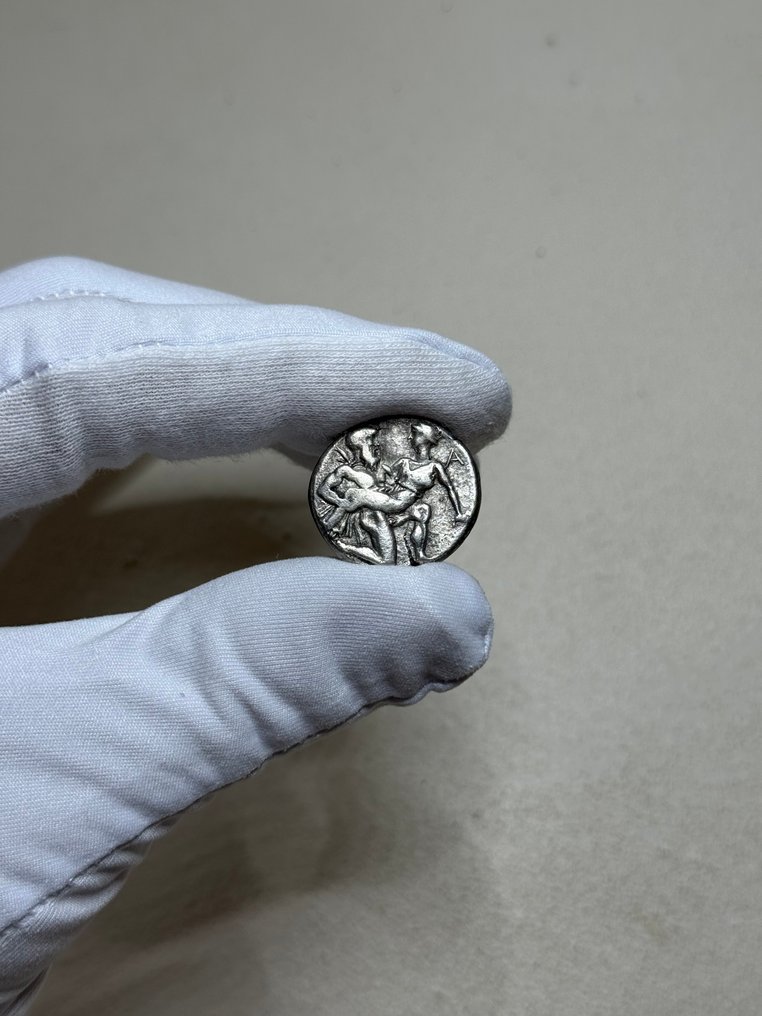
Eilanden bij Thracië, Thasos Stater Circa 480-463 BC
Opent 11:00
Startbod
€ 1

Markeer als favoriet om een melding te krijgen wanneer de veiling begint.

Carmen Vera Gutiérrez
Expert
Geselecteerd door Carmen Vera Gutiérrez

Ervaren taxateur van antiek, gespecialiseerd in Spaanse munten en oude valuta.

Geschatte waarde  € 1.100 - € 1.300
Catawiki Kopersbescherming

Je betaling is veilig bij ons totdat je het object hebt ontvangen.Bekijk details

Trustpilot 4.4 | 123609 reviews

Beoordeeld als "Uitstekend" op Trustpilot.
Beschrijving van de verkoper

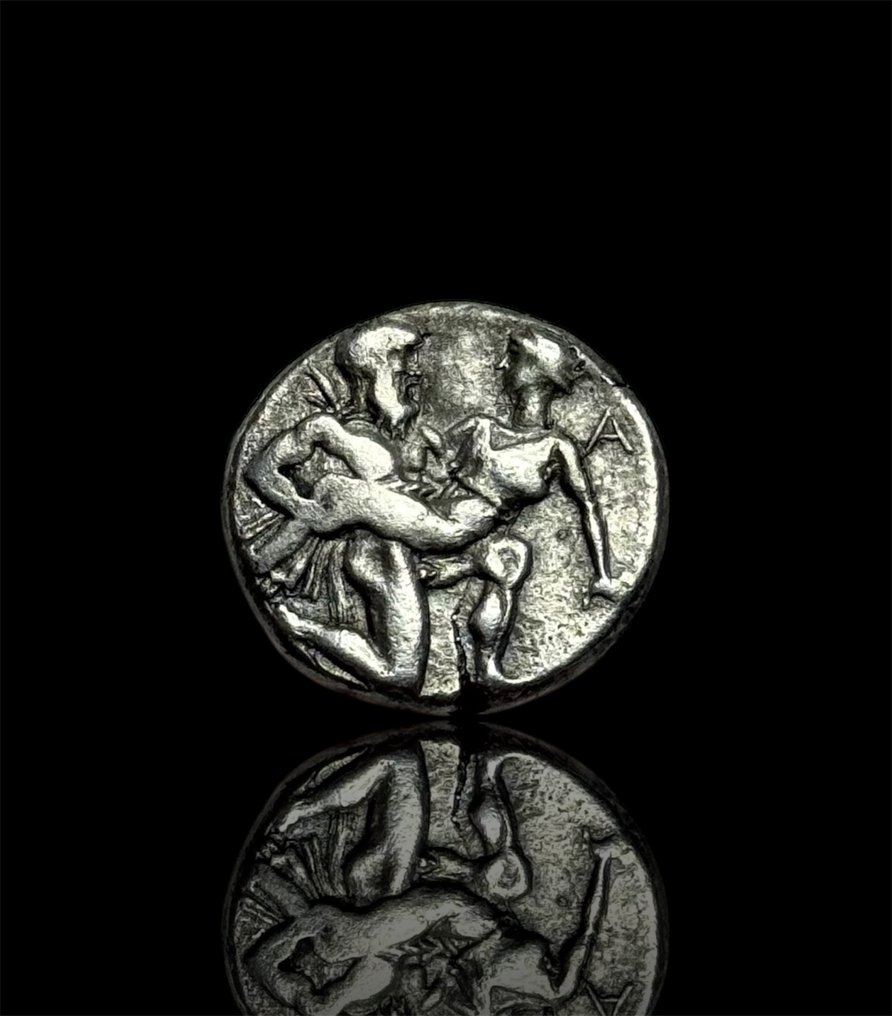
Obverse.

A nude, ithyphallic (excited) satyr (or silenos, a follower of Dionysus) carries a protesting nymph in his arms as he runs/kneels to the right. The nymph raises her hand in protest. This motif refers to the cult of Dionysus on Thasos, where wine production and orgiastic rituals were central—satyrs and nymphs symbolize fertility and ecstasy. The figures' poses often form a kind of swastika-like pattern (an ancient symbol of good luck in the Greek world).
The A is a control mark or magistrate's mark (mark of a mint master or issue series). Early Thasos staters sometimes feature single Greek letters (such as A, Λ, Θ, Σ) in the incuse squares to identify a specific issue or official. It is not an inscription like a city name, but a practical mark to distinguish series.

Reverse.

A quadripartite incuse square (a four-part indented square, a typical archaic feature without an image).

Very Fine (VF)

Obverse.

A nude, ithyphallic (excited) satyr (or silenos, a follower of Dionysus) carries a protesting nymph in his arms as he runs/kneels to the right. The nymph raises her hand in protest. This motif refers to the cult of Dionysus on Thasos, where wine production and orgiastic rituals were central—satyrs and nymphs symbolize fertility and ecstasy. The figures' poses often form a kind of swastika-like pattern (an ancient symbol of good luck in the Greek world).
The A is a control mark or magistrate's mark (mark of a mint master or issue series). Early Thasos staters sometimes feature single Greek letters (such as A, Λ, Θ, Σ) in the incuse squares to identify a specific issue or official. It is not an inscription like a city name, but a practical mark to distinguish series.

Reverse.

A quadripartite incuse square (a four-part indented square, a typical archaic feature without an image).

Very Fine (VF)

Details

Era
Vóór 1400
Gewicht
7,91 g
Cultuur/regio
Eilanden bij Thracië, Thasos
Jaar / Periode en Variatie
Circa 480-463 BC
Munteenheid
Stater
Metaal
AR
Staat
Niet gecertificeerd
Verkocht door
NederlandGeverifieerd
Particulier

Vergelijkbare objecten

Voor jou in

Antieke munten