N.º 101642605

Vendido
Weegee (1899–1968) - Frank Pape, Arrested For Homicide
Licitação final
€ 209
Há 1 dia

Weegee (1899–1968) - Frank Pape, Arrested For Homicide

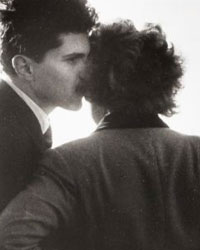
Frank Pape, Arrested For Homicide View of teenaged homicide suspect Frank Pape seen through the bars of a police van as he is taken from Manhattan's police headquarters,Sixteen-year-old Pape, a freshman at Bronx Vocational High School, was arrested following his alleged confession to tying up four-year-old William Drach, who subsequently strangled to death. New York, November 10, 1944. Print from Weegee Portfolio Exhibition Print based on the 1982 prints by Sid Kaplan, printed 1992. Produced for Amber Film & Photography Collective, Newcastle upon Tyne Arthur (Usher) Fellig (June 12, 1899 – December 26, 1968), known by his pseudonym Weegee, was a photographer and photojournalist, known for his stark black and white street photography in New York City. Weegee worked in Manhattan's Lower East Side as a press photographer during the 1930s and 1940s and developed his signature style by following the city's emergency services and documenting their activity.[2] Much of his work depicted unflinchingly realistic scenes of urban life, crime, injury and death. He worked at night and competed with the police to be first at the scene of a crime, selling his photographs to tabloids and photographic agencies.[5] His photographs, centered around Manhattan police headquarters, were soon published by the Daily News and other tabloids, as well as more upscale publication such as Life magazine. Most of his notable photographs were taken with very basic press photographer equipment and methods of the era, a 4×5 Speed Graphic camera preset at f/16 at 1/200 of a second, with flashbulbs and a set focus distance of ten feet.[11] He was a self-taught photographer with no formal training. Five of his photographs were acquired by the Museum of Modern Art (MoMA) in 1943. These works were included in its exhibition Action Photography.[21] He was later included in "50 Photographs by 50 Photographers", another MoMA show organized by photographer Edward Steichen,. Naked City (1945) was his first book of photographs. Film producer Mark Hellinger bought the rights to the title from Weegee.[21] In 1948, Weegee's aesthetic formed the foundation for Hellinger's film The Naked City. It was based on a gritty 1948 story written by Malvin Wald about the investigation into a model's murder in New York. In the 1950s and 1960s, Weegee experimented with panoramic photographs, photo distortions and photography through prisms. Using a plastic lens, he made a famous photograph of Marilyn Monroe in which her face is grotesquely distorted yet still recognizable. Weegee can be seen as the American counterpart to Brassaï, who photographed Paris street scenes at night. Weegee's themes of nudists, circus performers, freaks and street people were later taken up and developed by Diane Arbus in the early 1960s.

N.º 101642605

Vendido
Weegee (1899–1968) - Frank Pape, Arrested For Homicide

Weegee (1899–1968) - Frank Pape, Arrested For Homicide

Frank Pape, Arrested For Homicide
View of teenaged homicide suspect Frank Pape seen through the bars of a police van as he is taken from Manhattan's police headquarters,Sixteen-year-old Pape, a freshman at Bronx Vocational High School, was arrested following his alleged confession to tying up four-year-old William Drach, who subsequently strangled to death. New York, November 10, 1944.

Print from Weegee Portfolio
Exhibition Print based on the 1982 prints by Sid Kaplan,
printed 1992. Produced for Amber Film & Photography Collective, Newcastle upon Tyne


Arthur (Usher) Fellig (June 12, 1899 – December 26, 1968), known by his pseudonym Weegee, was a photographer and photojournalist, known for his stark black and white street photography in New York City.
Weegee worked in Manhattan's Lower East Side as a press photographer during the 1930s and 1940s and developed his signature style by following the city's emergency services and documenting their activity.[2] Much of his work depicted unflinchingly realistic scenes of urban life, crime, injury and death.
He worked at night and competed with the police to be first at the scene of a crime, selling his photographs to tabloids and photographic agencies.[5] His photographs, centered around Manhattan police headquarters, were soon published by the Daily News and other tabloids, as well as more upscale publication such as Life magazine.
Most of his notable photographs were taken with very basic press photographer equipment and methods of the era, a 4×5 Speed Graphic camera preset at f/16 at 1/200 of a second, with flashbulbs and a set focus distance of ten feet.[11] He was a self-taught photographer with no formal training.

Five of his photographs were acquired by the Museum of Modern Art (MoMA) in 1943. These works were included in its exhibition Action Photography.[21] He was later included in "50 Photographs by 50 Photographers", another MoMA show organized by photographer Edward Steichen,.

Naked City (1945) was his first book of photographs. Film producer Mark Hellinger bought the rights to the title from Weegee.[21] In 1948, Weegee's aesthetic formed the foundation for Hellinger's film The Naked City. It was based on a gritty 1948 story written by Malvin Wald about the investigation into a model's murder in New York.

In the 1950s and 1960s, Weegee experimented with panoramic photographs, photo distortions and photography through prisms. Using a plastic lens, he made a famous photograph of Marilyn Monroe in which her face is grotesquely distorted yet still recognizable.
Weegee can be seen as the American counterpart to Brassaï, who photographed Paris street scenes at night. Weegee's themes of nudists, circus performers, freaks and street people were later taken up and developed by Diane Arbus in the early 1960s.


Licitação final
€ 209
Kai Brückner
Especialista
Estimativa  € 300 - € 400

Objetos semelhantes

Para si em

Fotografia

Definir um alerta de pesquisa
Defina um alerta de pesquisa para ser notificado quando surgirem novos resultados.

Este objeto foi mostrado em


Como comprar na Catawiki

Saber mais sobre a nossa proteção do comprador

      1. Descubra algo especial

      Navegue por milhares de objetos especiais selecionados por especialistas. Veja as fotos, os detalhes e o valor estimado de cada objeto especial. 

      2. Faça a licitação vencedora

      Encontre algo que adora e faça a licitação vencedora. Pode acompanhar o leilão até ao fim ou deixar o nosso sistema licitar por si. Apenas tem de definir o valor máximo que está disposto a pagar. 

      3. Faça um pagamento seguro

      Pague o seu objeto especial e mantemos o seu pagamento seguro até o seu objeto chegar são e salvo. Utilizamos um sistema de pagamento confiável para processar todas as transações. 

Tem algo parecido para vender?

Quer tenha entrado agora no mundo dos leilões online ou venda a título profissional, podemos ajudá-lo a ganhar mais pelos seus objetos especiais.

Venda o seu objeto