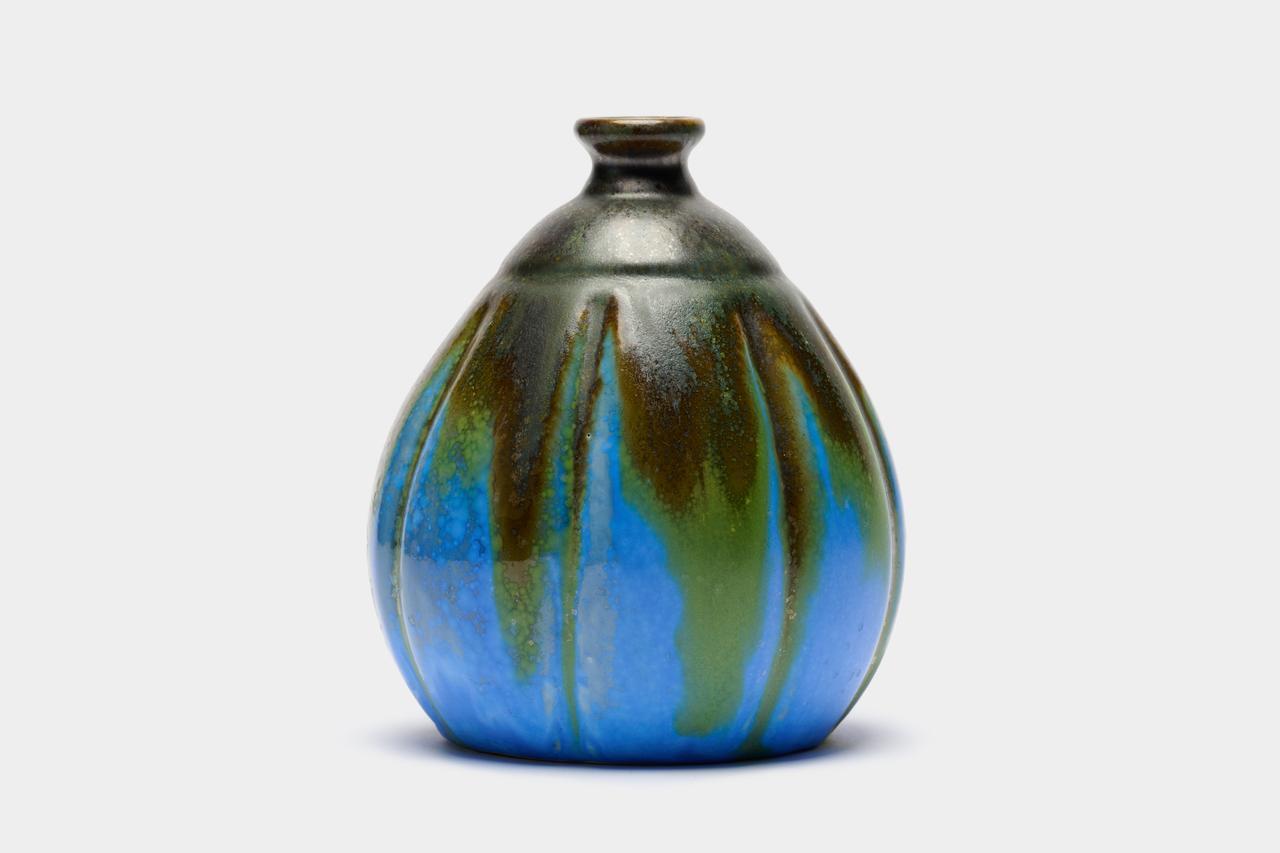
Guérin, Les Grès d'Art de Bouffioulx - GUERIN Roger (1896-1954) - Jarra - Grés - Arte Deco


Historiador de arte com ampla experiência em várias casas de leilões de antiguidades.
| €31 | ||
|---|---|---|
| €26 | ||
| €21 | ||
Proteção do comprador da Catawiki
O seu pagamento está seguro connosco até receber o seu objeto.Ver detalhes
Trustpilot 4.4 | 121798 avaliações
Classificada como Excelente na Trustpilot.
Jarro Art Déco de Roger Guérin em grés, Bouffioulx, Bélgica (c. 1920–1930), cerâmica trabalhada à mão com asa escultural torcida, esmalte verde com motivos heráldicos em relevo, assinado na base e com a etiqueta de folha original, dimensões 16 cm de altura, 11 cm de largura, 10 cm de profundidade, em excelente estado.
Descrição fornecida pelo vendedor
Roger Guérin Art Deco Pitcher – Handcrafted Ceramic with Sculptural Handle
This striking Art Deco pitcher by Belgian ceramist Roger Guérin (Bouffioulx) exemplifies the craftsmanship and creativity of early 20th-century European studio pottery.
Hand-thrown and finished in a rich green glaze with nuanced earthy tones, the piece is adorned with applied relief motifs in a heraldic style and features a dramatic, twisted sculptural handle with a metallic sheen. The elegant, asymmetrical spout and softly organic form echo both medieval symbolism and Art Deco flair, creating a bold, timeless silhouette.
Signed to the base and retaining its original foil label, this work reflects Guérin’s deep ties to traditional ceramic artistry while embracing the avant-garde spirit of the 1920s–1930s.
Roger Guérin (1896–1954)
was a distinguished Belgian ceramist renowned for his exceptional stoneware creations. Born in the village of Bouffioulx near Charleroi, Guérin was deeply influenced by the rich pottery traditions of his region. In 1918, he established his own workshop, marking the beginning of a prolific career that left an indelible mark on Belgian ceramics.
Guérin’s work is celebrated for its distinctive use of dripping glazes, a technique that added dynamic and organic patterns to his pieces. He often employed high-temperature firings, exceeding 1250 degrees Celsius, to produce durable stoneware, a practice rooted in the local ceramic traditions dating back to the late Middle Ages.
Throughout his career, Guérin collaborated with notable artists, including Cris Achterberg, Marcel Wolfers, Pierre Caille, Damien Ingels, and Chris Lebeau. These collaborations enriched his creative output and contributed to the evolution of ceramic art in Belgium. His participation in international exhibitions, such as the Paris Expos of 1925 and 1937, garnered him widespread acclaim and solidified his reputation as a leading figure in the ceramic arts.
After his passing in 1954, Guérin’s legacy was carried forward by his son, Jules Guérin, who took over the workshop around 1945. Jules continued the family tradition, maintaining the high standards set by his father and further contributing to the prominence of Bouffioulx as a center for ceramic artistry.
Today, Roger Guérin’s works are highly sought after by collectors and art enthusiasts, with his pieces fetching significant prices at auctions. His creations are not only valued for their aesthetic appeal but also for their embodiment of the rich cultural heritage of Belgian ceramics. Bouffioulx remains a testament to the enduring legacy of the Guérin family and their contributions to the world of ceramics.
The Golden Age of Artistic Pottery in Bouffioulx and Châtelet
In the 19th century, pottery in Bouffioulx and Châtelet, like in many other parts of Europe, was mainly about practical production. Skilled potters worked with a few assistants to create simple, everyday items. However, by the end of the century, a change was coming.
Artists and craftsmen started to oppose industrialization and looked back to older, more artistic traditions. Inspired by movements in England and France, potters rediscovered the beauty of handmade ceramics. They wanted to bring creativity back into pottery, moving away from mass production.
In Belgium, influential figures like Octave Maus and architect Henry Van de Velde played key roles in promoting ceramics as an art form. Soon, Bouffioulx and Châtelet became important centers for artistic pottery. Workshops focused on unique, handcrafted pieces that combined traditional skills with new artistic ideas.
A new generation of potters experimented with techniques such as wheel throwing, glazing, and high-temperature firing. They created beautiful vases, sculptures, and decorative objects that gained attention in exhibitions across Belgium and beyond. Schools and pottery courses were established, helping to train future artists and keep the craft alive.
This period, known as the “Golden Age” of pottery in the region, lasted for more than fifty years. Today, it is remembered as a time of creativity and innovation, where potters combined tradition with artistry to create timeless works.
It will be well packaged, protected and insured
Roger Guérin Art Deco Pitcher – Handcrafted Ceramic with Sculptural Handle
This striking Art Deco pitcher by Belgian ceramist Roger Guérin (Bouffioulx) exemplifies the craftsmanship and creativity of early 20th-century European studio pottery.
Hand-thrown and finished in a rich green glaze with nuanced earthy tones, the piece is adorned with applied relief motifs in a heraldic style and features a dramatic, twisted sculptural handle with a metallic sheen. The elegant, asymmetrical spout and softly organic form echo both medieval symbolism and Art Deco flair, creating a bold, timeless silhouette.
Signed to the base and retaining its original foil label, this work reflects Guérin’s deep ties to traditional ceramic artistry while embracing the avant-garde spirit of the 1920s–1930s.
Roger Guérin (1896–1954)
was a distinguished Belgian ceramist renowned for his exceptional stoneware creations. Born in the village of Bouffioulx near Charleroi, Guérin was deeply influenced by the rich pottery traditions of his region. In 1918, he established his own workshop, marking the beginning of a prolific career that left an indelible mark on Belgian ceramics.
Guérin’s work is celebrated for its distinctive use of dripping glazes, a technique that added dynamic and organic patterns to his pieces. He often employed high-temperature firings, exceeding 1250 degrees Celsius, to produce durable stoneware, a practice rooted in the local ceramic traditions dating back to the late Middle Ages.
Throughout his career, Guérin collaborated with notable artists, including Cris Achterberg, Marcel Wolfers, Pierre Caille, Damien Ingels, and Chris Lebeau. These collaborations enriched his creative output and contributed to the evolution of ceramic art in Belgium. His participation in international exhibitions, such as the Paris Expos of 1925 and 1937, garnered him widespread acclaim and solidified his reputation as a leading figure in the ceramic arts.
After his passing in 1954, Guérin’s legacy was carried forward by his son, Jules Guérin, who took over the workshop around 1945. Jules continued the family tradition, maintaining the high standards set by his father and further contributing to the prominence of Bouffioulx as a center for ceramic artistry.
Today, Roger Guérin’s works are highly sought after by collectors and art enthusiasts, with his pieces fetching significant prices at auctions. His creations are not only valued for their aesthetic appeal but also for their embodiment of the rich cultural heritage of Belgian ceramics. Bouffioulx remains a testament to the enduring legacy of the Guérin family and their contributions to the world of ceramics.
The Golden Age of Artistic Pottery in Bouffioulx and Châtelet
In the 19th century, pottery in Bouffioulx and Châtelet, like in many other parts of Europe, was mainly about practical production. Skilled potters worked with a few assistants to create simple, everyday items. However, by the end of the century, a change was coming.
Artists and craftsmen started to oppose industrialization and looked back to older, more artistic traditions. Inspired by movements in England and France, potters rediscovered the beauty of handmade ceramics. They wanted to bring creativity back into pottery, moving away from mass production.
In Belgium, influential figures like Octave Maus and architect Henry Van de Velde played key roles in promoting ceramics as an art form. Soon, Bouffioulx and Châtelet became important centers for artistic pottery. Workshops focused on unique, handcrafted pieces that combined traditional skills with new artistic ideas.
A new generation of potters experimented with techniques such as wheel throwing, glazing, and high-temperature firing. They created beautiful vases, sculptures, and decorative objects that gained attention in exhibitions across Belgium and beyond. Schools and pottery courses were established, helping to train future artists and keep the craft alive.
This period, known as the “Golden Age” of pottery in the region, lasted for more than fifty years. Today, it is remembered as a time of creativity and innovation, where potters combined tradition with artistry to create timeless works.
It will be well packaged, protected and insured