N.º 99493658

Vendido
República Romana (Imperatorial). Marco António. Denarius moving mint  (Sem preço de reserva)
Licitação final
€ 34
Há 4 semanas

República Romana (Imperatorial). Marco António. Denarius moving mint (Sem preço de reserva)

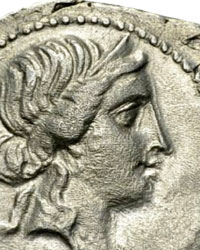
RULER: Marc Antony DATE: Patrae (?), 32-31 B.C DENOMINATION: Denarius MATERIAL: Silver, AR SIZE & WEIGHT: 18 mm, 3,1 gr OBVERSE: ANT AVG III VIR R P C, Praetorian galley REVERSE: LEG XXIII, Legionary eagle between two standards. REFERENCES: RSC 60 Comes with Certificate of Authenticity Minted in vast quantities between 32 and 31 BC to finance Mark Antony's military operations as he prepared for the final showdown with Octavian (the future Emperor Augustus). Unlike most Roman coinage of the period, the obverse (front) of this coin series typically features a galley or ship, while the reverse prominently displays a legionary eagle (Aquila) flanked by two military standards, often with the inscription "LEG" followed by the specific legion's number (from I to XXIII). This militaristic design was a direct form of propaganda, emphasizing Antony's reliance on his loyal legions and his role as a respected commander, rather than focusing on his own portrait or his controversial relationship with Cleopatra. The debased silver content of these coins, intended to stretch Antony's resources, ironically contributed to their longevity, keeping them in circulation for centuries. The final civil war of the Roman Republic, often called the War of Actium (32–30 BC), was the culmination of a decade-long struggle for supremacy between the two remaining Triumvirs: Mark Antony, ruler of the East, and Octavian, master of the West. Their initial political alliance fractured due to escalating personal and political tensions. Octavian skillfully used propaganda against Antony, focusing on his increasing association with Cleopatra VII of Egypt and the "Donations of Alexandria," which saw Roman lands granted to her and their children. Octavian illegally seized and published Antony's will, which contained politically damaging provisions—notably his desire to be buried in Alexandria—which Octavian successfully presented to the Roman people and Senate as proof of Antony's betrayal of Rome for an Eastern monarchy. The open conflict began when Octavian convinced the Roman Senate to declare war, not directly on Antony, but on Cleopatra, knowing Antony would stand by her side. The decisive moment came on September 2, 31 BC, at the Battle of Actium, a major naval engagement off the western coast of Greece. Octavian's forces, led by his general Marcus Agrippa, outmaneuvered the combined fleets of Antony and Cleopatra. Following the rout at Actium, Octavian pursued the pair to Egypt. Both Antony and Cleopatra committed suicide in 30 BC after Octavian's final victory at Alexandria. Octavian's triumph ended the Roman Republic, allowing him to consolidate all power and become the first Roman Emperor, Augustus. The War of Actium ushered in the Pax Romana and the beginning of the Imperial age.

N.º 99493658

Vendido
República Romana (Imperatorial). Marco António. Denarius moving mint  (Sem preço de reserva)

República Romana (Imperatorial). Marco António. Denarius moving mint (Sem preço de reserva)

RULER: Marc Antony
DATE: Patrae (?), 32-31 B.C
DENOMINATION: Denarius
MATERIAL: Silver, AR
SIZE & WEIGHT: 18 mm, 3,1 gr
OBVERSE: ANT AVG III VIR R P C, Praetorian galley
REVERSE: LEG XXIII, Legionary eagle between two standards.
REFERENCES: RSC 60

Comes with Certificate of Authenticity

Minted in vast quantities between 32 and 31 BC to finance Mark Antony's military operations as he prepared for the final showdown with Octavian (the future Emperor Augustus). Unlike most Roman coinage of the period, the obverse (front) of this coin series typically features a galley or ship, while the reverse prominently displays a legionary eagle (Aquila) flanked by two military standards, often with the inscription "LEG" followed by the specific legion's number (from I to XXIII). This militaristic design was a direct form of propaganda, emphasizing Antony's reliance on his loyal legions and his role as a respected commander, rather than focusing on his own portrait or his controversial relationship with Cleopatra. The debased silver content of these coins, intended to stretch Antony's resources, ironically contributed to their longevity, keeping them in circulation for centuries.

The final civil war of the Roman Republic, often called the War of Actium (32–30 BC), was the culmination of a decade-long struggle for supremacy between the two remaining Triumvirs: Mark Antony, ruler of the East, and Octavian, master of the West. Their initial political alliance fractured due to escalating personal and political tensions. Octavian skillfully used propaganda against Antony, focusing on his increasing association with Cleopatra VII of Egypt and the "Donations of Alexandria," which saw Roman lands granted to her and their children. Octavian illegally seized and published Antony's will, which contained politically damaging provisions—notably his desire to be buried in Alexandria—which Octavian successfully presented to the Roman people and Senate as proof of Antony's betrayal of Rome for an Eastern monarchy.

The open conflict began when Octavian convinced the Roman Senate to declare war, not directly on Antony, but on Cleopatra, knowing Antony would stand by her side. The decisive moment came on September 2, 31 BC, at the Battle of Actium, a major naval engagement off the western coast of Greece. Octavian's forces, led by his general Marcus Agrippa, outmaneuvered the combined fleets of Antony and Cleopatra. Following the rout at Actium, Octavian pursued the pair to Egypt. Both Antony and Cleopatra committed suicide in 30 BC after Octavian's final victory at Alexandria. Octavian's triumph ended the Roman Republic, allowing him to consolidate all power and become the first Roman Emperor, Augustus. The War of Actium ushered in the Pax Romana and the beginning of the Imperial age.

Objetos semelhantes

Para si em

Moedas antigas

Definir um alerta de pesquisa
Defina um alerta de pesquisa para ser notificado quando surgirem novos resultados.

Este objeto foi mostrado em


Como comprar na Catawiki

Saber mais sobre a nossa proteção do comprador

      1. Descubra algo especial

      Navegue por milhares de objetos especiais selecionados por especialistas. Veja as fotos, os detalhes e o valor estimado de cada objeto especial. 

      2. Faça a licitação vencedora

      Encontre algo que adora e faça a licitação vencedora. Pode acompanhar o leilão até ao fim ou deixar o nosso sistema licitar por si. Apenas tem de definir o valor máximo que está disposto a pagar. 

      3. Faça um pagamento seguro

      Pague o seu objeto especial e mantemos o seu pagamento seguro até o seu objeto chegar são e salvo. Utilizamos um sistema de pagamento confiável para processar todas as transações. 

Tem algo parecido para vender?

Quer tenha entrado agora no mundo dos leilões online ou venda a título profissional, podemos ajudá-lo a ganhar mais pelos seus objetos especiais.

Venda o seu objeto