N.º 99995377

Vendido
Frankish-Merovingian Tremissis 500-540 AD (Extremely rare)
Licitação final
€ 2.000
Há 2 dias

Frankish-Merovingian Tremissis 500-540 AD (Extremely rare)

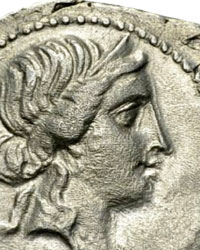
Unpublished Early Frankish (Proto-Merovingian) Tremissis , 500–540 AD. Unique and Previously Unknown Type Weight: 1,38 grams Diameter: 13-14 mm Condition: Almost in mint condition for this early "rude" struck proto-type. Minimal usage wear. Note that this early type has not to be compared with the "better" strikes of the later Merovingian/ Frankish Tremisses which appears "cleaner". The strike for this tremissis is as it should be for a non-regulated very early Archaic issue. For your consideration: it is like understanding the comparable between the early Archaic Athenian tetradrachms versus the later more stilistically minted tetradrachms. This tremissis belongs to the earliest phase of independent Frankish gold coinage, dating securely to c. 500–540 AD. Probably more likely 500-520. The coin marks a moment of transition from late Roman monetary circulation to autonomous Frankish production and demonstrates a numismatic profile that is virtually unseen in surviving material. Its combination of archaic fabric, unique iconography, and absence of standardized religious symbolism places it squarely within the proto-Merovingian minting horizon. Obverse Description A highly schematic bust facing right, executed in angular, linear strokes characteristic of early Frankish engravers. The facial features, particularly the prominent eye-pellet and linear nose, are rendered in a primitive style. Surrounding the bust is a marginal sequence of angular A-, V-, and N-like symbols. These do not represent pseudo-Latin, nor are they derived from imperial prototypes. Instead, they belong to the proto-epigraphic phase of early Germanic engraving, predating widespread literacy in minting contexts. This decorative, non-textual margin is diagnostic of the earliest autonomous Frankish issues. Reverse Description A standing proto-Victoria figure appears on the reverse, oriented right. Before her is an unprecedented radiate sun-wheel or rosette composed of a central globule with surrounding rays. This motif has no parallels in Byzantine, Merovingian, or pseudo-imperial series. Notably, the reverse lacks any form of Christian cross, a symbol that becomes nearly universal in Frankish gold coinage after c. 560. The absence of a cross confirms the coin’s very early date and positions it among the rarest transitional gold issues of post-Roman Gaul. Although a small cruciform-looking element appears beneath the radiant disc on the reverse, its form, proportions and placement differ fundamentally from the standardized cross motifs characteristic of the second half 6th and the 7th-century Merovingian coinage. The element lacks the symmetrical arms, central prominence and contextual isolation typical of cross reverses, and is more plausibly interpreted as part of a highly schematic anthropomorphic figure consistent with an early, abstracted representation of Victory rather than a deliberate Christian symbol. Rarity and Classification This specimen is confirmed by specialist, Dr. A.P of the UVL, co-working with the Dutch National Museum of Antiquities in Leiden, the Netherlands, to be a unicum: no die-match, stylistic parallel, or catalogue reference exists in RMO, NNC, Belfort, Prou, Gariel, MEC I, Depeyrot, or Grierson. Its iconographic independence and early stylistic features distinguish it from both the pseudo-imperial types of the mid-6th century and the standardized moneyer-name tremisses of the 7th century. Historical Importance The coin represents an early stage in which Frankish workshops began to break from Roman and Byzantine models. Its iconography blends late Roman symbolic vocabulary (sun-wheel) with emerging Frankish abstraction, marking a transitional moment of exceptional rarity. The piece contributes uniquely to the reconstruction of early Frankish monetary autonomy and provides evidence for an undocumented workshop, likely situated in northern Neustria (Schelde–Artois region). Dating Multiple features confirm a date of c. 500–540 AD: — Complete absence of a cross (never omitted after c. 560). — Proto-epigraphic marginal symbols. — Archaic, non-imperial bust with linear formulation. — Unique reverse type incompatible with later Merovingian systems. Numismatic Significance Early Frankish gold from this period is extremely rare, and unique types are almost unknown. This specimen occupies a critical position in the developmental sequence between late Roman gold and the standardized Merovingian system. As the only known representative of its type, it is of museum-level importance. Summary A unique and unpublished early Frankish tremissis of the highest numismatic and historical significance, providing unprecedented insight into the earliest independent gold coinage of the Merovingian world. Will be shipped fully insured only within the EU!!!

N.º 99995377

Vendido
Frankish-Merovingian Tremissis 500-540 AD (Extremely rare)

Frankish-Merovingian Tremissis 500-540 AD (Extremely rare)

Unpublished Early Frankish (Proto-Merovingian) Tremissis
, 500–540 AD. Unique and Previously Unknown Type

Weight: 1,38 grams
Diameter: 13-14 mm

Condition:
Almost in mint condition for this early "rude" struck proto-type. Minimal usage wear. Note that this early type has not to be compared with the "better" strikes of the later Merovingian/ Frankish Tremisses which appears "cleaner". The strike for this tremissis is as it should be for a non-regulated very early Archaic issue. For your consideration: it is like understanding the comparable between the early Archaic Athenian tetradrachms versus the later more stilistically minted tetradrachms.

This tremissis belongs to the earliest phase of independent Frankish gold coinage, dating securely to c. 500–540 AD. Probably more likely 500-520. The coin marks a moment of transition from late Roman monetary circulation to autonomous Frankish production and demonstrates a numismatic profile that is virtually unseen in surviving material. Its combination of archaic fabric, unique iconography, and absence of standardized religious symbolism places it squarely within the proto-Merovingian minting horizon.

Obverse Description
A highly schematic bust facing right, executed in angular, linear strokes characteristic of early Frankish engravers. The facial features, particularly the prominent eye-pellet and linear nose, are rendered in a primitive style. Surrounding the bust is a marginal sequence of angular A-, V-, and N-like symbols. These do not represent pseudo-Latin, nor are they derived from imperial prototypes. Instead, they belong to the proto-epigraphic phase of early Germanic engraving, predating widespread literacy in minting contexts. This decorative, non-textual margin is diagnostic of the earliest autonomous Frankish issues.

Reverse Description
A standing proto-Victoria figure appears on the reverse, oriented right. Before her is an unprecedented radiate sun-wheel or rosette composed of a central globule with surrounding rays. This motif has no parallels in Byzantine, Merovingian, or pseudo-imperial series. Notably, the reverse lacks any form of Christian cross, a symbol that becomes nearly universal in Frankish gold coinage after c. 560. The absence of a cross confirms the coin’s very early date and positions it among the rarest transitional gold issues of post-Roman Gaul.

Although a small cruciform-looking element appears beneath the radiant disc on the reverse, its form, proportions and placement differ fundamentally from the standardized cross motifs characteristic of the second half 6th and the 7th-century Merovingian coinage. The element lacks the symmetrical arms, central prominence and contextual isolation typical of cross reverses, and is more plausibly interpreted as part of a highly schematic anthropomorphic figure consistent with an early, abstracted representation of Victory rather than a deliberate Christian symbol.

Rarity and Classification
This specimen is confirmed by specialist, Dr. A.P of the UVL, co-working with the Dutch National Museum of Antiquities in Leiden, the Netherlands, to be a unicum: no die-match, stylistic parallel, or catalogue reference exists in RMO, NNC, Belfort, Prou, Gariel, MEC I, Depeyrot, or Grierson. Its iconographic independence and early stylistic features distinguish it from both the pseudo-imperial types of the mid-6th century and the standardized moneyer-name tremisses of the 7th century.

Historical Importance
The coin represents an early stage in which Frankish workshops began to break from Roman and Byzantine models. Its iconography blends late Roman symbolic vocabulary (sun-wheel) with emerging Frankish abstraction, marking a transitional moment of exceptional rarity. The piece contributes uniquely to the reconstruction of early Frankish monetary autonomy and provides evidence for an undocumented workshop, likely situated in northern Neustria (Schelde–Artois region).

Dating
Multiple features confirm a date of c. 500–540 AD:
— Complete absence of a cross (never omitted after c. 560).
— Proto-epigraphic marginal symbols.
— Archaic, non-imperial bust with linear formulation.
— Unique reverse type incompatible with later Merovingian systems.

Numismatic Significance
Early Frankish gold from this period is extremely rare, and unique types are almost unknown. This specimen occupies a critical position in the developmental sequence between late Roman gold and the standardized Merovingian system. As the only known representative of its type, it is of museum-level importance.

Summary
A unique and unpublished early Frankish tremissis of the highest numismatic and historical significance, providing unprecedented insight into the earliest independent gold coinage of the Merovingian world.

Will be shipped fully insured only within the EU!!!

Licitação final
€ 2.000
Carmen Vera Gutiérrez
Especialista
Estimativa  € 3.900 - € 4.300

Objetos semelhantes

Para si em

Moedas antigas

Definir um alerta de pesquisa
Defina um alerta de pesquisa para ser notificado quando surgirem novos resultados.

Este objeto foi mostrado em


Como comprar na Catawiki

Saber mais sobre a nossa proteção do comprador

      1. Descubra algo especial

      Navegue por milhares de objetos especiais selecionados por especialistas. Veja as fotos, os detalhes e o valor estimado de cada objeto especial. 

      2. Faça a licitação vencedora

      Encontre algo que adora e faça a licitação vencedora. Pode acompanhar o leilão até ao fim ou deixar o nosso sistema licitar por si. Apenas tem de definir o valor máximo que está disposto a pagar. 

      3. Faça um pagamento seguro

      Pague o seu objeto especial e mantemos o seu pagamento seguro até o seu objeto chegar são e salvo. Utilizamos um sistema de pagamento confiável para processar todas as transações. 

Tem algo parecido para vender?

Quer tenha entrado agora no mundo dos leilões online ou venda a título profissional, podemos ajudá-lo a ganhar mais pelos seus objetos especiais.

Venda o seu objeto