Mesopotamien Töpferware Fundamentstein (Ohne Mindestpreis)


02
Tage
05
Stunden
07
Minuten
06
Sekunden
Aktuelles Gebot
€ 4
Ohne Mindestpreis

Experte
Von Ruth Garrido Vila ausgewählt
Leitete das Ifergan Collection Museum, spezialisiert auf phönizische Archäologie.
Schätzung € 330 - € 400
26 andere Benutzer beobachten dieses Objekt
 Bieter 5288 Bieter 5288 | 4 € | |
|---|---|---|
 Bieter 1482 Bieter 1482 | 3 € | |
 Bieter 3729 Bieter 3729 | 2 € | |
Käuferschutz auf Catawiki
Ihre Zahlung wird von uns sicher verwahrt, bis Sie Ihr Objekt erhalten.Details ansehen
Trustpilot 4.4 | 121899 Bewertungen
Auf Trustpilot als hervorragend bewertet.
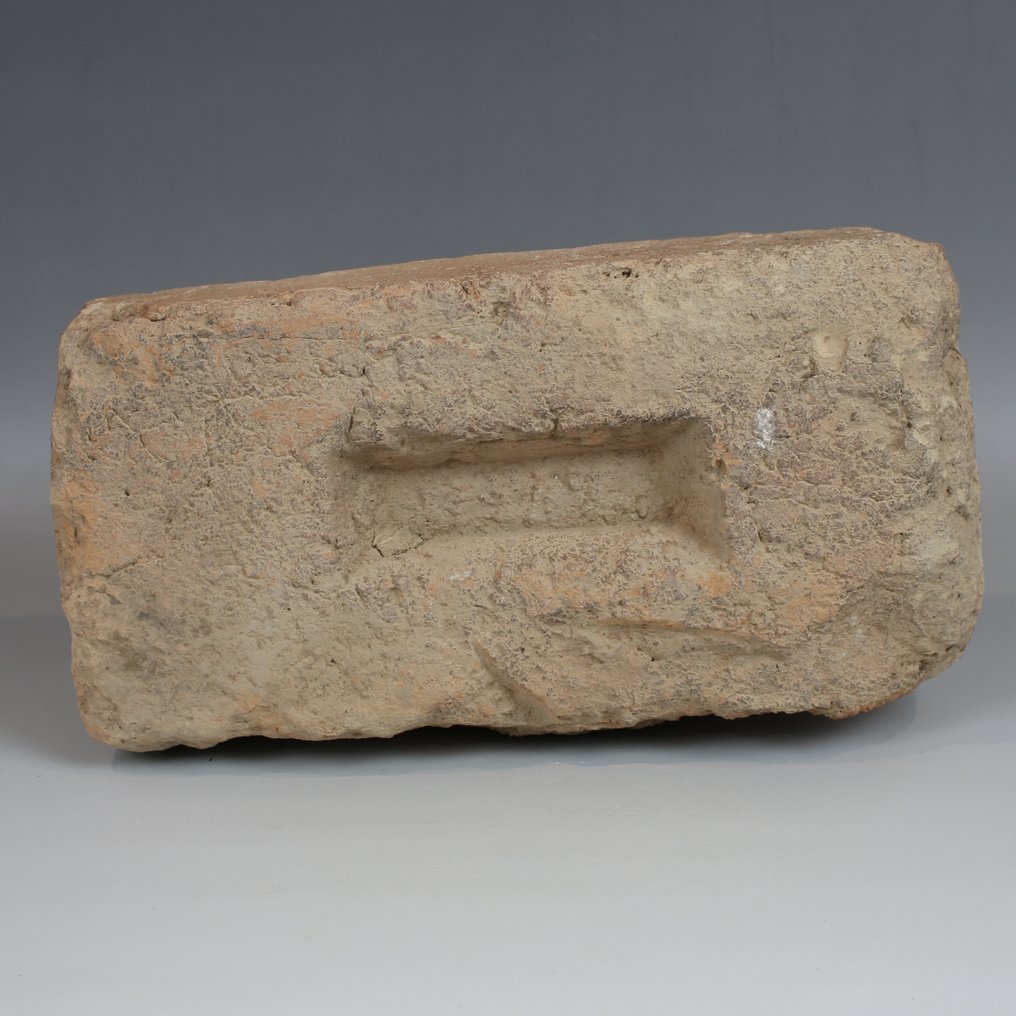
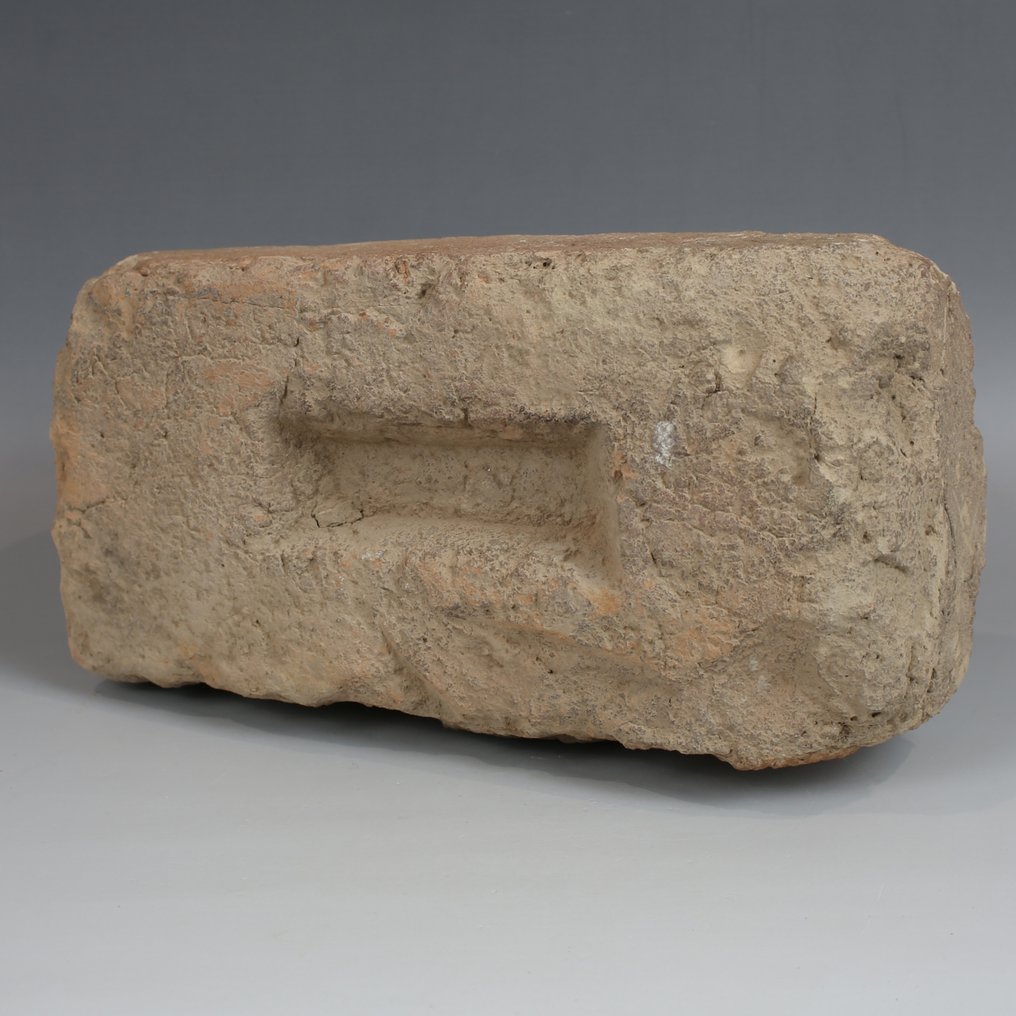
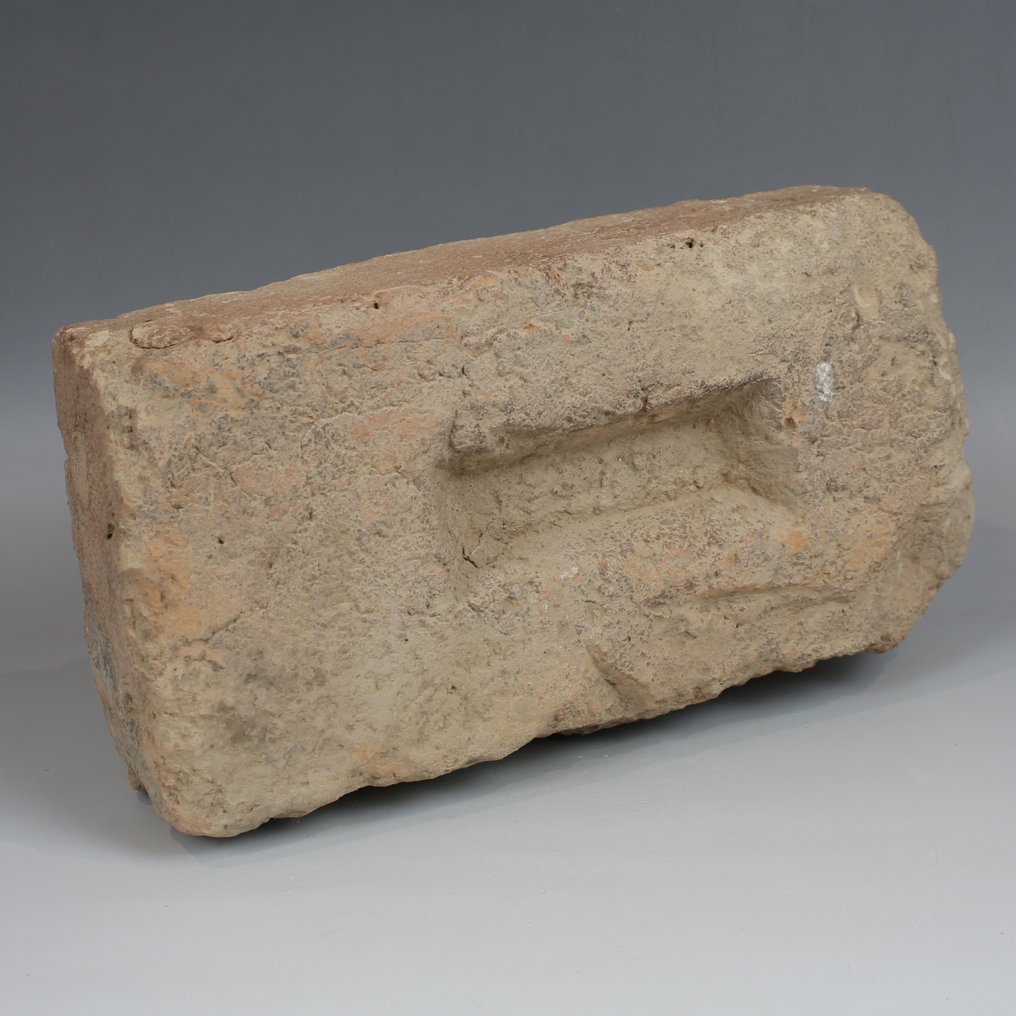
Fundamentstein aus der mesopotamischen Kultur, dat auf das 3. bis 2. Jahrtausend v. Chr. datiert, aus Ton gefertigt; Abmessungen 120 mm × 225 mm × 72 mm; guter Zustand; 2025 aus einer deutschen Privatsammlung erworben; mit Echtheitszertifikat und EU-Exportlizenz.
KI-gestützte Zusammenfassung
Vom Verkäufer bereitgestellte Beschreibung
ITEM: Foundation brick
MATERIAL: Pottery
CULTURE: Mesopotamian
PERIOD: 3rd - 2nd millenium B.C
DIMENSIONS: 120 mm x 225 mm x 72 mm
CONDITION: Good condition. Includes scanned document from Artonline (see last picture)
PROVENANCE: Ex German private collection, F.B., acquired in Artonline, France, 2022. Ex German private collection, Lux, 2019.
Comes with Certificate of Authenticity and European Union export license
If you bid outside European Union and win the item, we must request a new export license to your country and the shipment will delay between 3 - 5 weeks.
The Mesopotamian foundation brick, often found in temples and palaces, served as a crucial votive and documentary object in ancient Near Eastern construction practices. Rather than just being a structural component, these special bricks or foundation deposits were ritually placed beneath the structure's foundations—particularly at corners, doorways, or perimeters. This practice was deeply intertwined with the ideology of kingship and the divine world. By embedding inscribed bricks or figures (sometimes in clay boxes) into the earth, the king sought to secure the favor and protection of the gods for the new building and to symbolically anchor the structure to the sacred ground
What distinguishes a Mesopotamian foundation brick is the presence of an inscription, typically written in Sumerian or Akkadian cuneiform. These texts invariably record the name and titles of the ruling monarch, the name of the deity the temple was dedicated to, and details about the building project, such as the construction or restoration of the temple. For example, bricks from the Ur III period often bear the name of King Ur-Nammu, celebrating his building works and his title "King of Sumer and Akkad." These inscriptions functioned as a perpetual record of the king's piety and power, ensuring his name would be remembered by the gods and by future rulers who might uncover the deposit during subsequent building phases.
Foundation bricks were a small, but ritually significant, part of the wider Mesopotamian architectural tradition which relied heavily on brick construction, as stone was scarce in the region. Most buildings used sun-dried mud bricks, which led to a cycle of decay, leveling, and rebuilding on the same site over centuries, resulting in raised mounds known as tells. Foundation deposits—which included both inscribed bricks and figures (like foundation pegs depicting the king carrying a basket of earth)—were integral to this cycle. They connected the ruler, the structure, and the divine mandate, proclaiming that the king was obedient to the gods' architectural wishes, thus guaranteeing the community's prosperity and the building's spiritual integrity.
Der Verkäufer stellt sich vor
Ihr Antiquar bietet antike Kunst und antike Münzen. Unser Hauptziel ist es, höchste Qualität zum besten Preis anzubieten und dabei die Gesetze zum Schutz des kulturellen Erbes und die Normen des UNESCO-Weltkulturerbes zu respektieren und strikt einzuhalten. Daher stammen alle veröffentlichten Stücke aus Privatsammlungen, in denen die Provenienz überprüft werden kann, oder aus internationalen Auktionen. Allen unseren Antiquitäten und Münzen liegt ein Echtheitszertifikat bei. Wir haben ein uneingeschränktes 90-tägiges Rückgaberecht. Bei Your Antiquarian engagieren wir uns dafür, benachteiligten Gruppen zu helfen. Aus diesem Grund wird ein Teil jedes Kaufs an Wohltätigkeitsorganisationen gespendet, um Menschen in Not zu helfen.
Übersetzt mit Google ÜbersetzerITEM: Foundation brick
MATERIAL: Pottery
CULTURE: Mesopotamian
PERIOD: 3rd - 2nd millenium B.C
DIMENSIONS: 120 mm x 225 mm x 72 mm
CONDITION: Good condition. Includes scanned document from Artonline (see last picture)
PROVENANCE: Ex German private collection, F.B., acquired in Artonline, France, 2022. Ex German private collection, Lux, 2019.
Comes with Certificate of Authenticity and European Union export license
If you bid outside European Union and win the item, we must request a new export license to your country and the shipment will delay between 3 - 5 weeks.
The Mesopotamian foundation brick, often found in temples and palaces, served as a crucial votive and documentary object in ancient Near Eastern construction practices. Rather than just being a structural component, these special bricks or foundation deposits were ritually placed beneath the structure's foundations—particularly at corners, doorways, or perimeters. This practice was deeply intertwined with the ideology of kingship and the divine world. By embedding inscribed bricks or figures (sometimes in clay boxes) into the earth, the king sought to secure the favor and protection of the gods for the new building and to symbolically anchor the structure to the sacred ground
What distinguishes a Mesopotamian foundation brick is the presence of an inscription, typically written in Sumerian or Akkadian cuneiform. These texts invariably record the name and titles of the ruling monarch, the name of the deity the temple was dedicated to, and details about the building project, such as the construction or restoration of the temple. For example, bricks from the Ur III period often bear the name of King Ur-Nammu, celebrating his building works and his title "King of Sumer and Akkad." These inscriptions functioned as a perpetual record of the king's piety and power, ensuring his name would be remembered by the gods and by future rulers who might uncover the deposit during subsequent building phases.
Foundation bricks were a small, but ritually significant, part of the wider Mesopotamian architectural tradition which relied heavily on brick construction, as stone was scarce in the region. Most buildings used sun-dried mud bricks, which led to a cycle of decay, leveling, and rebuilding on the same site over centuries, resulting in raised mounds known as tells. Foundation deposits—which included both inscribed bricks and figures (like foundation pegs depicting the king carrying a basket of earth)—were integral to this cycle. They connected the ruler, the structure, and the divine mandate, proclaiming that the king was obedient to the gods' architectural wishes, thus guaranteeing the community's prosperity and the building's spiritual integrity.
Der Verkäufer stellt sich vor
Ihr Antiquar bietet antike Kunst und antike Münzen. Unser Hauptziel ist es, höchste Qualität zum besten Preis anzubieten und dabei die Gesetze zum Schutz des kulturellen Erbes und die Normen des UNESCO-Weltkulturerbes zu respektieren und strikt einzuhalten. Daher stammen alle veröffentlichten Stücke aus Privatsammlungen, in denen die Provenienz überprüft werden kann, oder aus internationalen Auktionen. Allen unseren Antiquitäten und Münzen liegt ein Echtheitszertifikat bei. Wir haben ein uneingeschränktes 90-tägiges Rückgaberecht. Bei Your Antiquarian engagieren wir uns dafür, benachteiligten Gruppen zu helfen. Aus diesem Grund wird ein Teil jedes Kaufs an Wohltätigkeitsorganisationen gespendet, um Menschen in Not zu helfen.
Übersetzt mit Google ÜbersetzerDetails
Kultur
Mesopotamien
Jahrhundert/ Zeitraum
3rd - 2nd millenium B.C
Name of object
Foundation brick
Erworben von
Privatsammlung
Jahr des Erwerbs
2025
Material
Töpferware
Erwerbsland
Deutschland
Zustand
Gut
Vorbesitzer erworben von
Galerie/Antiquitätenhändler
Vorbesitzer – Jahr des Erwerbs
2022
Vorbesitzer – Erwerbsland
Frankreich
Ich bestätige, dass ich dieses Objekt legal erworben habe und berechtigt bin, es zu verkaufen.
Ja
Verkauft von
Disclaimer
Der Verkäufer wurde von Catawiki über die Anforderungen an die Dokumentation informiert und garantiert Folgendes: - Das Objekt wurde rechtmäßig erworben. - Der Verkäufer hat das Recht, das Objekt zu verkaufen und/oder zu exportieren (sofern zutreffend). - Der Verkäufer wird die erforderlichen Herkunftsinformationen bereitstellen und die notwendigen Dokumente sowie Genehmigungen bzw. Lizenzen besorgen (soweit zutreffend und gemäß den örtlichen Gesetzen geboten). - Der Verkäufer wird den Käufer über etwaige Verzögerungen bei der Erlangung von Genehmigungen bzw. Lizenzen informieren. Mit der Abgabe eines Gebots erkennen Sie an, dass je nach Ihrem Wohnsitzland Importdokumente erforderlich sein können und die Beschaffung von Genehmigungen bzw. Lizenzen zu Verzögerungen bei der Lieferung Ihres Objekts führen kann.
Der Verkäufer wurde von Catawiki über die Anforderungen an die Dokumentation informiert und garantiert Folgendes: - Das Objekt wurde rechtmäßig erworben. - Der Verkäufer hat das Recht, das Objekt zu verkaufen und/oder zu exportieren (sofern zutreffend). - Der Verkäufer wird die erforderlichen Herkunftsinformationen bereitstellen und die notwendigen Dokumente sowie Genehmigungen bzw. Lizenzen besorgen (soweit zutreffend und gemäß den örtlichen Gesetzen geboten). - Der Verkäufer wird den Käufer über etwaige Verzögerungen bei der Erlangung von Genehmigungen bzw. Lizenzen informieren. Mit der Abgabe eines Gebots erkennen Sie an, dass je nach Ihrem Wohnsitzland Importdokumente erforderlich sein können und die Beschaffung von Genehmigungen bzw. Lizenzen zu Verzögerungen bei der Lieferung Ihres Objekts führen kann.
