Römisches Reich Irideszierendes Glas Lachrymatory (Tränenfläschchen) - 14.5 mm (Ohne Mindestpreis)


02
Tage
12
Stunden
05
Minuten
15
Sekunden
Aktuelles Gebot
€ 7
Ohne Mindestpreis

Experte
Von Peter Reynaers ausgewählt
Verfügt über fast 30 Jahre Erfahrung und moderierte mehrere Online-Kunstforschungsgruppen.
Schätzung € 230 - € 280
24 andere Benutzer beobachten dieses Objekt
 Bieter 0459 Bieter 0459 | 7 € | |
|---|---|---|
| Bieter 4071 | 6 € | |
 Bieter 4652 Bieter 4652 | 4 € | |
Käuferschutz auf Catawiki
Ihre Zahlung wird von uns sicher verwahrt, bis Sie Ihr Objekt erhalten.Details ansehen
Trustpilot 4.4 | 121798 Bewertungen
Auf Trustpilot als hervorragend bewertet.
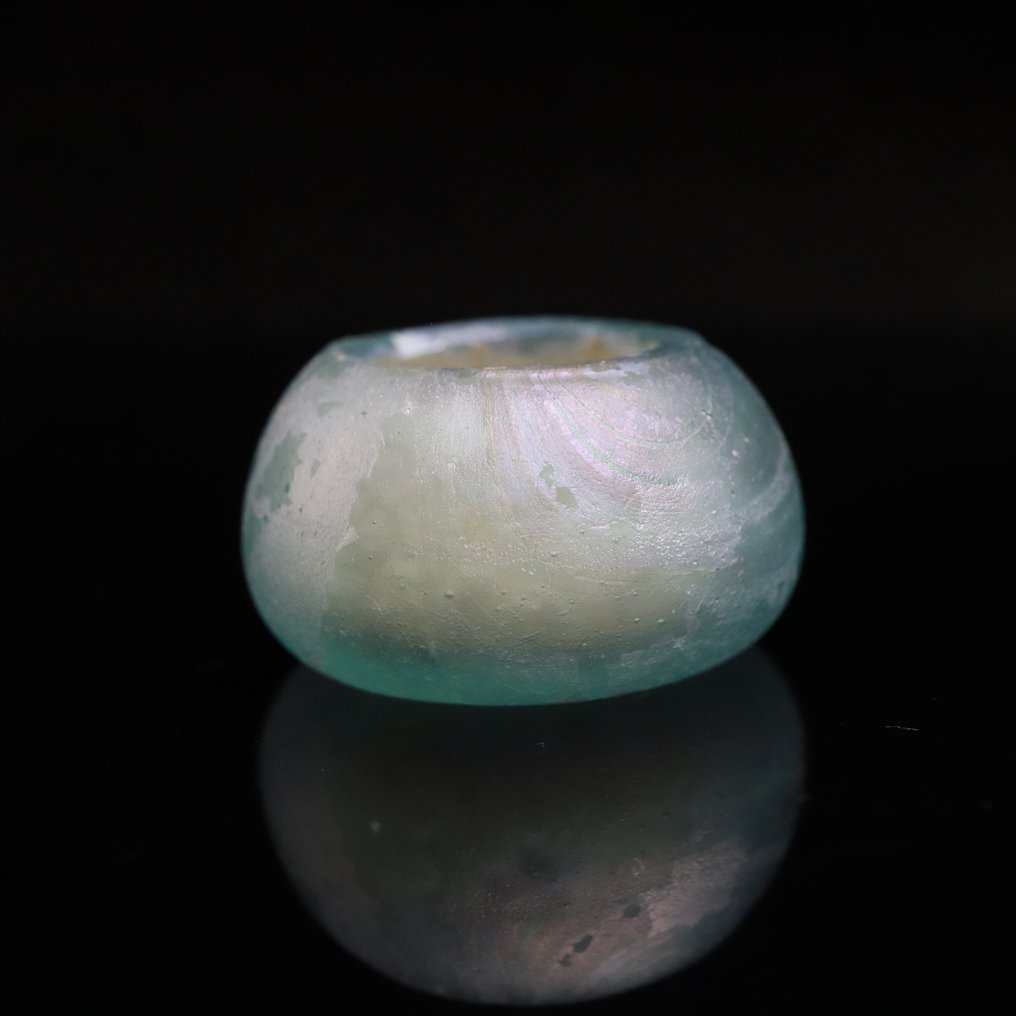
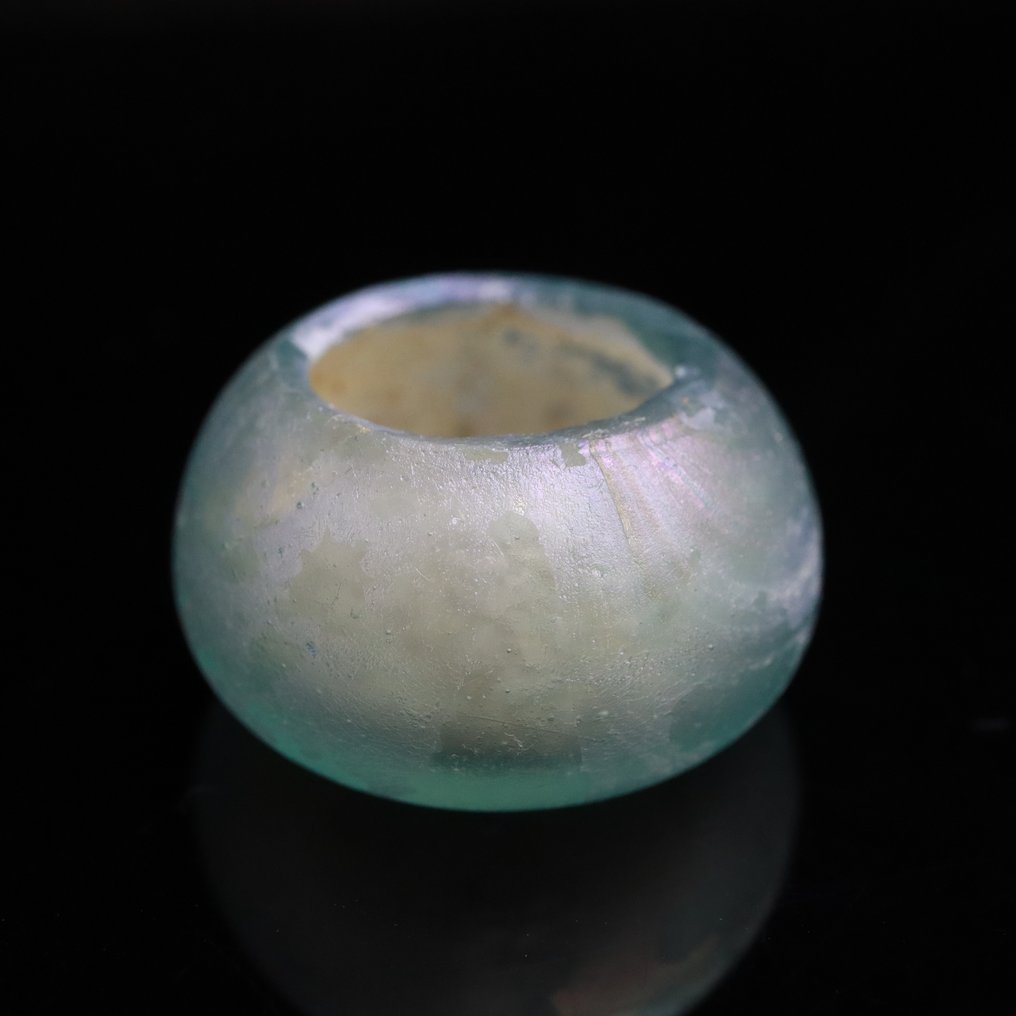
Römische Lachrymarium aus irisierendem Glas, 1. bis 4. Jahrhundert n. Chr., in hervorragendem Zustand und mit eindrucksvoller Patina.
KI-gestützte Zusammenfassung
Vom Verkäufer bereitgestellte Beschreibung
Ancient Roman Iridescent Glass Lachrymatory (Tear Vial), 1st–4th Century AD - Top Condition
Note: Sorry, no shipping outside Europe.
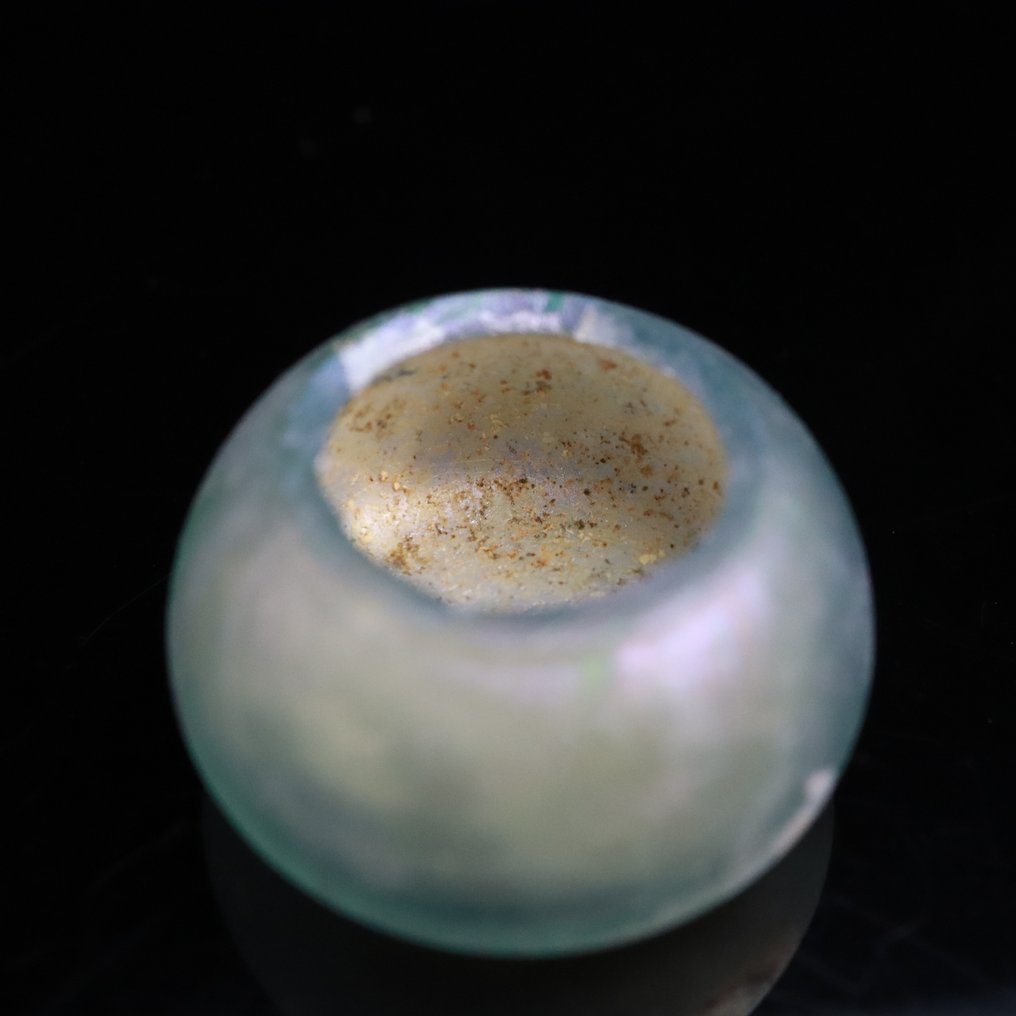
This exquisite ancient Roman glass lachrymatory, often romantically known as a "tear vial," dates to the 1st–4th century AD and features a compact, bulbous form with a wide mouth opening for easy access. Crafted from translucent blue-green glass, it exhibits a striking iridescent sheen—professionally termed "iridescence" or "weathering patina"—that produces rainbow-like colors under light, resulting from the natural delamination and oxidation of the glass surface over centuries of burial.
Symbolism & Historical Significance:
Lachrymatory Vial: These small vessels were primarily used in Roman daily life to hold perfumes, oils, unguents, or medicinal essences, rather than tears as later Victorian myths suggested. The iridescence, caused by the breakdown of silica layers in the glass due to environmental exposure (such as moisture and soil chemicals), creates a prismatic effect that enhances the object's ethereal beauty.
In Roman culture, such vials symbolized personal care, beauty rituals, and sometimes mourning or funerary practices, where they were placed in tombs as grave goods to accompany the deceased into the afterlife.
The shimmering surface, while a product of aging, mirrors the advanced Roman glassmaking techniques, including blowing and molding, which allowed for mass production of delicate items across the empire.
Connection to Ancient Rome:
Produced during the height of the Roman Empire, these lachrymatories were common in households, baths, and burial contexts from Britain to the Near East. The iridescent effect, unique to ancient glass, was not intentional but became a hallmark of authenticity, with similar examples excavated from sites like Pompeii and Roman cemeteries in the Levant, reflecting the widespread trade and innovation in glass technology influenced by earlier Hellenistic traditions.
Condition:
Intact with a beautiful iridescent patina covering the surface, and no cracks or repairs; the glass retains its structural integrity, making it a well-preserved example of Roman artistry.
Dimensions:
Outer Diameter: 26.5 mm
Height: 14.5 mm
Weight: 7.58 g
Provenance:
Previously part of a private European collection, established in the 1980s. A provenance document and declaration of legal origin are available in PDF format upon request.
Note: Please examine the provided images for a detailed impression of the vial. The photos are highly magnified to showcase the iridescent details the best way possible; otherwise, the piece is even more beautiful and attractive in person.
In top condition making it relevant for both collectors and special Christmas gift seekers
Der Verkäufer stellt sich vor
Als Geschichtsliebhaberin und Sammlerin antiker Kunst in zweiter Generation hege ich eine tiefe Leidenschaft für historische Artefakte – von prähistorischen Zivilisationen bis zum Mittelalter. Ich liebe es, mich mit anderen Geschichtsliebhabern auszutauschen und einzigartige, sorgfältig ausgewählte Stücke zu teilen. Mein Ziel ist es, bemerkenswerte Gegenstände in ein neues Zuhause zu bringen und gleichzeitig meine eigene Sammlung kontinuierlich zu erweitern. Stöbern Sie durch meine Auswahl – ich hoffe, Sie finden etwas Besonderes!
Übersetzt mit Google ÜbersetzerAncient Roman Iridescent Glass Lachrymatory (Tear Vial), 1st–4th Century AD - Top Condition
Note: Sorry, no shipping outside Europe.
This exquisite ancient Roman glass lachrymatory, often romantically known as a "tear vial," dates to the 1st–4th century AD and features a compact, bulbous form with a wide mouth opening for easy access. Crafted from translucent blue-green glass, it exhibits a striking iridescent sheen—professionally termed "iridescence" or "weathering patina"—that produces rainbow-like colors under light, resulting from the natural delamination and oxidation of the glass surface over centuries of burial.
Symbolism & Historical Significance:
Lachrymatory Vial: These small vessels were primarily used in Roman daily life to hold perfumes, oils, unguents, or medicinal essences, rather than tears as later Victorian myths suggested. The iridescence, caused by the breakdown of silica layers in the glass due to environmental exposure (such as moisture and soil chemicals), creates a prismatic effect that enhances the object's ethereal beauty.
In Roman culture, such vials symbolized personal care, beauty rituals, and sometimes mourning or funerary practices, where they were placed in tombs as grave goods to accompany the deceased into the afterlife.
The shimmering surface, while a product of aging, mirrors the advanced Roman glassmaking techniques, including blowing and molding, which allowed for mass production of delicate items across the empire.
Connection to Ancient Rome:
Produced during the height of the Roman Empire, these lachrymatories were common in households, baths, and burial contexts from Britain to the Near East. The iridescent effect, unique to ancient glass, was not intentional but became a hallmark of authenticity, with similar examples excavated from sites like Pompeii and Roman cemeteries in the Levant, reflecting the widespread trade and innovation in glass technology influenced by earlier Hellenistic traditions.
Condition:
Intact with a beautiful iridescent patina covering the surface, and no cracks or repairs; the glass retains its structural integrity, making it a well-preserved example of Roman artistry.
Dimensions:
Outer Diameter: 26.5 mm
Height: 14.5 mm
Weight: 7.58 g
Provenance:
Previously part of a private European collection, established in the 1980s. A provenance document and declaration of legal origin are available in PDF format upon request.
Note: Please examine the provided images for a detailed impression of the vial. The photos are highly magnified to showcase the iridescent details the best way possible; otherwise, the piece is even more beautiful and attractive in person.
In top condition making it relevant for both collectors and special Christmas gift seekers
Der Verkäufer stellt sich vor
Als Geschichtsliebhaberin und Sammlerin antiker Kunst in zweiter Generation hege ich eine tiefe Leidenschaft für historische Artefakte – von prähistorischen Zivilisationen bis zum Mittelalter. Ich liebe es, mich mit anderen Geschichtsliebhabern auszutauschen und einzigartige, sorgfältig ausgewählte Stücke zu teilen. Mein Ziel ist es, bemerkenswerte Gegenstände in ein neues Zuhause zu bringen und gleichzeitig meine eigene Sammlung kontinuierlich zu erweitern. Stöbern Sie durch meine Auswahl – ich hoffe, Sie finden etwas Besonderes!
Übersetzt mit Google ÜbersetzerDetails
Kultur
Römisches Reich
Jahrhundert/ Zeitraum
1st–4th Century AD
Name of object
Lachrymatory (Tear Vial)
Erworben von
Privatsammlung
Jahr des Erwerbs
2024
Material
Iridescent Glass
Erwerbsland
Dänemark
Zustand
Hervorragend
Vorbesitzer erworben von
Geerbt
Height
14,5 mm
Vorbesitzer – Jahr des Erwerbs
1980
Width
26,5 mm
Vorbesitzer – Erwerbsland
Europa
Ich bestätige, dass ich dieses Objekt legal erworben habe und berechtigt bin, es zu verkaufen.
Ja
Verkauft von
Disclaimer
Der Verkäufer wurde von Catawiki über die Anforderungen an die Dokumentation informiert und garantiert Folgendes: - Das Objekt wurde rechtmäßig erworben. - Der Verkäufer hat das Recht, das Objekt zu verkaufen und/oder zu exportieren (sofern zutreffend). - Der Verkäufer wird die erforderlichen Herkunftsinformationen bereitstellen und die notwendigen Dokumente sowie Genehmigungen bzw. Lizenzen besorgen (soweit zutreffend und gemäß den örtlichen Gesetzen geboten). - Der Verkäufer wird den Käufer über etwaige Verzögerungen bei der Erlangung von Genehmigungen bzw. Lizenzen informieren. Mit der Abgabe eines Gebots erkennen Sie an, dass je nach Ihrem Wohnsitzland Importdokumente erforderlich sein können und die Beschaffung von Genehmigungen bzw. Lizenzen zu Verzögerungen bei der Lieferung Ihres Objekts führen kann.
Der Verkäufer wurde von Catawiki über die Anforderungen an die Dokumentation informiert und garantiert Folgendes: - Das Objekt wurde rechtmäßig erworben. - Der Verkäufer hat das Recht, das Objekt zu verkaufen und/oder zu exportieren (sofern zutreffend). - Der Verkäufer wird die erforderlichen Herkunftsinformationen bereitstellen und die notwendigen Dokumente sowie Genehmigungen bzw. Lizenzen besorgen (soweit zutreffend und gemäß den örtlichen Gesetzen geboten). - Der Verkäufer wird den Käufer über etwaige Verzögerungen bei der Erlangung von Genehmigungen bzw. Lizenzen informieren. Mit der Abgabe eines Gebots erkennen Sie an, dass je nach Ihrem Wohnsitzland Importdokumente erforderlich sein können und die Beschaffung von Genehmigungen bzw. Lizenzen zu Verzögerungen bei der Lieferung Ihres Objekts führen kann.
