Römisches Reich Halskette mit römischen Glasperlen



02
Tage
02
Stunden
40
Minuten
16
Sekunden
Aktuelles Gebot
€ 68
Mindestpreis nicht erreicht

Experte
Von Peter Reynaers ausgewählt
Verfügt über fast 30 Jahre Erfahrung und moderierte mehrere Online-Kunstforschungsgruppen.
Schätzung € 250 - € 330
18 andere Benutzer beobachten dieses Objekt
 Bieter 6768 Bieter 6768 | 68 € | |
|---|---|---|
| Bieter 6768 | 2 € | |
 Bieter 7911 Bieter 7911 | 1 € |
Käuferschutz auf Catawiki
Ihre Zahlung wird von uns sicher verwahrt, bis Sie Ihr Objekt erhalten.Details ansehen
Trustpilot 4.4 | 121899 Bewertungen
Auf Trustpilot als hervorragend bewertet.
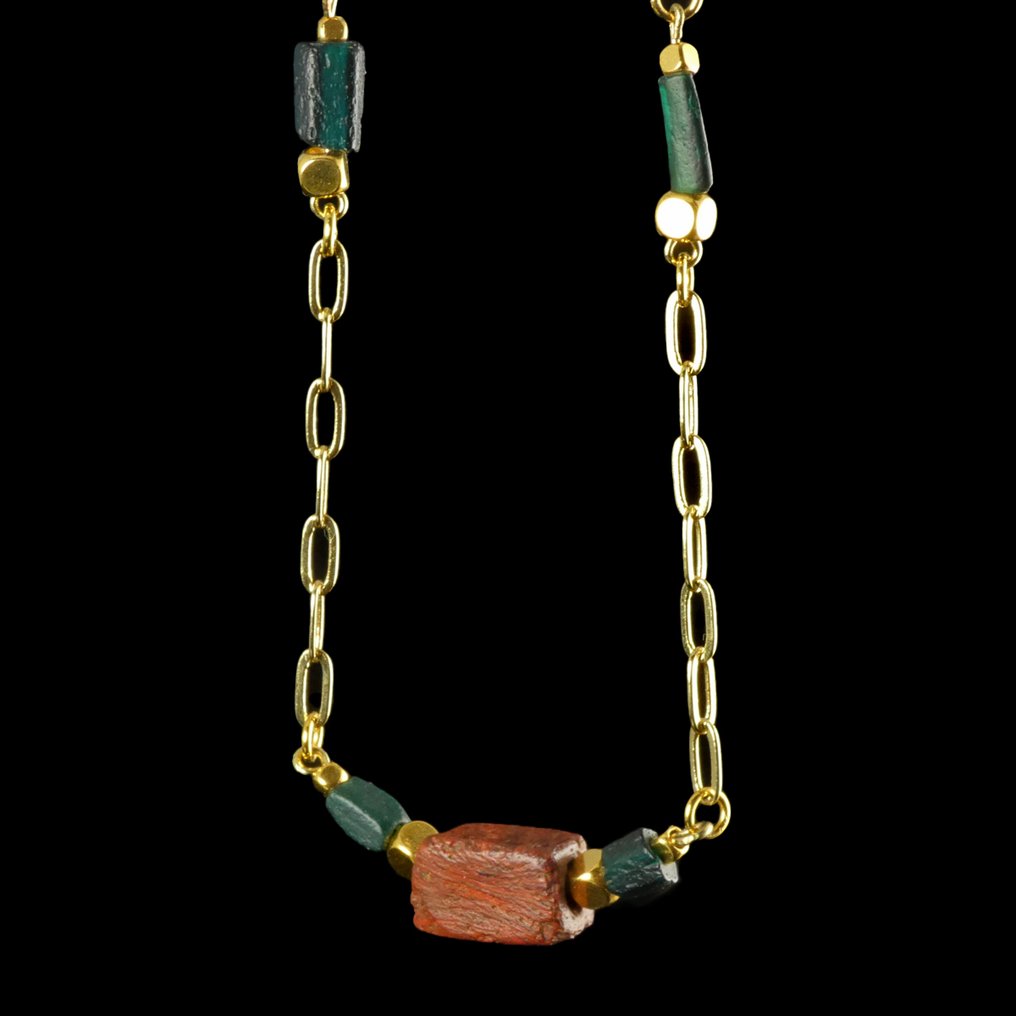
Diese antike römische Halskette aus grünem und rotem Glas ist mit modernen Verschlüssen getragenbar.
KI-gestützte Zusammenfassung
Vom Verkäufer bereitgestellte Beschreibung
Attention: due to customs regulations we can only ship inside the European Union. Please ensure you have a valid EU shipping address before placing a bid.
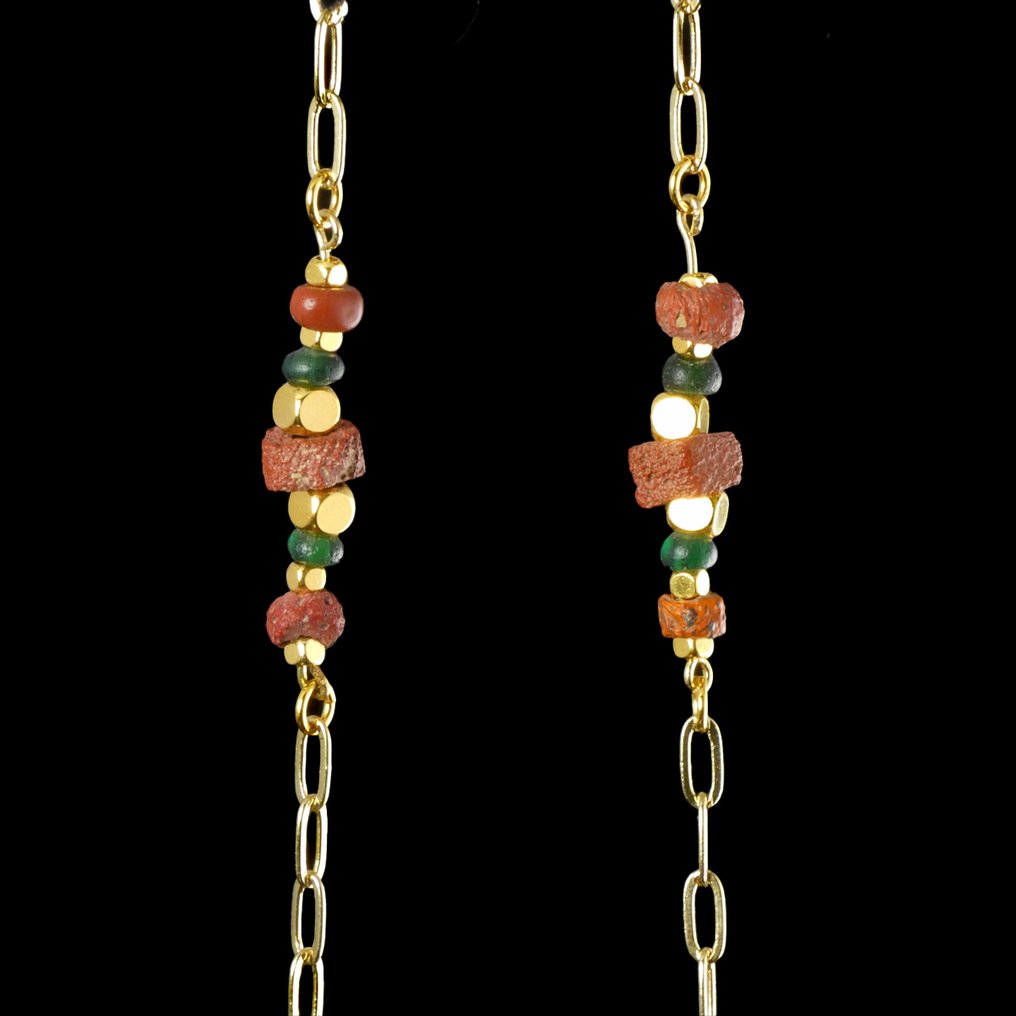
Handmade necklace with Roman green and red glass beads in a classic linked design. The ancient beads are carefully restrung with modern fittings, making them suitable for modern wear while preserving their historical charm.
The necklace will be delivered in a jewellery box, a perfect gift for any occasion.
Linking chains to craft jewellery is one of the earliest known jewellery-making techniques, appearing across various ancient cultures. The oldest known example of a chain necklace was discovered in a royal tomb in Babylonia, dating back to around 2500 BC.
Length: ± 45 cm
Diameter beads: ± 11,5 mm maximum
Condition: good condition and wearable. The ancient beads are restrung and combined with modern gold-plated spacer beads and fittings. Signs of wear consistent with age and use. See images.
Composed with beads originating from various old collections, acquired in the UK between 2016-2024.
Every ancient bead shows subtle variations and signs of age, reflecting its history and adding to the unique charm of every composition.
Certificate of Authenticity (PDF) is available upon request for lots with a hammer price of €100 or higher.
ANCIENT GLASS
Glass has always been found in nature, but the humans first created glass about 4.000 years ago. when ancient craftsmen in Mesopotamia discovered the art of mixing sand, soda and lime to make glass.
For centuries, glass was a luxury item and reserved for the upper classes.
Glassmaking centers around the Mediterranean world experimented with new techniques (casting, core-forming, mosaic glass) and with colours by adding metallic oxides (cobalt, copper, etc) to the mixture.
The Romans learned the glass-making craft after the conquest of Egypt in the 1st century BC. During the 1st century AD the glassblowing technique revolutionized the production and made it possible to produce larger quantities. By adding manganese dioxide Roman glassmakers successfully produced colourless or ‘aqua’ glass for the first time.
Roman glass became a very popular material, used for beads, glass windows, mosaic tiles, tableware pieces etc. Roman glass was traded all over the Roman Empire and far beyond to Central Africa, Scandinavia and via the Silk Route to China.
Der Verkäufer stellt sich vor
Bitte lesen Sie unsere Informationen sorgfältig durch.
Versandinformationen: Aufgrund von Versicherungsverfahren ist kombinierter Versand nur mit einer einzigen Zahlung möglich. (1 Zahlungsreferenz = 1 versichertes Paket.) Wenn Sie ein Angebot nach der Auktion annehmen und separat bezahlen, können Sendungen danach nicht manuell zusammengeführt werden. Bitte stellen Sie sicher, dass Ihre Versandadresse vollständig und korrekt ist, bevor Sie bezahlen. Änderungen nach der Zahlung werden nicht automatisch an uns weitergeleitet.
* ECHTHEITSZERTIFIKAT (COA) Für Versicherungszwecke können wir ein digitales Echtheitszertifikat (PDF) für jeden Artikel mit einem Hammerpreis von 100 Euro oder mehr bereitstellen. Das COA ist auf Anfrage innerhalb von 20 Tagen nach Auktionsdatum erhältlich. Anweisungen werden beim Versand Ihrer Bestellung mitgeteilt. Zertifikate sind nicht im Paket enthalten.
Versicherungen & Ansprüche
Alle unsere Pakete sind mit externer Versicherung versichert. Für diese Versicherung sind folgende Voraussetzungen erforderlich:
Überwachen Sie das Online-Tracking und benachrichtigen Sie über Verzögerungen innerhalb von 14 Tagen nach Versanddatum.
Im Schadensfall: Vermerken Sie eine Reservierung auf dem Lieferschein, bewahren Sie die Verpackung auf und senden Sie uns Fotos des Schadens.
* WICHTIGE KÄUFER AUßerHALB DER EU: Wir können nicht in Länder außerhalb der Europäischen Union versenden. Bitte stellen Sie sicher, dass Sie eine EU-Versandadresse haben, bevor Sie bieten. Es können keine Ausnahmen gemacht werden. Die Schweiz, Norwegen und das Vereinigte Königreich sind kein Teil der EU.
* Dokumentationshinweis: Frühere Rechnungen und Import-/Exportdokumente werden nicht mit Kunden geteilt.
Vielen Dank für Ihr Interesse und viel Glück bei Ihren Geboten!
Übersetzt mit Google ÜbersetzerAttention: due to customs regulations we can only ship inside the European Union. Please ensure you have a valid EU shipping address before placing a bid.
Handmade necklace with Roman green and red glass beads in a classic linked design. The ancient beads are carefully restrung with modern fittings, making them suitable for modern wear while preserving their historical charm.
The necklace will be delivered in a jewellery box, a perfect gift for any occasion.
Linking chains to craft jewellery is one of the earliest known jewellery-making techniques, appearing across various ancient cultures. The oldest known example of a chain necklace was discovered in a royal tomb in Babylonia, dating back to around 2500 BC.
Length: ± 45 cm
Diameter beads: ± 11,5 mm maximum
Condition: good condition and wearable. The ancient beads are restrung and combined with modern gold-plated spacer beads and fittings. Signs of wear consistent with age and use. See images.
Composed with beads originating from various old collections, acquired in the UK between 2016-2024.
Every ancient bead shows subtle variations and signs of age, reflecting its history and adding to the unique charm of every composition.
Certificate of Authenticity (PDF) is available upon request for lots with a hammer price of €100 or higher.
ANCIENT GLASS
Glass has always been found in nature, but the humans first created glass about 4.000 years ago. when ancient craftsmen in Mesopotamia discovered the art of mixing sand, soda and lime to make glass.
For centuries, glass was a luxury item and reserved for the upper classes.
Glassmaking centers around the Mediterranean world experimented with new techniques (casting, core-forming, mosaic glass) and with colours by adding metallic oxides (cobalt, copper, etc) to the mixture.
The Romans learned the glass-making craft after the conquest of Egypt in the 1st century BC. During the 1st century AD the glassblowing technique revolutionized the production and made it possible to produce larger quantities. By adding manganese dioxide Roman glassmakers successfully produced colourless or ‘aqua’ glass for the first time.
Roman glass became a very popular material, used for beads, glass windows, mosaic tiles, tableware pieces etc. Roman glass was traded all over the Roman Empire and far beyond to Central Africa, Scandinavia and via the Silk Route to China.
Der Verkäufer stellt sich vor
Bitte lesen Sie unsere Informationen sorgfältig durch.
Versandinformationen: Aufgrund von Versicherungsverfahren ist kombinierter Versand nur mit einer einzigen Zahlung möglich. (1 Zahlungsreferenz = 1 versichertes Paket.) Wenn Sie ein Angebot nach der Auktion annehmen und separat bezahlen, können Sendungen danach nicht manuell zusammengeführt werden. Bitte stellen Sie sicher, dass Ihre Versandadresse vollständig und korrekt ist, bevor Sie bezahlen. Änderungen nach der Zahlung werden nicht automatisch an uns weitergeleitet.
* ECHTHEITSZERTIFIKAT (COA) Für Versicherungszwecke können wir ein digitales Echtheitszertifikat (PDF) für jeden Artikel mit einem Hammerpreis von 100 Euro oder mehr bereitstellen. Das COA ist auf Anfrage innerhalb von 20 Tagen nach Auktionsdatum erhältlich. Anweisungen werden beim Versand Ihrer Bestellung mitgeteilt. Zertifikate sind nicht im Paket enthalten.
Versicherungen & Ansprüche
Alle unsere Pakete sind mit externer Versicherung versichert. Für diese Versicherung sind folgende Voraussetzungen erforderlich:
Überwachen Sie das Online-Tracking und benachrichtigen Sie über Verzögerungen innerhalb von 14 Tagen nach Versanddatum.
Im Schadensfall: Vermerken Sie eine Reservierung auf dem Lieferschein, bewahren Sie die Verpackung auf und senden Sie uns Fotos des Schadens.
* WICHTIGE KÄUFER AUßerHALB DER EU: Wir können nicht in Länder außerhalb der Europäischen Union versenden. Bitte stellen Sie sicher, dass Sie eine EU-Versandadresse haben, bevor Sie bieten. Es können keine Ausnahmen gemacht werden. Die Schweiz, Norwegen und das Vereinigte Königreich sind kein Teil der EU.
* Dokumentationshinweis: Frühere Rechnungen und Import-/Exportdokumente werden nicht mit Kunden geteilt.
Vielen Dank für Ihr Interesse und viel Glück bei Ihren Geboten!
Übersetzt mit Google ÜbersetzerDetails
Kultur
Römisches Reich
Jahrhundert/ Zeitraum
1st - 3rd century AD
Name of object
Necklace with Roman glass beads
Erworben von
Galerie/Antiquitätenhändler
Jahr des Erwerbs
2016
Erwerbsland
Vereinigtes Königreich
Zustand
Gut
Vorbesitzer erworben von
Galerie/Antiquitätenhändler
Vorbesitzer – Jahr des Erwerbs
2016
Vorbesitzer – Erwerbsland
Vereinigtes Königreich
Ich bestätige, dass ich dieses Objekt legal erworben habe und berechtigt bin, es zu verkaufen.
Ja
Verkauft von
Disclaimer
Der Verkäufer wurde von Catawiki über die Anforderungen an die Dokumentation informiert und garantiert Folgendes: - Das Objekt wurde rechtmäßig erworben. - Der Verkäufer hat das Recht, das Objekt zu verkaufen und/oder zu exportieren (sofern zutreffend). - Der Verkäufer wird die erforderlichen Herkunftsinformationen bereitstellen und die notwendigen Dokumente sowie Genehmigungen bzw. Lizenzen besorgen (soweit zutreffend und gemäß den örtlichen Gesetzen geboten). - Der Verkäufer wird den Käufer über etwaige Verzögerungen bei der Erlangung von Genehmigungen bzw. Lizenzen informieren. Mit der Abgabe eines Gebots erkennen Sie an, dass je nach Ihrem Wohnsitzland Importdokumente erforderlich sein können und die Beschaffung von Genehmigungen bzw. Lizenzen zu Verzögerungen bei der Lieferung Ihres Objekts führen kann.
Der Verkäufer wurde von Catawiki über die Anforderungen an die Dokumentation informiert und garantiert Folgendes: - Das Objekt wurde rechtmäßig erworben. - Der Verkäufer hat das Recht, das Objekt zu verkaufen und/oder zu exportieren (sofern zutreffend). - Der Verkäufer wird die erforderlichen Herkunftsinformationen bereitstellen und die notwendigen Dokumente sowie Genehmigungen bzw. Lizenzen besorgen (soweit zutreffend und gemäß den örtlichen Gesetzen geboten). - Der Verkäufer wird den Käufer über etwaige Verzögerungen bei der Erlangung von Genehmigungen bzw. Lizenzen informieren. Mit der Abgabe eines Gebots erkennen Sie an, dass je nach Ihrem Wohnsitzland Importdokumente erforderlich sein können und die Beschaffung von Genehmigungen bzw. Lizenzen zu Verzögerungen bei der Lieferung Ihres Objekts führen kann.
