maismenos - Abril Mágoas Mil AP


04
days
18
hours
36
minutes
15
seconds
Current bid
€ 50
Reserve price not met

Expert
Selected by Egidio Emiliano Bianco
Holds a bachelor’s degree in art history and a master’s degree in arts and cultural management.
Gallery Estimate € 800 - € 1,000
10 other people are watching this object
 Bidder 1431 Bidder 1431 | €50 | |
|---|---|---|
| Bidder 1431 | €40 | |
| Bidder 1431 | €25 | |
Catawiki Buyer Protection
Your payment’s safe with us until you receive your object.View details
Trustpilot 4.4 | 123077 reviews
Rated Excellent on Trustpilot.
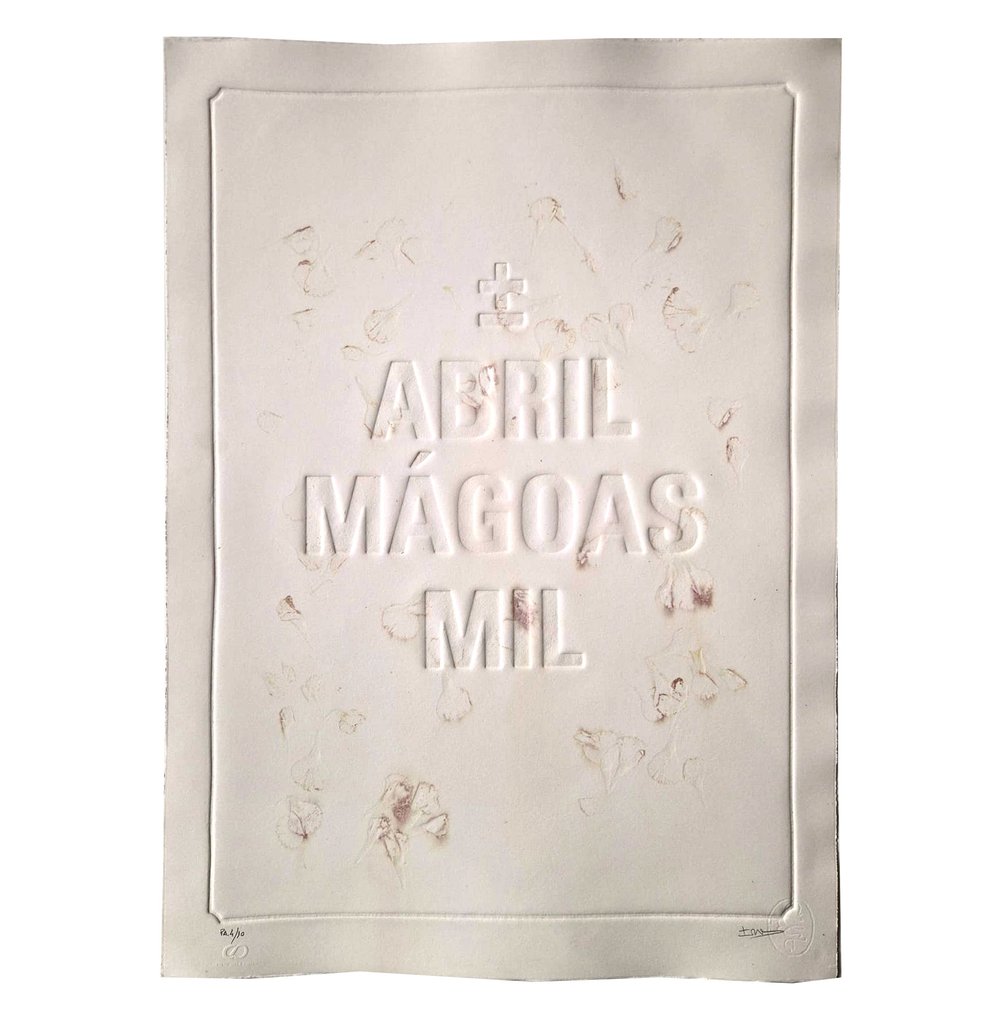
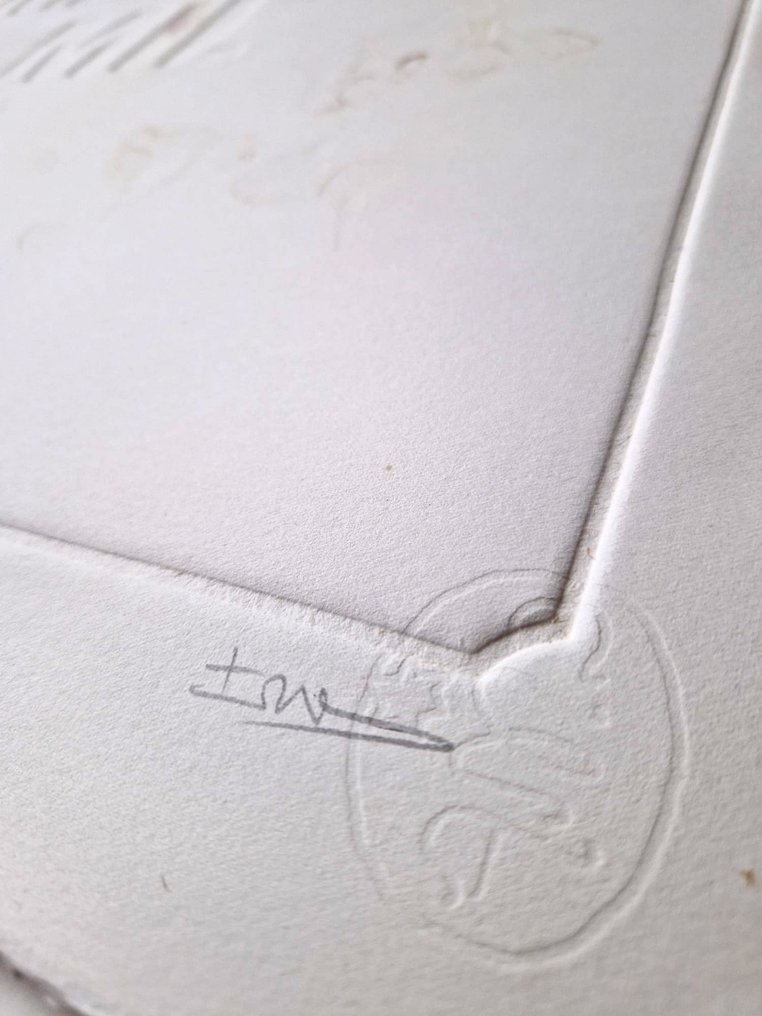
Artist: maismenos; Title: Abril Mágoas Mil AP, a hand-signed low-relief gravure of 77 × 56 cm, created in 2024 on Fabriano Tiepolo 290 g paper, an edition of 50 copies, in excellent condition, originated from Portugal and sold directly by the artist, with an artist’s certificate.
AI-assisted summary
Description from the seller
This woodcut print is a very special edition in celebration of the 50th anniversary of the Carnation Revolution in Portugal, created in collaboration with CPS - Portuguese Screen Printing Center.
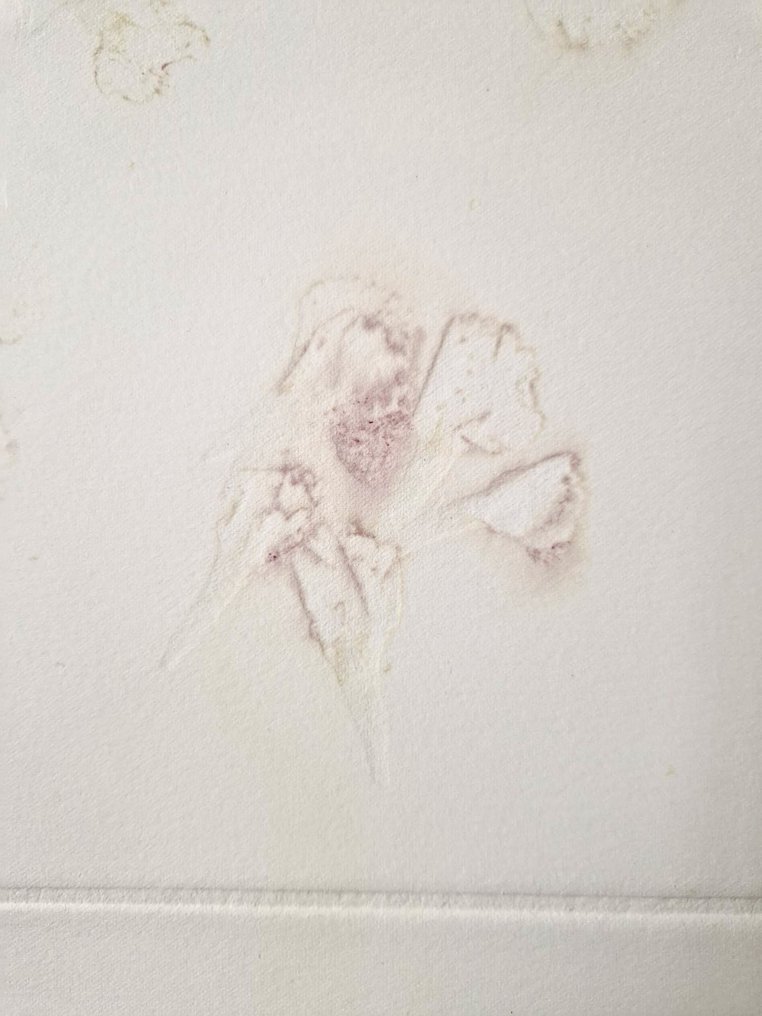
It is part of a limited edition of 50 copies: one for each year of the revolution. For each copy, a carnation and its leaves were stamped onto the paper, making each copy unique and different from all the others. It was made without ink, using only embossing, on Fabriano Tiepolo 290g paper.
The woodcut is in excellent condition and will be shipped with an artist’s certificate inside a rigid cardboard tube.
The first photo is indicative; this specific impression is from the second photo.
This year we celebrate five decades of the Carnation Revolution. Fifty years later, there is still much April to fulfill for a large part of the population, such as the right to decent housing, quality healthcare, and work with a fair salary. The achievements of the Revolution seem increasingly distant and are celebrated with the presence of far-right forces in the Assembly of the Republic, with as many deputies as years of Freedom from the dictatorship.
On the eve of April 25, 2024, artist Miguel Januário went to Largo do Carmo — the most symbolic site of the Revolution — and placed, without authorization, a marble plaque on the facade of the Quartel do Carmo, which read 'April Sorrows Thousand, 1974-2024,' conveying a mixture of celebration and homage, desolation and hope, beginning and end.
As we become accustomed to your intervention project MaisMenos, it not only leaves us with a duality of interpretations but also, in a compelling way, points to an apparently inevitable wound.
Development
After several days observing the 'Quartel do Carmo', on one side to understand the guards' movements and on the other to understand the support where the plaque would be placed, the artist took the piece to Carmo on the Saturday before April 25, specifically on April 20 during the morning. After some waiting, as there were many guards constantly entering and leaving, and also because many groups of tourists passed by (which ended up helping to camouflage the action), Miguel Januário, along with two people filming the intervention, went straight to the main door of the 'Quartel' and, without the guards noticing, glued the marble plaque with the nails to the building's facade. After about a minute, one of the guards came out, saw the plaque, and detained the artist, as well as one of the people filming, who had to delete the footage (the other was not seen, so there is a video and photos). Miguel Januário was identified, and the plaque was removed from the wall and kept inside the quarter. The officer responsible for the day was called, and a conversation about the intervention's purpose began. The artist explained his motivations and was questioned about doing something without authorization in an Army building, to which he replied that it was part of his artistic process. Miguel Januário proposed offering the plaque to the Guard and the Carmo Museum, which is inside the quarter, but to do so, he had to write to the Guard Command explaining the action and the offer. The command simply responded that the retained plaque could be collected by the artist, which happened on April 24 by someone close to him. On that day, when this person went to the Quarter to retrieve the piece, a ceremony honoring the 50 years of the Revolution was taking place, and coincidentally, the President of the Republic was about to inaugurate a commemorative plaque exactly where the piece had been previously placed.
Out of curiosity:
The guard kept the plate until it was lifted, still with the nails in their respective cups.
The dish was stuck with a lot of double-sided tape, which made it difficult for the guard on duty on the 24th to remove it from the table where it was placed.
- The artist posted the action video that same morning, and some of the guards mentioned to the person who collected it that they had already watched it on the Instagram of the project maismenos (see the link https://www.instagram.com/p/C6Iobvforle/?img_index=1).
On the 20th, a few minutes after the action, another ceremony honoring Salgueiro Maia took place, with some April Captains, such as Vasco Lourenço, and Salgueiro Maia's wife. The artist sang 'Grândola' with this group right after being released! The timing was perfect, as it would have been impossible to carry out the action while it was happening, because this ceremony was observed by a large number of guards in front of the 'Quartel do Carmo'.
Miguel Januário is a Portuguese artist born in 1981. He holds a degree in Communication Design and is a PhD candidate in Design at FBAUP. He was a collaborator at the cultural intervention space Maus Hábitos and served as artistic director of Ivity Brand Corp. Currently, he is Head of Art for Sustainability at CEiiA. He is a member of the PCP. He is the author of '±MaisMenos±', an intervention project that has become a national and international reference in urban art. He is represented by the Underdogs gallery in Lisbon. Additionally, he is the creator of KissMyWalls, a project with a strong urban component related to graffiti, advertising, writing, and intervention, involving several artists – Caos, Mr. Death, Naif, among others – each with their own visual identity and aesthetic. He has exhibited and/or collaborated with internationally renowned artists such as Vhils, Shepard Fairey (Obey), Futura, Felipe Pantone, Barry McGee, Swoon, AddFuel, Wasted Rita, Icy and Sot, Bordalo II, Mosaik, Ram, Gonçalo Mar, Nomen, among many others.
He has been producing intriguing and innovative works both indoors and outdoors, across a variety of media—from video to sculptural installations, from painting to performance. In addition to numerous illegal public art interventions in various countries, the project has also been showcased in solo and group exhibitions in various institutional contexts, notably at Galeria Vera Cortês (Lisbon, 2010), MACE – Museu de Arte Contemporânea de Elvas (Elvas, 2011, 2014), Galeria Underdogs (Lisbon, 2013, 2014, 2015, 2021), Caixa Cultural (Rio de Janeiro, São Paulo, and Brasília, 2014), Museu do Côa (Vila Nova de Foz Côa, 2015), Centro de Arte Contemporânea Graça Morais (Bragança, 2015), MUDE–Museu do Design e da Moda (Lisbon, 2016), Museu José Malhoa (Caldas da Rainha, 2016), MACRO–Museu d’Arte Contemporanea di Roma (Rome, 2016); Cultura (Guimarães, 2012), La Tour Paris 13 (Paris, 2013), Wool Festival (2014), Esporo (Proença-a-Nova, 2022), Nuart Festival (Stavanger, 2014, 2017), TrashPlant Festival (Tenerife, 2018), Roskilde Festival (Roskilde, 2018), Forgotten Project (Rome, 2016), Festival Iminente (2015, 2016, 2017, 2018, 2019, 2020, 2022), Emergency Iminente Festival (2020), Iminente Festival Rio de Janeiro (2019), Iminente Festival London (2017), Iminente Festival Marseille (2022), Alter Ego Macau (2018), Mulheres Saramaguianas with Centro Português de Serigrafia and Fundação José Saramago (2022), Esporo (2022), NEBFest Brussels (2022), Cáceres Abierto (2023). ±MaisMenos± was also the theme of two TED talks, at TEDxLuanda (Luanda, 2014) and TEDxPorto (Porto, 2015), along with other public and academic lectures.
This woodcut print is a very special edition in celebration of the 50th anniversary of the Carnation Revolution in Portugal, created in collaboration with CPS - Portuguese Screen Printing Center.
It is part of a limited edition of 50 copies: one for each year of the revolution. For each copy, a carnation and its leaves were stamped onto the paper, making each copy unique and different from all the others. It was made without ink, using only embossing, on Fabriano Tiepolo 290g paper.
The woodcut is in excellent condition and will be shipped with an artist’s certificate inside a rigid cardboard tube.
The first photo is indicative; this specific impression is from the second photo.
This year we celebrate five decades of the Carnation Revolution. Fifty years later, there is still much April to fulfill for a large part of the population, such as the right to decent housing, quality healthcare, and work with a fair salary. The achievements of the Revolution seem increasingly distant and are celebrated with the presence of far-right forces in the Assembly of the Republic, with as many deputies as years of Freedom from the dictatorship.
On the eve of April 25, 2024, artist Miguel Januário went to Largo do Carmo — the most symbolic site of the Revolution — and placed, without authorization, a marble plaque on the facade of the Quartel do Carmo, which read 'April Sorrows Thousand, 1974-2024,' conveying a mixture of celebration and homage, desolation and hope, beginning and end.
As we become accustomed to your intervention project MaisMenos, it not only leaves us with a duality of interpretations but also, in a compelling way, points to an apparently inevitable wound.
Development
After several days observing the 'Quartel do Carmo', on one side to understand the guards' movements and on the other to understand the support where the plaque would be placed, the artist took the piece to Carmo on the Saturday before April 25, specifically on April 20 during the morning. After some waiting, as there were many guards constantly entering and leaving, and also because many groups of tourists passed by (which ended up helping to camouflage the action), Miguel Januário, along with two people filming the intervention, went straight to the main door of the 'Quartel' and, without the guards noticing, glued the marble plaque with the nails to the building's facade. After about a minute, one of the guards came out, saw the plaque, and detained the artist, as well as one of the people filming, who had to delete the footage (the other was not seen, so there is a video and photos). Miguel Januário was identified, and the plaque was removed from the wall and kept inside the quarter. The officer responsible for the day was called, and a conversation about the intervention's purpose began. The artist explained his motivations and was questioned about doing something without authorization in an Army building, to which he replied that it was part of his artistic process. Miguel Januário proposed offering the plaque to the Guard and the Carmo Museum, which is inside the quarter, but to do so, he had to write to the Guard Command explaining the action and the offer. The command simply responded that the retained plaque could be collected by the artist, which happened on April 24 by someone close to him. On that day, when this person went to the Quarter to retrieve the piece, a ceremony honoring the 50 years of the Revolution was taking place, and coincidentally, the President of the Republic was about to inaugurate a commemorative plaque exactly where the piece had been previously placed.
Out of curiosity:
The guard kept the plate until it was lifted, still with the nails in their respective cups.
The dish was stuck with a lot of double-sided tape, which made it difficult for the guard on duty on the 24th to remove it from the table where it was placed.
- The artist posted the action video that same morning, and some of the guards mentioned to the person who collected it that they had already watched it on the Instagram of the project maismenos (see the link https://www.instagram.com/p/C6Iobvforle/?img_index=1).
On the 20th, a few minutes after the action, another ceremony honoring Salgueiro Maia took place, with some April Captains, such as Vasco Lourenço, and Salgueiro Maia's wife. The artist sang 'Grândola' with this group right after being released! The timing was perfect, as it would have been impossible to carry out the action while it was happening, because this ceremony was observed by a large number of guards in front of the 'Quartel do Carmo'.
Miguel Januário is a Portuguese artist born in 1981. He holds a degree in Communication Design and is a PhD candidate in Design at FBAUP. He was a collaborator at the cultural intervention space Maus Hábitos and served as artistic director of Ivity Brand Corp. Currently, he is Head of Art for Sustainability at CEiiA. He is a member of the PCP. He is the author of '±MaisMenos±', an intervention project that has become a national and international reference in urban art. He is represented by the Underdogs gallery in Lisbon. Additionally, he is the creator of KissMyWalls, a project with a strong urban component related to graffiti, advertising, writing, and intervention, involving several artists – Caos, Mr. Death, Naif, among others – each with their own visual identity and aesthetic. He has exhibited and/or collaborated with internationally renowned artists such as Vhils, Shepard Fairey (Obey), Futura, Felipe Pantone, Barry McGee, Swoon, AddFuel, Wasted Rita, Icy and Sot, Bordalo II, Mosaik, Ram, Gonçalo Mar, Nomen, among many others.
He has been producing intriguing and innovative works both indoors and outdoors, across a variety of media—from video to sculptural installations, from painting to performance. In addition to numerous illegal public art interventions in various countries, the project has also been showcased in solo and group exhibitions in various institutional contexts, notably at Galeria Vera Cortês (Lisbon, 2010), MACE – Museu de Arte Contemporânea de Elvas (Elvas, 2011, 2014), Galeria Underdogs (Lisbon, 2013, 2014, 2015, 2021), Caixa Cultural (Rio de Janeiro, São Paulo, and Brasília, 2014), Museu do Côa (Vila Nova de Foz Côa, 2015), Centro de Arte Contemporânea Graça Morais (Bragança, 2015), MUDE–Museu do Design e da Moda (Lisbon, 2016), Museu José Malhoa (Caldas da Rainha, 2016), MACRO–Museu d’Arte Contemporanea di Roma (Rome, 2016); Cultura (Guimarães, 2012), La Tour Paris 13 (Paris, 2013), Wool Festival (2014), Esporo (Proença-a-Nova, 2022), Nuart Festival (Stavanger, 2014, 2017), TrashPlant Festival (Tenerife, 2018), Roskilde Festival (Roskilde, 2018), Forgotten Project (Rome, 2016), Festival Iminente (2015, 2016, 2017, 2018, 2019, 2020, 2022), Emergency Iminente Festival (2020), Iminente Festival Rio de Janeiro (2019), Iminente Festival London (2017), Iminente Festival Marseille (2022), Alter Ego Macau (2018), Mulheres Saramaguianas with Centro Português de Serigrafia and Fundação José Saramago (2022), Esporo (2022), NEBFest Brussels (2022), Cáceres Abierto (2023). ±MaisMenos± was also the theme of two TED talks, at TEDxLuanda (Luanda, 2014) and TEDxPorto (Porto, 2015), along with other public and academic lectures.
Details
Artist
maismenos
Sold by
Direct from the artist
Edition
Limited edition
Title of artwork
Abril Mágoas Mil AP
Technique
Engraving
Signature
Hand signed
Country of Origin
Portugal
Year
2024
Condition
Excellent condition
Height
77 cm
Width
56 cm
Style
Street art
Period
2020+
Sold with frame
No
Sold by