Emil Rau (1858-1937), After - Loving couple - NO RESERVE


01
day
13
hours
19
minutes
22
seconds

17 other people are watching this object
 Bidder 0677 Bidder 0677 | €55 | |
|---|---|---|
 Bidder 2960 Bidder 2960 | €50 | |
| Bidder 0677 | €45 | |
Catawiki Buyer Protection
Your payment’s safe with us until you receive your object.View details
Trustpilot 4.4 | 123113 reviews
Rated Excellent on Trustpilot.
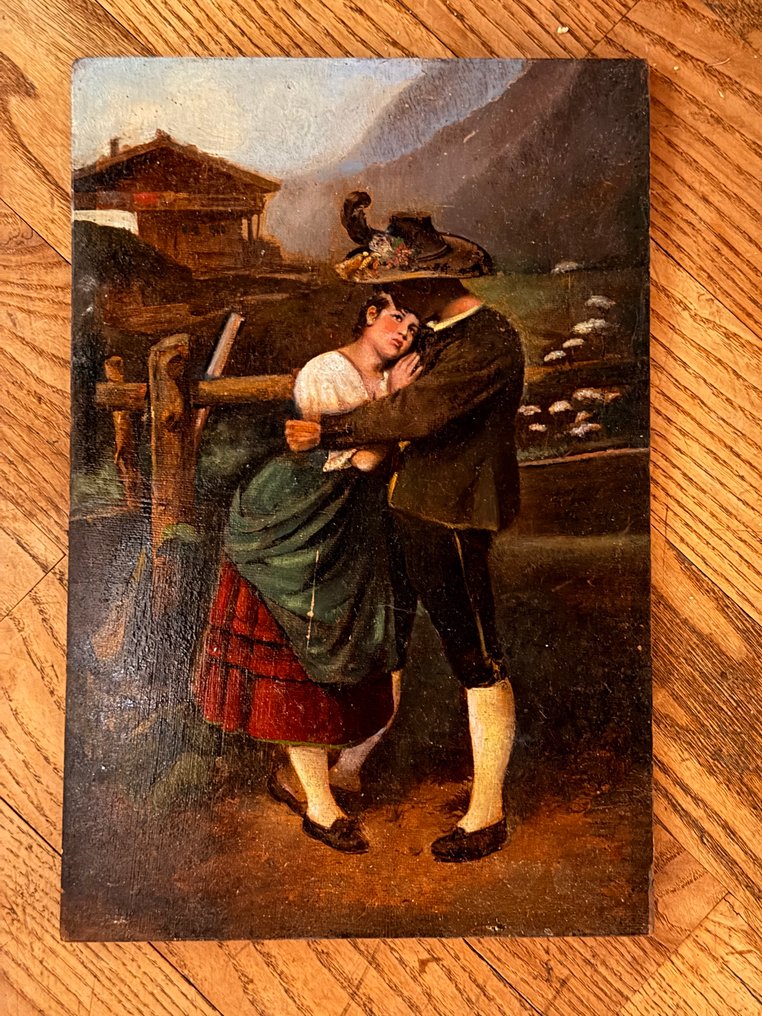
Oil painting on a wood panel (26.6 × 17.5 cm), 1895, Austria, attributed to the circle of Emil Rau, titled 'Loving couple'.
AI-assisted summary
Description from the seller
Title
In the service of love – romantic genre scene of an Alpine couple in traditional attire.
Object
Oil painting on wood panel, approximately 26.6cm × 17.5cm × 0.55cm. Alpine region, Upper Bavaria / Austria. Dating: circa 1895–1900. Attributed to the circle of Emil Rau (1858–1937). Unsigned.
Representation
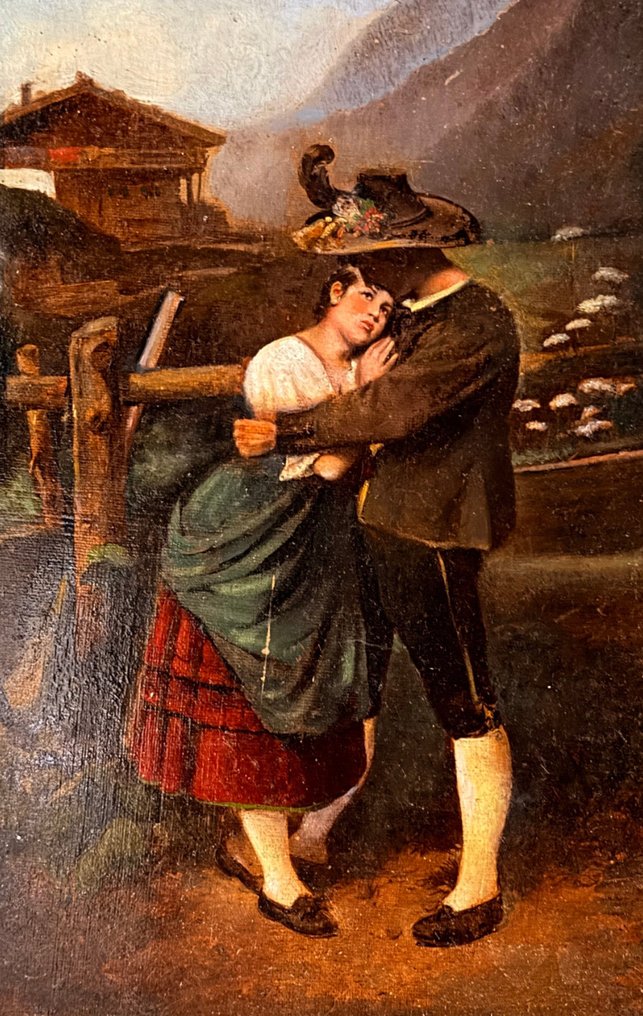
The painting depicts a young couple in an intimate, rural-idyllic setting of the high mountains. At the center is a young woman in Upper Bavarian costume, trusting as she leans against her companion. Her face is shown in three-quarter profile; she wears a white, elaborately puffed blouse under a bodice and a deep red skirt with a contrasting emerald green apron. Her expression is filled with longing anticipation, and her gaze is slightly raised.
The young man is designed as a receding figure (repoussoir figure). He wears the traditional attire of the Alpine region: a dark loden jacket, knee-length trousers, light calf stockings, and a Tyrolean hat decorated with a feather arrangement (gamsbart or feather). This compositional choice immediately engages the viewer with the scene, as it shares the intimacy of the couple from an observing, almost voyeuristic perspective.
The figures are positioned in front of a rustic wooden fence, which marks the boundary between the domestic area (suggested by the gable of a farmstead in the left background) and untouched nature. A blooming mountain meadow and the mountain ranges fading into atmospheric Sfumato complete the narrative of the 'perfect world'.
Technique and painting style
The painting is (probably) executed in oil on a finely smoothed wooden panel, which allows for the precision typical of the Munich School.
Inkarnat: The woman's face is characterized by subtle modeling. The skin areas are rendered in delicate pink and ivory tones, with fine glazes highlighting the plasticity of the cheekbones and the neck area.
Textures: The artist demonstrates mastery in tactile quality. The matte white of the cotton blouse contrasts with the heavy fall of the red skirt fabric and the silky shine of the green apron.
Duktus: While the figures are executed with almost photographic sharpness, the landscape displays a freer, more impressionistic brushstroke, especially in the white blossoms of the alpine meadow, which were applied with thick, paste-like dabs.
Lighting: A soft, diffuse light models the scene. There are no harsh cast shadows; instead, a warm, late-afternoon golden hue dominates, emphasizing the nostalgic mood.
Composition
The composition follows the strict rules of late Romantic genre painting.
Central perspective: The couple forms a vertical axis, stabilized by the horizontal course of the fence in the midground.
The visual guidance of the diagonal, leading from the woman's gaze up to the mountains, creates a sense of spatial and emotional expansiveness.
Color symbolism: red (love/vitality) and green (hope/nature) dominate the center and are focused through the white (purity) of the blouse.
Layered composition: The three-tiered arrangement (foreground: couple; middle ground: architecture/fence; background: high mountains) creates a remarkable monumental effect despite the small format.
Stylistic classification
The work is probably attributed to the late realism of the Munich School or a successor inspired by it. It is in the tradition or lineage of artists such as Emil Rau and Franz von Defregger.
Late Romantic influences: idealization of the peasant class as a moral counterbalance to the urbanization at the turn of the century.
Realistic elements: ethnographically accurate depiction of traditional costumes and alpine architecture.
Inspirational works by Emil Rau (e.g., 'The Love Letter' or 'On the Mountain') show the same preference for depicting courtship and rural romance, often using wooden panels for increased detail accuracy.
Framing
Not framed!
Condition
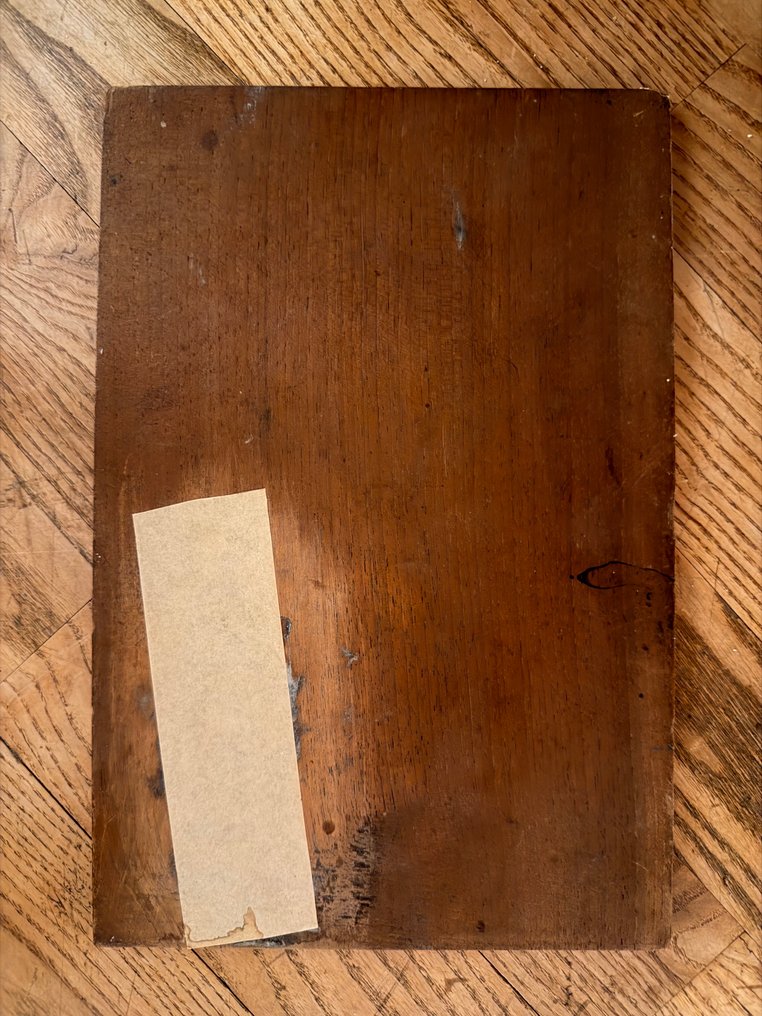
Image carrier: The wooden panel is stable, no warping visible. Scratched and scuffed.
art historical significance
The painting is possibly a significant document of the homeland art movement around 1900.
Iconography of the idyll: In a time of societal upheaval, such images served as 'soul anchors'. They catered to the bourgeoisie's longing for an unspoiled, virtuous life in harmony with nature.
Costume studies: The detailed depiction of clothing makes the image a cultural-historical source for the development of Alpine identity and its museological preservation in art.
Meaning of the circumscribed circle: Painters in the circle of Emil Rau specialized in combining the craftsmanship quality of the academy with popular, emotionally accessible themes. The technical quality of this work likely indicates a highly qualified contemporary who mastered Raus' style perfectly.
Conclusion
The present painting is a high-quality example of Alpine regional genre painting. It combines:
painterly quality (especially in skin tone and materiality)
an iconic motif of the Munich School (the love pair in traditional costume)
a good condition on a classic support.
The work possesses both decorative charm and collector's value as a representative of one of the most popular art movements in German and Austrian art history of the Fin de Siècle.
Summary for auction context
Painting on wood, circa 1895–1900, circle of Emil Rau. Depiction of a young couple in Upper Bavarian traditional dress against an alpine backdrop. Masterfully executed in the tradition of the Munich School, characterized by fine glazes and a meticulous rendering of textures. The composition captivates with its emotional intensity and the harmonious integration of the figures into the landscape. In an antique frame, in excellent condition. A classic cabinet piece of late Romantic genre painting of great cultural and historical significance.
Title
In the service of love – romantic genre scene of an Alpine couple in traditional attire.
Object
Oil painting on wood panel, approximately 26.6cm × 17.5cm × 0.55cm. Alpine region, Upper Bavaria / Austria. Dating: circa 1895–1900. Attributed to the circle of Emil Rau (1858–1937). Unsigned.
Representation
The painting depicts a young couple in an intimate, rural-idyllic setting of the high mountains. At the center is a young woman in Upper Bavarian costume, trusting as she leans against her companion. Her face is shown in three-quarter profile; she wears a white, elaborately puffed blouse under a bodice and a deep red skirt with a contrasting emerald green apron. Her expression is filled with longing anticipation, and her gaze is slightly raised.
The young man is designed as a receding figure (repoussoir figure). He wears the traditional attire of the Alpine region: a dark loden jacket, knee-length trousers, light calf stockings, and a Tyrolean hat decorated with a feather arrangement (gamsbart or feather). This compositional choice immediately engages the viewer with the scene, as it shares the intimacy of the couple from an observing, almost voyeuristic perspective.
The figures are positioned in front of a rustic wooden fence, which marks the boundary between the domestic area (suggested by the gable of a farmstead in the left background) and untouched nature. A blooming mountain meadow and the mountain ranges fading into atmospheric Sfumato complete the narrative of the 'perfect world'.
Technique and painting style
The painting is (probably) executed in oil on a finely smoothed wooden panel, which allows for the precision typical of the Munich School.
Inkarnat: The woman's face is characterized by subtle modeling. The skin areas are rendered in delicate pink and ivory tones, with fine glazes highlighting the plasticity of the cheekbones and the neck area.
Textures: The artist demonstrates mastery in tactile quality. The matte white of the cotton blouse contrasts with the heavy fall of the red skirt fabric and the silky shine of the green apron.
Duktus: While the figures are executed with almost photographic sharpness, the landscape displays a freer, more impressionistic brushstroke, especially in the white blossoms of the alpine meadow, which were applied with thick, paste-like dabs.
Lighting: A soft, diffuse light models the scene. There are no harsh cast shadows; instead, a warm, late-afternoon golden hue dominates, emphasizing the nostalgic mood.
Composition
The composition follows the strict rules of late Romantic genre painting.
Central perspective: The couple forms a vertical axis, stabilized by the horizontal course of the fence in the midground.
The visual guidance of the diagonal, leading from the woman's gaze up to the mountains, creates a sense of spatial and emotional expansiveness.
Color symbolism: red (love/vitality) and green (hope/nature) dominate the center and are focused through the white (purity) of the blouse.
Layered composition: The three-tiered arrangement (foreground: couple; middle ground: architecture/fence; background: high mountains) creates a remarkable monumental effect despite the small format.
Stylistic classification
The work is probably attributed to the late realism of the Munich School or a successor inspired by it. It is in the tradition or lineage of artists such as Emil Rau and Franz von Defregger.
Late Romantic influences: idealization of the peasant class as a moral counterbalance to the urbanization at the turn of the century.
Realistic elements: ethnographically accurate depiction of traditional costumes and alpine architecture.
Inspirational works by Emil Rau (e.g., 'The Love Letter' or 'On the Mountain') show the same preference for depicting courtship and rural romance, often using wooden panels for increased detail accuracy.
Framing
Not framed!
Condition
Image carrier: The wooden panel is stable, no warping visible. Scratched and scuffed.
art historical significance
The painting is possibly a significant document of the homeland art movement around 1900.
Iconography of the idyll: In a time of societal upheaval, such images served as 'soul anchors'. They catered to the bourgeoisie's longing for an unspoiled, virtuous life in harmony with nature.
Costume studies: The detailed depiction of clothing makes the image a cultural-historical source for the development of Alpine identity and its museological preservation in art.
Meaning of the circumscribed circle: Painters in the circle of Emil Rau specialized in combining the craftsmanship quality of the academy with popular, emotionally accessible themes. The technical quality of this work likely indicates a highly qualified contemporary who mastered Raus' style perfectly.
Conclusion
The present painting is a high-quality example of Alpine regional genre painting. It combines:
painterly quality (especially in skin tone and materiality)
an iconic motif of the Munich School (the love pair in traditional costume)
a good condition on a classic support.
The work possesses both decorative charm and collector's value as a representative of one of the most popular art movements in German and Austrian art history of the Fin de Siècle.
Summary for auction context
Painting on wood, circa 1895–1900, circle of Emil Rau. Depiction of a young couple in Upper Bavarian traditional dress against an alpine backdrop. Masterfully executed in the tradition of the Munich School, characterized by fine glazes and a meticulous rendering of textures. The composition captivates with its emotional intensity and the harmonious integration of the figures into the landscape. In an antique frame, in excellent condition. A classic cabinet piece of late Romantic genre painting of great cultural and historical significance.
Details
Artist
Emil Rau (1858-1937)
Sold with frame
No
Attribution
After
Title of artwork
Loving couple - NO RESERVE
Technique
Oil painting
Signature
Not signed
Country of Origin
Austria
Year
1895
Condition
Good condition
Height
26.6 cm
Width
17.5 cm
Depiction/Theme
Portrait
Style
Romanticism
Period
19th century
Sold by
