Domènec Carles Rosich (1888–1962) - NO RESERVE - Vase Of Flowers



07
days
08
hours
03
minutes
07
seconds

15 other people are watching this object
 Bidder 0732 Bidder 0732 | €15 | |
|---|---|---|
 Bidder 9916 Bidder 9916 | €10 |
Catawiki Buyer Protection
Your payment’s safe with us until you receive your object.View details
Trustpilot 4.4 | 123077 reviews
Rated Excellent on Trustpilot.
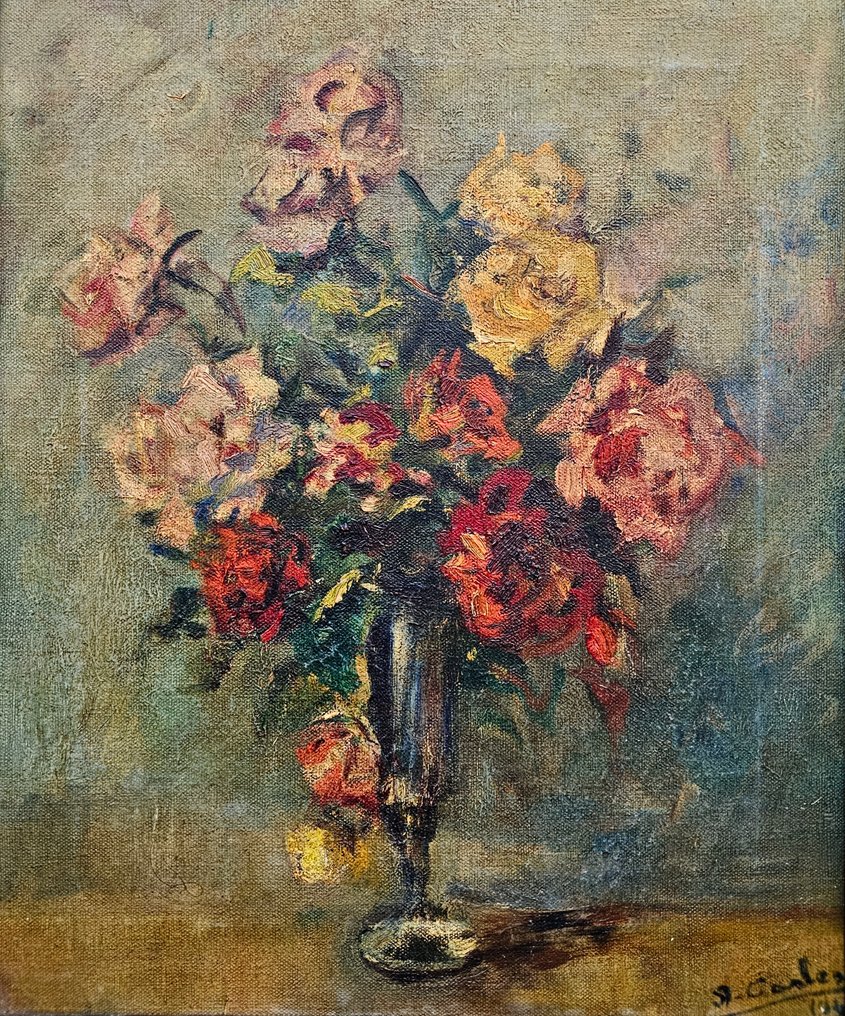
Vase Of Flowers, 1930–1940, oil on canvas by Domènec Carles Rosich (1888–1962) from Spain, original edition, sold with frame, depicting a vase of flowers.
AI-assisted summary
Description from the seller
Flower vase in an intimate atmosphere
Intimate Post-Impressionism
Pictorial School: Catalan School of the first half of the 20th century
Technical Data Sheet
Author: Domènec Carles Rosich (1888–1962)
Around the 1930s
Technique: oil on canvas
Measurements: 46 × 38 cm (55 × 45 cm with frame)
Signature: Signed and dated on the back 'D. Carles – 1939.'
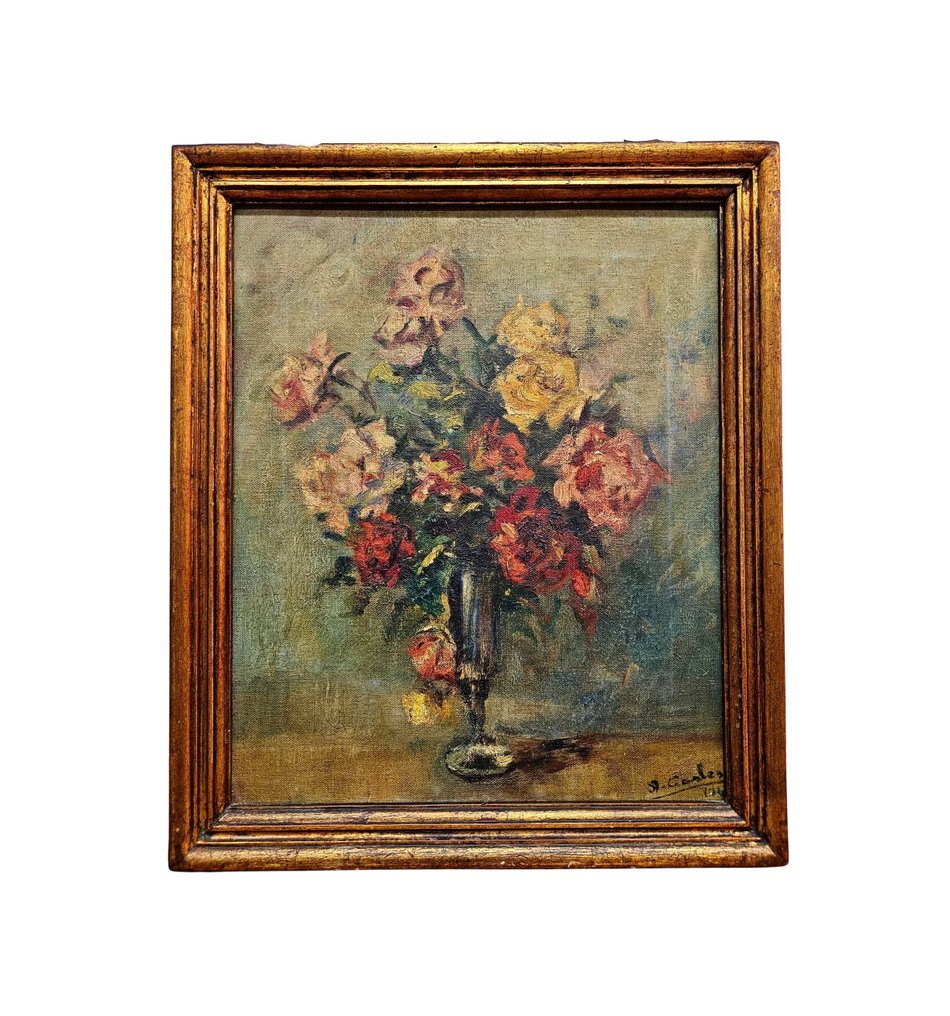
Golden wooden frame of quality, moldured and sober, in keeping with the period.
Condition: Good, with a natural patina of time.
1. Descriptive and Iconographic Composition
The work features a stylized vase with a lush floral bouquet, arranged frontally on a neutral surface.
The flowers — roses and carnations interpreted freely — are created with loose, pasty, and vibrant brushstrokes, where color takes precedence over drawing.
The background, deliberately undefined, creates an enveloping and intimate atmosphere that enhances the prominence of the floral motif. The composition, balanced yet lively, conveys a sense of poetic quietness and silent contemplation.
Style, School, and Context
Domènec Carles Rosich falls within Catalan post-impressionism, with clear affinities to the intimate painting style developed in Catalonia during the first third of the 20th century.
Your language combines Impressionist heritage — especially in the treatment of light and brushwork — with a more emotional and restrained sensitivity.
Echoes of artists such as Joaquim Mir, Isidre Nonell in his late phase, and internationally, affinities with Pierre Bonnard or certain still lifes by Fantin-Latour can be perceived, although interpreted from a more modern and domestic perspective.
Aesthetic and Comparative Evaluation
We are faced with a mature, honest, and well-executed work, representative of the cultivated bourgeois taste of interwar Catalonia.
The quality of the pictorial matter, chromatic harmony, and compositional sensitivity position this oil painting as an excellent example of the Catalan floral still life of the 20th century.
In the market, comparable works by artists from the same artistic environment achieve sustained valuation, appreciated by both Catalan school collectors and lovers of European post-impressionism. An elegant, intimate piece with solid artistic interest.
Seller's Story
At Barcelona Art Gallery, we are a large family of art collectors in Barcelona who have been acquiring all kinds of paintings for 2 centuries.
Headquartered in the Les Corts neighborhood of Barcelona.
We offer part of our private collection for auction: high period and modern paintings that we have been acquiring over time, mainly from art galleries, antique dealers, auctions, private collections and very diverse origins.
Translated by Google TranslateFlower vase in an intimate atmosphere
Intimate Post-Impressionism
Pictorial School: Catalan School of the first half of the 20th century
Technical Data Sheet
Author: Domènec Carles Rosich (1888–1962)
Around the 1930s
Technique: oil on canvas
Measurements: 46 × 38 cm (55 × 45 cm with frame)
Signature: Signed and dated on the back 'D. Carles – 1939.'
Golden wooden frame of quality, moldured and sober, in keeping with the period.
Condition: Good, with a natural patina of time.
1. Descriptive and Iconographic Composition
The work features a stylized vase with a lush floral bouquet, arranged frontally on a neutral surface.
The flowers — roses and carnations interpreted freely — are created with loose, pasty, and vibrant brushstrokes, where color takes precedence over drawing.
The background, deliberately undefined, creates an enveloping and intimate atmosphere that enhances the prominence of the floral motif. The composition, balanced yet lively, conveys a sense of poetic quietness and silent contemplation.
Style, School, and Context
Domènec Carles Rosich falls within Catalan post-impressionism, with clear affinities to the intimate painting style developed in Catalonia during the first third of the 20th century.
Your language combines Impressionist heritage — especially in the treatment of light and brushwork — with a more emotional and restrained sensitivity.
Echoes of artists such as Joaquim Mir, Isidre Nonell in his late phase, and internationally, affinities with Pierre Bonnard or certain still lifes by Fantin-Latour can be perceived, although interpreted from a more modern and domestic perspective.
Aesthetic and Comparative Evaluation
We are faced with a mature, honest, and well-executed work, representative of the cultivated bourgeois taste of interwar Catalonia.
The quality of the pictorial matter, chromatic harmony, and compositional sensitivity position this oil painting as an excellent example of the Catalan floral still life of the 20th century.
In the market, comparable works by artists from the same artistic environment achieve sustained valuation, appreciated by both Catalan school collectors and lovers of European post-impressionism. An elegant, intimate piece with solid artistic interest.
Seller's Story
At Barcelona Art Gallery, we are a large family of art collectors in Barcelona who have been acquiring all kinds of paintings for 2 centuries.
Headquartered in the Les Corts neighborhood of Barcelona.
We offer part of our private collection for auction: high period and modern paintings that we have been acquiring over time, mainly from art galleries, antique dealers, auctions, private collections and very diverse origins.
Translated by Google TranslateDetails
Artist
Domènec Carles Rosich (1888–1962) - NO RESERVE
Sold with frame
Yes
Sold by
Gallery
Edition
Original
Title of artwork
Vase Of Flowers
Technique
Oil painting
Signature
Hand signed
Country of Origin
Spain
Condition
Good condition
Height
55 cm
Width
45 cm
Weight
3 kg
Depiction/Theme
Plants and flowers
Style
Post-Impressionism
Period
1930-1940
Sold by
