Enrique Pinet Pàmies (1912–1974) - XL FORMAT - An Intimate Afternoon in the Garden


09
days
21
hours
24
minutes
37
seconds
Starting bid
€ 1
Reserve price not met

No bids placed
Catawiki Buyer Protection
Your payment’s safe with us until you receive your object.View details
Trustpilot 4.4 | 122910 reviews
Rated Excellent on Trustpilot.
Description from the seller
Intimate Afternoon in the Garden
Style: Figurative post-impressionism with Fauvist reflections.
Pictorial school: Spanish painting influenced by the School of Paris (mid-20th century)
Technical sheet
Author: Enrique Pinet Pàmies (1912–1974)
Chronology: circa 1945–1955
Technique: oil on canvas
Measurements: 100 × 80 cm (103 × 83 cm with frame)
Signature: Signed 'PINET' in the upper left corner.
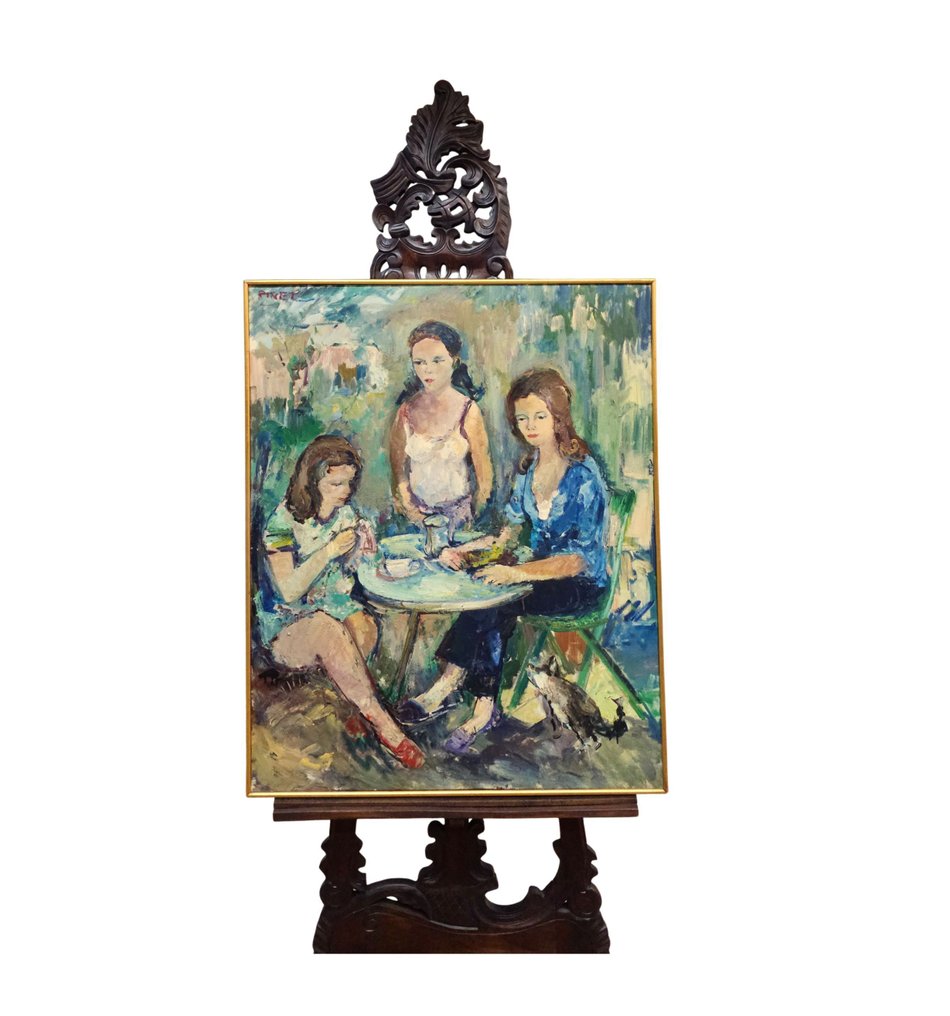
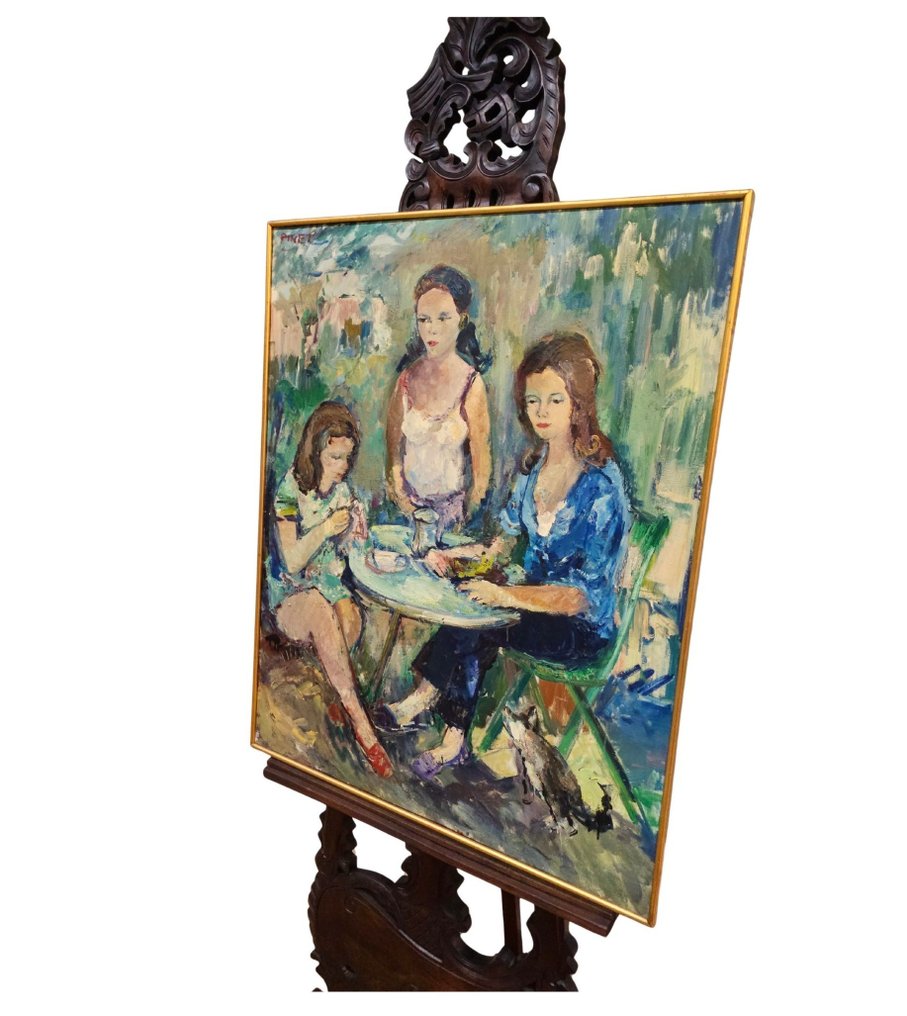
Original frame in carved and gilded wood, with a simple and elegant profile, in harmony with the modern aesthetic of the set.
Condition: Excellent, with natural aging patina.
2. Compositional and iconographic description
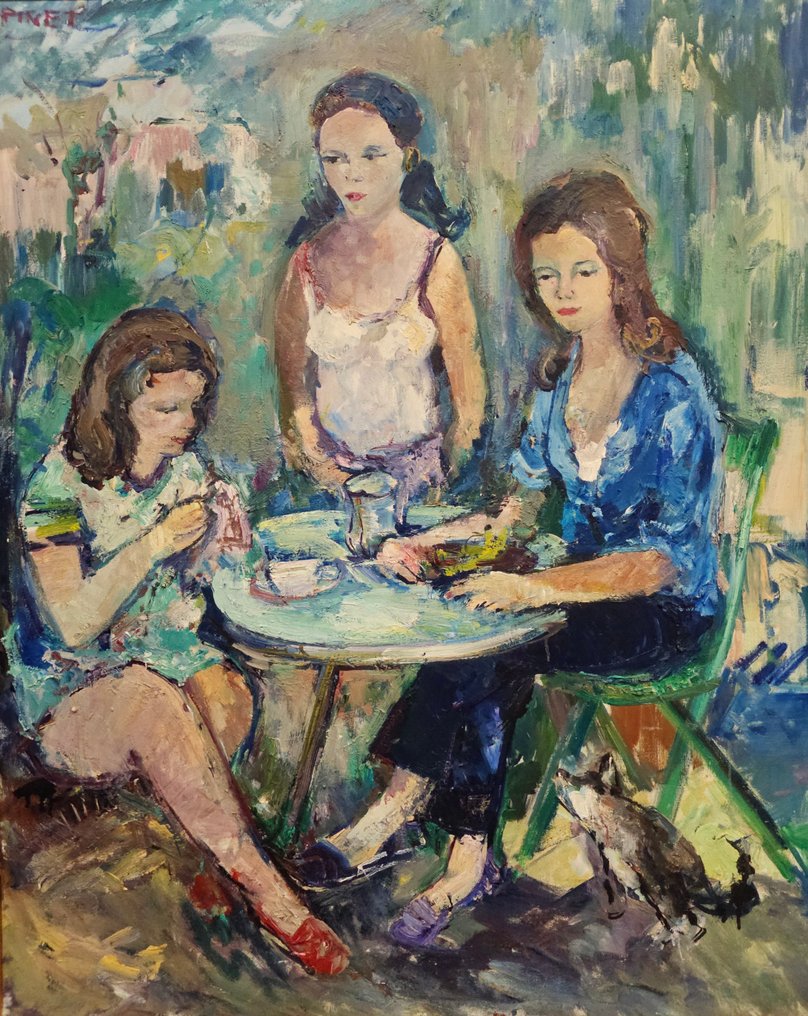
The work depicts a peaceful, everyday scene: three female figures gathered around a small garden table, accompanied by a cat in the foreground.
The composition is built around a triangular axis that provides stability, while the background is rendered with loose and vertical brushstrokes that suggest vegetation without depicting it literally.
The palette, dominated by greens, blues, and ochres, enhances an intimate and domestic atmosphere. The figures, with idealized faces and restrained gestures, convey a sense of introspective calm, moving away from anecdote to focus on the emotion of the shared moment.
3. Style, School, and Comparative Valuation
Enrique Pinet Pàmies is situated within the orbit of Spanish figurative post-impressionism, with clear affinities towards French painting by Bonnard and Vuillard, as well as echoes of Joaquim Sunyer and certain approaches of the École de Paris.
The pastose, free, and vibrant brushstroke demonstrates a mature mastery of color as a structural element.
A representative work of his most accomplished production, it combines modernity and lyricism, making it especially attractive within the Spanish figurative painting market of the 20th century.
Its technical quality, generous format, and intimate theme position it as a solid and marketable piece within the context of authors of its generation.
Seller's Story
At Barcelona Art Gallery, we are a large family of art collectors in Barcelona who have been acquiring all kinds of paintings for 2 centuries.
Headquartered in the Les Corts neighborhood of Barcelona.
We offer part of our private collection for auction: high period and modern paintings that we have been acquiring over time, mainly from art galleries, antique dealers, auctions, private collections and very diverse origins.
Translated by Google TranslateIntimate Afternoon in the Garden
Style: Figurative post-impressionism with Fauvist reflections.
Pictorial school: Spanish painting influenced by the School of Paris (mid-20th century)
Technical sheet
Author: Enrique Pinet Pàmies (1912–1974)
Chronology: circa 1945–1955
Technique: oil on canvas
Measurements: 100 × 80 cm (103 × 83 cm with frame)
Signature: Signed 'PINET' in the upper left corner.
Original frame in carved and gilded wood, with a simple and elegant profile, in harmony with the modern aesthetic of the set.
Condition: Excellent, with natural aging patina.
2. Compositional and iconographic description
The work depicts a peaceful, everyday scene: three female figures gathered around a small garden table, accompanied by a cat in the foreground.
The composition is built around a triangular axis that provides stability, while the background is rendered with loose and vertical brushstrokes that suggest vegetation without depicting it literally.
The palette, dominated by greens, blues, and ochres, enhances an intimate and domestic atmosphere. The figures, with idealized faces and restrained gestures, convey a sense of introspective calm, moving away from anecdote to focus on the emotion of the shared moment.
3. Style, School, and Comparative Valuation
Enrique Pinet Pàmies is situated within the orbit of Spanish figurative post-impressionism, with clear affinities towards French painting by Bonnard and Vuillard, as well as echoes of Joaquim Sunyer and certain approaches of the École de Paris.
The pastose, free, and vibrant brushstroke demonstrates a mature mastery of color as a structural element.
A representative work of his most accomplished production, it combines modernity and lyricism, making it especially attractive within the Spanish figurative painting market of the 20th century.
Its technical quality, generous format, and intimate theme position it as a solid and marketable piece within the context of authors of its generation.
Seller's Story
At Barcelona Art Gallery, we are a large family of art collectors in Barcelona who have been acquiring all kinds of paintings for 2 centuries.
Headquartered in the Les Corts neighborhood of Barcelona.
We offer part of our private collection for auction: high period and modern paintings that we have been acquiring over time, mainly from art galleries, antique dealers, auctions, private collections and very diverse origins.
Translated by Google TranslateDetails
Artist
Enrique Pinet Pàmies (1912–1974) - XL FORMAT
Sold with frame
Yes
Sold by
Gallery
Edition
Original
Title of artwork
An Intimate Afternoon in the Garden
Technique
Oil painting
Signature
Hand signed
Country of Origin
France
Condition
Excellent condition
Height
103 cm
Width
83 cm
Weight
6 kg
Depiction/Theme
Spring scene
Style
Fauvism
Period
1970-1980
Sold by
