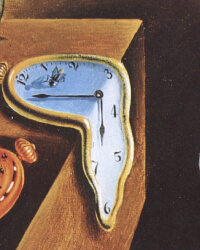
Salvador Dali (1904-1989) - Les Tranchées (suite Poèmes secrets d’Apollinaire)


06
days
06
hours
17
minutes
31
seconds
Current bid
€ 302
Reserve price not met

Expert
Selected by Florent Fressier
Specialises in works on paper and (New) School of Paris artists. Former gallery owner.
Estimate € 1,500 - € 2,200
20 other people are watching this object
 Bidder 1915 Bidder 1915 | €302 | |
|---|---|---|
| Bidder 0214 | €282 | |
 Bidder 0758 Bidder 0758 | €262 | |
Catawiki Buyer Protection
Your payment’s safe with us until you receive your object.View details
Trustpilot 4.4 | 123077 reviews
Rated Excellent on Trustpilot.
Salvador Dalí, Les Tranchées (suite Poèmes secrets d’Apollinaire), a 1967 hand-signed, limited edition etching, 115/145, in excellent condition, 37 x 28 cm, framed, from Spain and sold by Galería.
AI-assisted summary
Description from the seller
Salvador Dalí (Figueres, Girona, 1904 - 1989).
The Trenches, suite Secret Poems by Apollinaire
1967
Etched and drypoint print, hand-colored with watercolor.
Signed and numbered by hand.
37 x 28 cm and 46 x 37 x 2 cm with the frame.
Provenance: Private Collection, France.
Description:
This work belongs to the series of engravings created by Dalí to illustrate the posthumous edition (1967) of a collection of erotic poems by the French poet Guillaume Apollinaire (1880-1918), a key figure of the surrealist movement. These 'secret' poems were written by Apollinaire from the front lines to his fiancée Amélia Kolb (1891-1987) during World War I. It is for this reason that Dalí combines in the series, through his personal iconography, eroticism and war imagery — the title of the engraving, The Trenches, directly alludes to the conflict. In these works, Dalí's dreamlike language is employed to serve Apollinaire's evocative surrealist poetry, working with rich symbolism that reflects the central themes of the French poet's work: war, love, myth, and the subconscious. The series consists of 18 original engravings, 8 of them vignettes and 10 full-page.
Les Tranchées was born as part of a project by Dalí to illustrate several songs by the French singer-songwriter Georges Brassens, whom he depicted in early engravings with his guitar, singing to the female body. However, the constant changes introduced to the project by Brassens's agent caused Dalí to ultimately change the theme of the work, transforming Les Tranchées into a war landscape where time stops like in a soft watch. Seeing a clear correlation with World War I in these plates, the photographer and collector Pierre Argillet suggested to Dalí that he use them to illustrate Apollinaire's Secret Poems. From that moment, the project became notably stranger, taking a distinctly surreal turn.
Salvador Dalí (Figueres, Girona, 1904 – 1989) moved to Madrid in 1922, where he lived at the famous Residencia de Estudiantes and enrolled at the Academia de Bellas Artes de San Fernando. However, in 1926, before his final exams, he was expelled for claiming that no one at the Academy was qualified to examine him. That same year, Dalí settled in Paris, where he began to establish the formal characteristics that would become distinctive of his work, absorbing diverse influences from academic masters to avant-garde movements. Associated with Montparnasse surrealism, in 1929 he collaborated with Luis Buñuel on the making of Un perro andaluz, the most recognized film of the movement. His work greatly influenced the course of surrealism over the next two years, being acclaimed as the creator of the paranoiac-critical method, which was said to help access the subconscious by releasing creative artistic energies. In 1931, Dalí painted one of his most famous works, The Persistence of Memory, which, according to some theories, illustrated his rejection of time as a rigid or deterministic entity.
Dalí arrived in America in 1934 accompanied by dealer Julian Levy. Following his first solo exhibition in New York, his international profile was definitively established, and since then he has exhibited his work and given lectures around the world. That same year, he was subjected to a 'surrealist trial,' which resulted in his expulsion from the movement, as the painter believed that surrealism could exist in an apolitical context, refusing to commit to André Breton's ideas. Dalí responded to his expulsion with his famous retort: 'I am surrealism.' Most of his work is currently housed in the Dalí Theatre-Museum in Figueres, followed by the Salvador Dalí Museum collection in St. Petersburg (Florida), the MNCARS in Madrid, the Salvador Dalí Gallery in Pacific Palisades (California), the Espace Dalí in Montmartre (Paris), and the Dalí Universe in London.
Publications
- MICHLER, R.; LÖPSINGER, L.W. Salvador Dali. The Catalogue Raisonné of Etchings and Mixed-Media Prints, 1924-1980. Prestel Publishing. 1993. Cataloged with no. 192.
Parallels: Blanton Museum of Art, The University of Texas, Austin, inv. 2024.58.
Seller's Story
Gallery of Ancient Art - Archeology based in Barcelona with more than fifteen years of experience. Specialized in classical art, Egyptian art, Asian art and pre-Columbian art. It guarantees the authenticity of all its pieces. It participates in the most important art fairs in Spain, such as Feriarte, as well as in fairs abroad, BRAFA, Parcours des Mondes, Cultures Brussels.
All the pieces are sent with an Export Permit issued by the Spanish Ministry of Culture.
We are quick to ship via DHL Express or Direct Art Transport.
Translated by Google TranslateSalvador Dalí (Figueres, Girona, 1904 - 1989).
The Trenches, suite Secret Poems by Apollinaire
1967
Etched and drypoint print, hand-colored with watercolor.
Signed and numbered by hand.
37 x 28 cm and 46 x 37 x 2 cm with the frame.
Provenance: Private Collection, France.
Description:
This work belongs to the series of engravings created by Dalí to illustrate the posthumous edition (1967) of a collection of erotic poems by the French poet Guillaume Apollinaire (1880-1918), a key figure of the surrealist movement. These 'secret' poems were written by Apollinaire from the front lines to his fiancée Amélia Kolb (1891-1987) during World War I. It is for this reason that Dalí combines in the series, through his personal iconography, eroticism and war imagery — the title of the engraving, The Trenches, directly alludes to the conflict. In these works, Dalí's dreamlike language is employed to serve Apollinaire's evocative surrealist poetry, working with rich symbolism that reflects the central themes of the French poet's work: war, love, myth, and the subconscious. The series consists of 18 original engravings, 8 of them vignettes and 10 full-page.
Les Tranchées was born as part of a project by Dalí to illustrate several songs by the French singer-songwriter Georges Brassens, whom he depicted in early engravings with his guitar, singing to the female body. However, the constant changes introduced to the project by Brassens's agent caused Dalí to ultimately change the theme of the work, transforming Les Tranchées into a war landscape where time stops like in a soft watch. Seeing a clear correlation with World War I in these plates, the photographer and collector Pierre Argillet suggested to Dalí that he use them to illustrate Apollinaire's Secret Poems. From that moment, the project became notably stranger, taking a distinctly surreal turn.
Salvador Dalí (Figueres, Girona, 1904 – 1989) moved to Madrid in 1922, where he lived at the famous Residencia de Estudiantes and enrolled at the Academia de Bellas Artes de San Fernando. However, in 1926, before his final exams, he was expelled for claiming that no one at the Academy was qualified to examine him. That same year, Dalí settled in Paris, where he began to establish the formal characteristics that would become distinctive of his work, absorbing diverse influences from academic masters to avant-garde movements. Associated with Montparnasse surrealism, in 1929 he collaborated with Luis Buñuel on the making of Un perro andaluz, the most recognized film of the movement. His work greatly influenced the course of surrealism over the next two years, being acclaimed as the creator of the paranoiac-critical method, which was said to help access the subconscious by releasing creative artistic energies. In 1931, Dalí painted one of his most famous works, The Persistence of Memory, which, according to some theories, illustrated his rejection of time as a rigid or deterministic entity.
Dalí arrived in America in 1934 accompanied by dealer Julian Levy. Following his first solo exhibition in New York, his international profile was definitively established, and since then he has exhibited his work and given lectures around the world. That same year, he was subjected to a 'surrealist trial,' which resulted in his expulsion from the movement, as the painter believed that surrealism could exist in an apolitical context, refusing to commit to André Breton's ideas. Dalí responded to his expulsion with his famous retort: 'I am surrealism.' Most of his work is currently housed in the Dalí Theatre-Museum in Figueres, followed by the Salvador Dalí Museum collection in St. Petersburg (Florida), the MNCARS in Madrid, the Salvador Dalí Gallery in Pacific Palisades (California), the Espace Dalí in Montmartre (Paris), and the Dalí Universe in London.
Publications
- MICHLER, R.; LÖPSINGER, L.W. Salvador Dali. The Catalogue Raisonné of Etchings and Mixed-Media Prints, 1924-1980. Prestel Publishing. 1993. Cataloged with no. 192.
Parallels: Blanton Museum of Art, The University of Texas, Austin, inv. 2024.58.
Seller's Story
Gallery of Ancient Art - Archeology based in Barcelona with more than fifteen years of experience. Specialized in classical art, Egyptian art, Asian art and pre-Columbian art. It guarantees the authenticity of all its pieces. It participates in the most important art fairs in Spain, such as Feriarte, as well as in fairs abroad, BRAFA, Parcours des Mondes, Cultures Brussels.
All the pieces are sent with an Export Permit issued by the Spanish Ministry of Culture.
We are quick to ship via DHL Express or Direct Art Transport.
Translated by Google TranslateDetails
Artist
Salvador Dali (1904-1989)
Sold by
Gallery
Edition
Limited edition
Edition number
115/145
Title of artwork
Les Tranchées (suite Poèmes secrets d’Apollinaire)
Technique
Engraving
Signature
Hand signed
Country of Origin
Spain
Year
1967
Condition
Excellent condition
Height
37 cm
Width
28 cm
Period
1960-1970
Sold with frame
Yes