René Mels (1909-1977) - Abstraction abstraite circa 1958
03
days
06
hours
34
minutes
22
seconds
Starting bid
€ 1
No reserve price

Expert
Selected by Giulia Couzzi
Master’s in culture and arts innovation, with a decade in 20th-21st century Italian art.
Estimate € 300 - € 400
No bids placed
Catawiki Buyer Protection
Your payment’s safe with us until you receive your object.View details
Trustpilot 4.4 | 123113 reviews
Rated Excellent on Trustpilot.
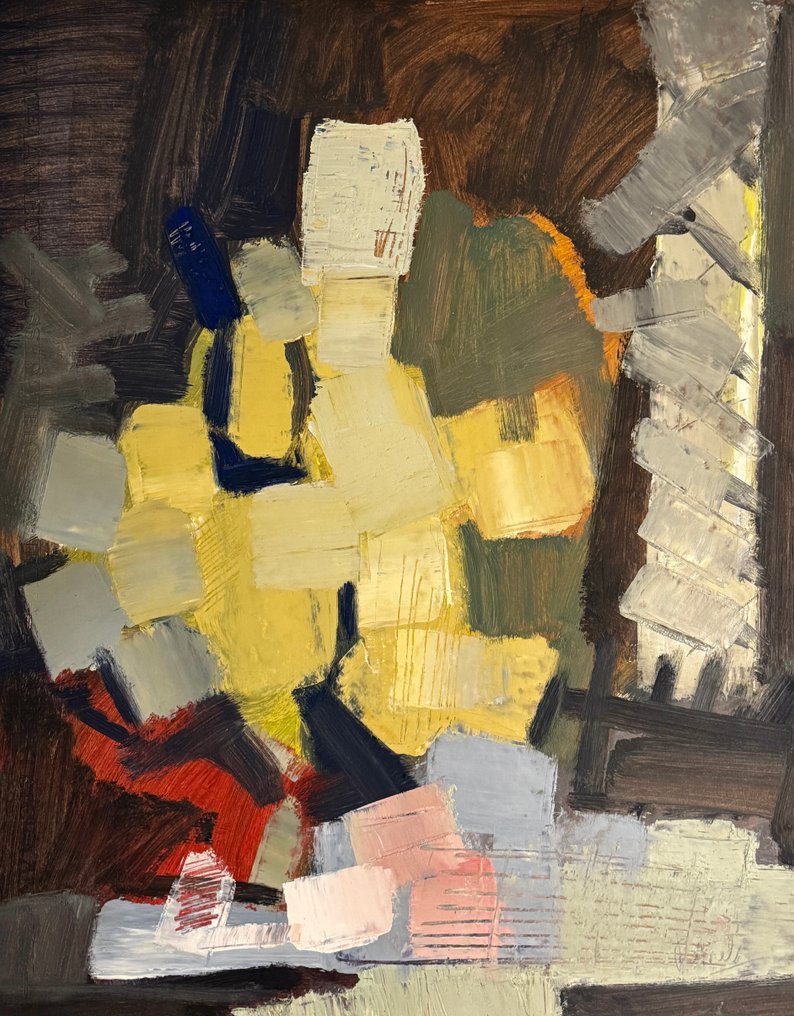
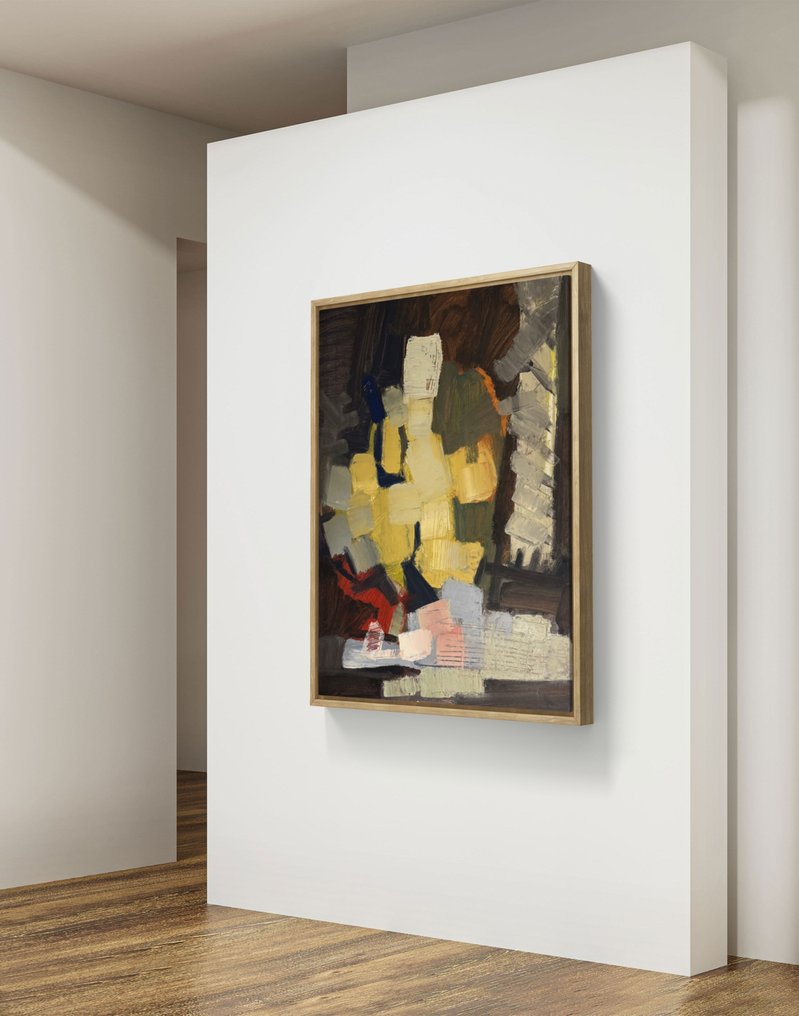
René Mels (1909–1977), Abstraction abstraction circa 1958, oil on paper, 65 × 50 cm, signed at bottom right, Belgique origin, original edition, dated to the late 1950s with good condition.
AI-assisted summary
Description from the seller
This work is part of one of the most accomplished moments in René Mels' career and will appeal to collectors sensitive to post-war European abstraction. Through its construction, chromatic density, and internal tension, it clearly evokes the major pictorial explorations carried out at the end of the 1950s by several key figures of abstraction, notably Nicolas de Staël.
Artist: René Mels (1909–1977) – Belgium
Abstract Composition
Date: the late 1950s
Technique: Oil on paper
Dimensions: 65 × 50.5 cm
Signature: Signed at the bottom right
Condition: Perfect state of preservation
Framing: Sold unframed
Provenance: From the artist's family collection.
Description of the work
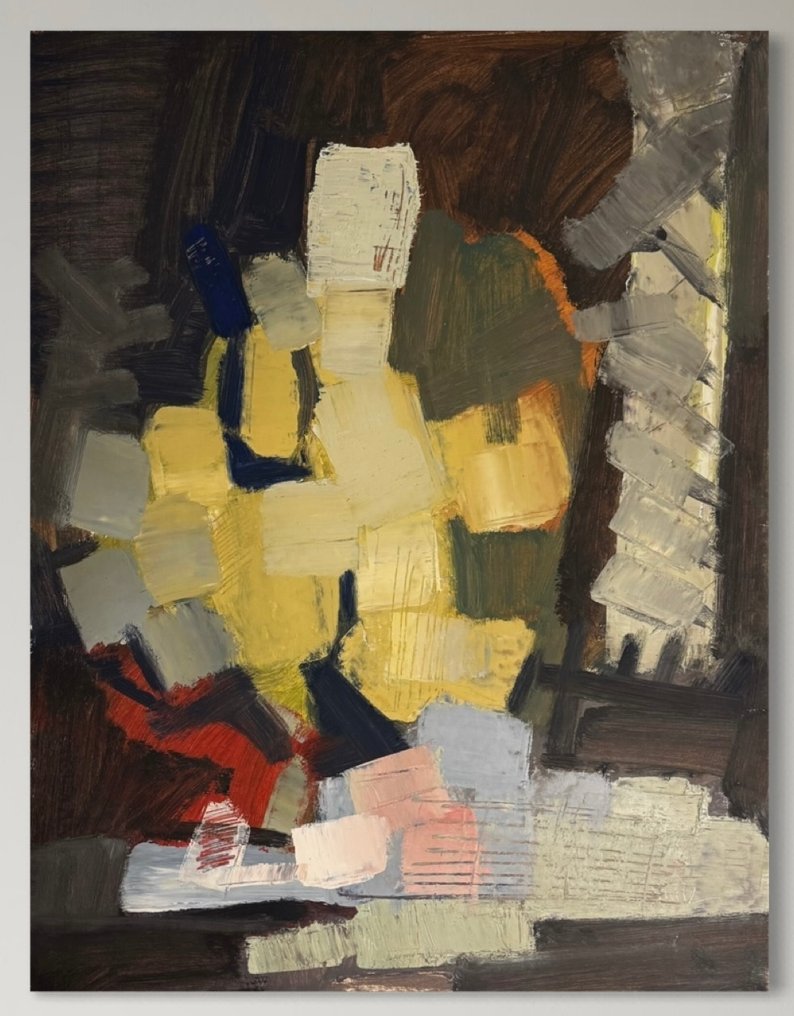
This oil on paper testifies to René Mels's full artistic maturity in the late 1950s, a period during which his abstract language achieves a remarkable balance between construction and expressiveness. The composition is based on an assembly of strongly structured colored masses, arranged within a dense and controlled pictorial space.
The palette, dominated by bright yellows, ochres, deep browns, bluish grays, and a few darker accents, creates a subtle chromatic tension, animated by a generous and vibrant pictorial material. The brushwork is broad, assertive, sometimes almost architectural, giving the whole a strong physical and visual presence.
Through its treatment with broad, colorful planes, the thickness of the material, and the pursuit of a balance between abstraction and reminiscence of reality, this work shows clear resonances with the work of Nicolas de Staël at the same time, particularly in his abstract compositions from the late 1950s, where color becomes structure and the pictorial surface a field of contained tensions. Without ever imitating, René Mels shares this same desire to condense emotion into simple, powerful, and silent forms.
Artistic context
In the late 1950s, René Mels established himself as one of the most sensitive representatives of post-war Belgian abstraction. His work is part of a broader European exploration, characterized by constructed abstraction, where color and material replace any figurative narration.
Close, in spirit, to the approaches of Bram and Geer van Velde, but also to the research conducted in France by Nicolas de Staël during this period, Mels develops a personal language that is both rigorous and lyrical. This work perfectly illustrates this positioning: a painting of internal tension, where each form seems weighed, balanced, and charged with a strong emotional intensity.
Biography of René Mels (1909–1977)
Born in Herent-lez-Louvain, René Mels studied at the Leuven Academy, then in Brussels, before continuing his studies at La Cambre. He is a member of the Jeune Peinture belge and the Art Abstrait group, playing an active role in the renewal of the pictorial language in Belgium after World War II.
His work gradually evolved from expressionism towards increasingly pure and constructed abstraction, characterized by great attention to light, material, and the balance of forms. René Mels died in 1977 in Woluwe-Saint-Lambert, leaving behind a coherent, demanding body of work that is now rediscovered by collectors of European abstraction.
Conclusion
This abstract composition from the late 1950s is a particularly accomplished example of René Mels's work. Through its strong visual impact, chromatic richness, and aesthetic proximity to some major research by Nicolas de Staël at the same time, it offers a rare opportunity to acquire a high-quality work that is emblematic of post-war European abstraction.
This work is part of one of the most accomplished moments in René Mels' career and will appeal to collectors sensitive to post-war European abstraction. Through its construction, chromatic density, and internal tension, it clearly evokes the major pictorial explorations carried out at the end of the 1950s by several key figures of abstraction, notably Nicolas de Staël.
Artist: René Mels (1909–1977) – Belgium
Abstract Composition
Date: the late 1950s
Technique: Oil on paper
Dimensions: 65 × 50.5 cm
Signature: Signed at the bottom right
Condition: Perfect state of preservation
Framing: Sold unframed
Provenance: From the artist's family collection.
Description of the work
This oil on paper testifies to René Mels's full artistic maturity in the late 1950s, a period during which his abstract language achieves a remarkable balance between construction and expressiveness. The composition is based on an assembly of strongly structured colored masses, arranged within a dense and controlled pictorial space.
The palette, dominated by bright yellows, ochres, deep browns, bluish grays, and a few darker accents, creates a subtle chromatic tension, animated by a generous and vibrant pictorial material. The brushwork is broad, assertive, sometimes almost architectural, giving the whole a strong physical and visual presence.
Through its treatment with broad, colorful planes, the thickness of the material, and the pursuit of a balance between abstraction and reminiscence of reality, this work shows clear resonances with the work of Nicolas de Staël at the same time, particularly in his abstract compositions from the late 1950s, where color becomes structure and the pictorial surface a field of contained tensions. Without ever imitating, René Mels shares this same desire to condense emotion into simple, powerful, and silent forms.
Artistic context
In the late 1950s, René Mels established himself as one of the most sensitive representatives of post-war Belgian abstraction. His work is part of a broader European exploration, characterized by constructed abstraction, where color and material replace any figurative narration.
Close, in spirit, to the approaches of Bram and Geer van Velde, but also to the research conducted in France by Nicolas de Staël during this period, Mels develops a personal language that is both rigorous and lyrical. This work perfectly illustrates this positioning: a painting of internal tension, where each form seems weighed, balanced, and charged with a strong emotional intensity.
Biography of René Mels (1909–1977)
Born in Herent-lez-Louvain, René Mels studied at the Leuven Academy, then in Brussels, before continuing his studies at La Cambre. He is a member of the Jeune Peinture belge and the Art Abstrait group, playing an active role in the renewal of the pictorial language in Belgium after World War II.
His work gradually evolved from expressionism towards increasingly pure and constructed abstraction, characterized by great attention to light, material, and the balance of forms. René Mels died in 1977 in Woluwe-Saint-Lambert, leaving behind a coherent, demanding body of work that is now rediscovered by collectors of European abstraction.
Conclusion
This abstract composition from the late 1950s is a particularly accomplished example of René Mels's work. Through its strong visual impact, chromatic richness, and aesthetic proximity to some major research by Nicolas de Staël at the same time, it offers a rare opportunity to acquire a high-quality work that is emblematic of post-war European abstraction.
Details
Artist
René Mels (1909-1977)
Sold with frame
No
Sold by
Owner or reseller
Edition
Original
Title of artwork
Abstraction abstraite circa 1958
Technique
Oil painting
Signature
Hand signed
Country of Origin
Belgium
Condition
Good condition
Height
65 cm
Width
50 cm
Style
Abstract
Period
1950-1960
Sold by