Miquel Torner de Semir (1938) - Presencia interior


11
days
01
hour
47
minutes
29
seconds
Starting bid
€ 1
Reserve price not met

No bids placed
Catawiki Buyer Protection
Your payment’s safe with us until you receive your object.View details
Trustpilot 4.4 | 123641 reviews
Rated Excellent on Trustpilot.
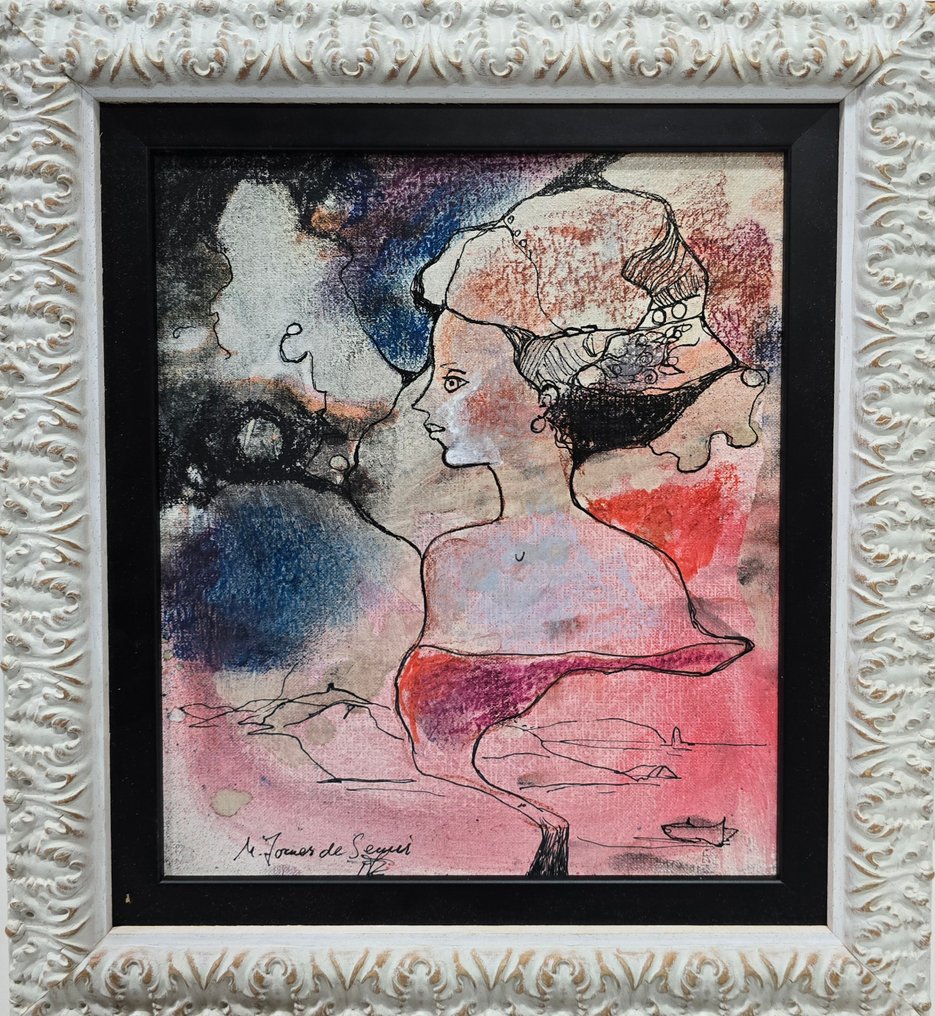
Presencia interior, an oil painting by Miquel Torner de Semir (1938) from Spain, dated 1980–1990, in Baroque style, original edition, hand-signed, sold with frame; with frame dimensions 37×31×2 cm.
AI-assisted summary
Description from the seller
Pictura Subastas presents this magnificent work of art by Miquel Torner de Semir, depicting a female figure as a symbol of the inner world, where thought, emotion, and identity blend in a poetic and abstract space. The painting stands out for its excellent technique and the high pictorial quality it conveys.
Dimensions with frame: 37x31x2 cm.
Frame-free dimensions: 27x22 cm.
· Oil on panel, hand-signed by the artist in the lower left, Miquel Torner de Semir.
The piece is in good condition.
The artwork is sold with a beautiful frame (included in the auction as a gift).
The work comes from an exclusive private collection in Girona.
Important note: the included photographs are an integral part of the lot description.
The picture will be professionally packed by an IVEX expert (https://www.instagram.com/ivex.online/), using high-quality materials to ensure its protection. The shipping price covers both the cost of professional packaging and the transportation itself.
The shipment will be sent via Correos, GLS, or NACEX with tracking. International shipping options are available.
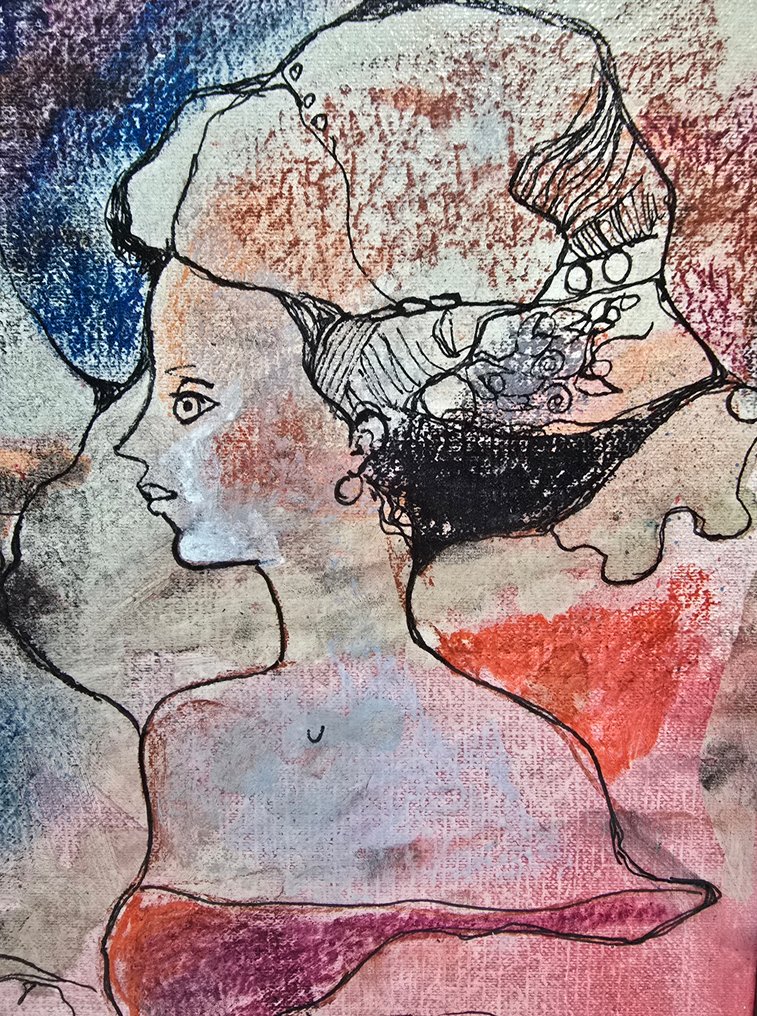
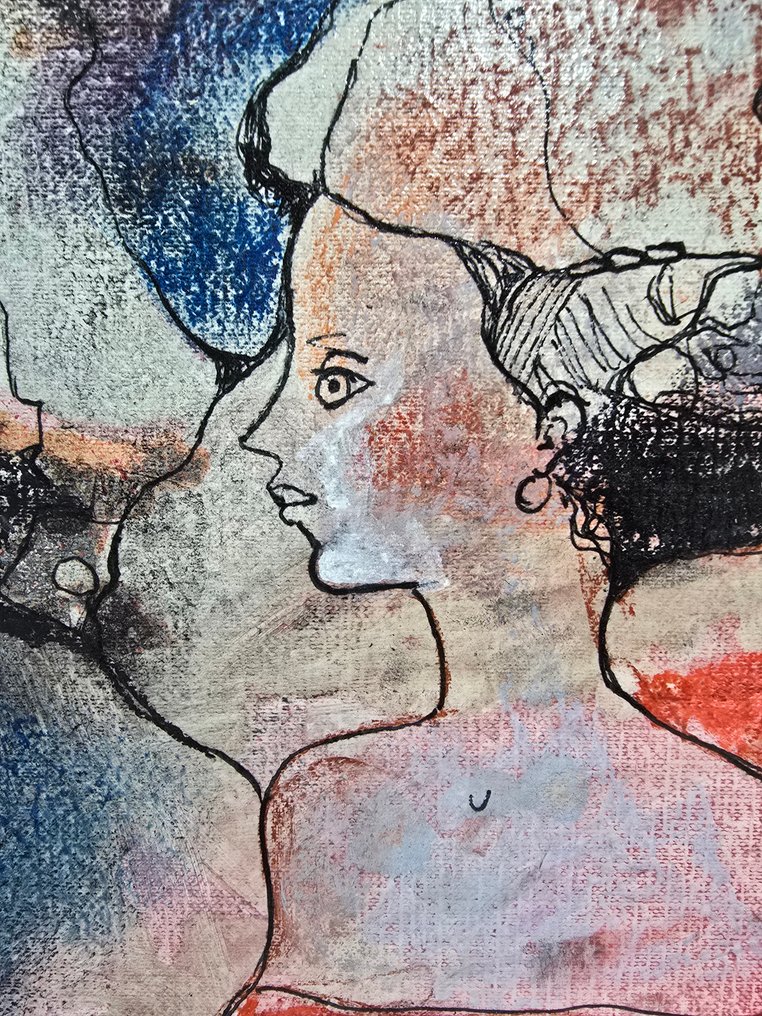
This painting presents a deeply suggestive and poetic image, centered on a female figure emerging as an almost dreamlike being within an undefined space. Her silhouette, outlined with free and flowing lines, seems to float among abstract shapes and changing backgrounds, as if belonging to an inner world rather than a concrete reality. The profile of her face, delicate and serene, conveys a sense of silent introspection, while her gaze appears directed toward a distant thought, invisible to the viewer but intensely present in the scene.
The head of the figure takes on a special prominence, transforming into a symbolic space where volumes, textures, and organic shapes blend. This ensemble suggests a complex mind, filled with ideas, memories, and intertwined emotions. It is not a literal representation but a visual evocation of thought and imagination, where the internal manifests outwardly. The hair, more than a physical element, seems to become an extension of the mental landscape, integrating with the abstract forms surrounding it.
The body, slender and elongated, enhances the sense of fragility and lightness. It does not firmly support itself on the ground but seems to be balanced in a delicate, almost unstable equilibrium, as if the figure is in a state of transition. This posture conveys a sense of halted movement, of constant transformation, and suggests an intimate relationship between the human being and the emotional environment surrounding it. The figure does not occupy space dominantly but interacts with it, blending with its tones and rhythms.
The background is composed of a superposition of colors and stains that create a vibrant and emotional atmosphere. The chromatic contrasts add depth and dynamism, while the diffuse shapes eliminate any concrete spatial reference. This undefined space reinforces the idea that the scene does not occur in a recognizable physical place but in a symbolic realm, where the emotional and the imaginary take center stage. Everything seems to vibrate gently, as if the very air were charged with sensations.
The absence of explicit narrative elements leaves the viewer free to interpret the scene from their own experience. The female figure can be understood as a symbol of consciousness, creative thought, or the inner world—open and vulnerable. Each line and shape seems to suggest more than they show, inviting a slow and reflective reading, where meaning is constructed in a personal and emotional way.
Overall, the painting offers an intimate and evocative view of the human being as a sensitive and complex entity, fused with an inner universe full of emotions, ideas, and silences, and proposes a contemplative experience that transcends the visible to delve into the emotional and the symbolic.
Seller's Story
We are Pictura Auctions and our mission is to provide an online space where art lovers, collectors and enthusiasts can immerse themselves in a wide repertoire of masterpieces, from the most revolutionary avant-garde to classic jewels that have stood the test of time. Our team of expert curators has carefully assembled a diverse and exciting collection, selecting the most significant and moving pieces from different eras and cultures.
Translated by Google TranslatePictura Subastas presents this magnificent work of art by Miquel Torner de Semir, depicting a female figure as a symbol of the inner world, where thought, emotion, and identity blend in a poetic and abstract space. The painting stands out for its excellent technique and the high pictorial quality it conveys.
Dimensions with frame: 37x31x2 cm.
Frame-free dimensions: 27x22 cm.
· Oil on panel, hand-signed by the artist in the lower left, Miquel Torner de Semir.
The piece is in good condition.
The artwork is sold with a beautiful frame (included in the auction as a gift).
The work comes from an exclusive private collection in Girona.
Important note: the included photographs are an integral part of the lot description.
The picture will be professionally packed by an IVEX expert (https://www.instagram.com/ivex.online/), using high-quality materials to ensure its protection. The shipping price covers both the cost of professional packaging and the transportation itself.
The shipment will be sent via Correos, GLS, or NACEX with tracking. International shipping options are available.
This painting presents a deeply suggestive and poetic image, centered on a female figure emerging as an almost dreamlike being within an undefined space. Her silhouette, outlined with free and flowing lines, seems to float among abstract shapes and changing backgrounds, as if belonging to an inner world rather than a concrete reality. The profile of her face, delicate and serene, conveys a sense of silent introspection, while her gaze appears directed toward a distant thought, invisible to the viewer but intensely present in the scene.
The head of the figure takes on a special prominence, transforming into a symbolic space where volumes, textures, and organic shapes blend. This ensemble suggests a complex mind, filled with ideas, memories, and intertwined emotions. It is not a literal representation but a visual evocation of thought and imagination, where the internal manifests outwardly. The hair, more than a physical element, seems to become an extension of the mental landscape, integrating with the abstract forms surrounding it.
The body, slender and elongated, enhances the sense of fragility and lightness. It does not firmly support itself on the ground but seems to be balanced in a delicate, almost unstable equilibrium, as if the figure is in a state of transition. This posture conveys a sense of halted movement, of constant transformation, and suggests an intimate relationship between the human being and the emotional environment surrounding it. The figure does not occupy space dominantly but interacts with it, blending with its tones and rhythms.
The background is composed of a superposition of colors and stains that create a vibrant and emotional atmosphere. The chromatic contrasts add depth and dynamism, while the diffuse shapes eliminate any concrete spatial reference. This undefined space reinforces the idea that the scene does not occur in a recognizable physical place but in a symbolic realm, where the emotional and the imaginary take center stage. Everything seems to vibrate gently, as if the very air were charged with sensations.
The absence of explicit narrative elements leaves the viewer free to interpret the scene from their own experience. The female figure can be understood as a symbol of consciousness, creative thought, or the inner world—open and vulnerable. Each line and shape seems to suggest more than they show, inviting a slow and reflective reading, where meaning is constructed in a personal and emotional way.
Overall, the painting offers an intimate and evocative view of the human being as a sensitive and complex entity, fused with an inner universe full of emotions, ideas, and silences, and proposes a contemplative experience that transcends the visible to delve into the emotional and the symbolic.
Seller's Story
We are Pictura Auctions and our mission is to provide an online space where art lovers, collectors and enthusiasts can immerse themselves in a wide repertoire of masterpieces, from the most revolutionary avant-garde to classic jewels that have stood the test of time. Our team of expert curators has carefully assembled a diverse and exciting collection, selecting the most significant and moving pieces from different eras and cultures.
Translated by Google TranslateDetails
Artist
Miquel Torner de Semir (1938)
Sold with frame
Yes
Sold by
Gallery
Edition
Original
Title of artwork
Presencia interior
Technique
Oil painting
Signature
Hand signed
Country of Origin
Spain
Condition
Good condition
Height
37 cm
Width
31 cm
Style
Baroque
Period
1980-1990
Sold by
