Europäische Schule (XIX-XX) - Portrait eines Herren


06
days
18
hours
39
minutes
34
seconds

No bids placed
Catawiki Buyer Protection
Your payment’s safe with us until you receive your object.View details
Trustpilot 4.4 | 123536 reviews
Rated Excellent on Trustpilot.
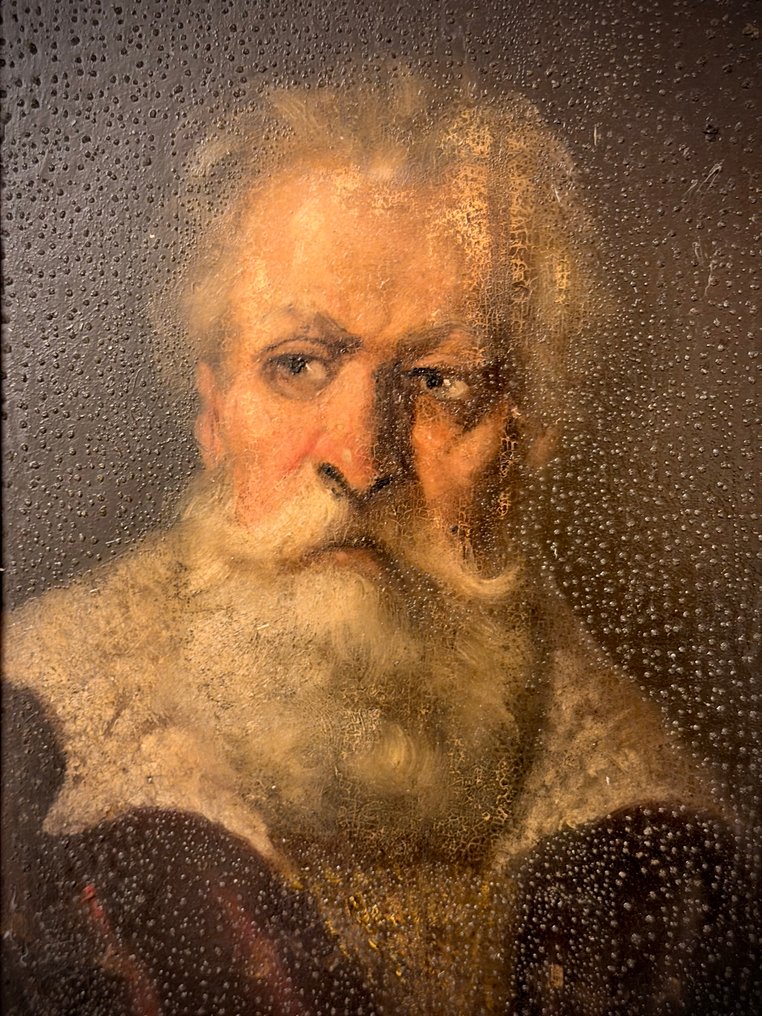
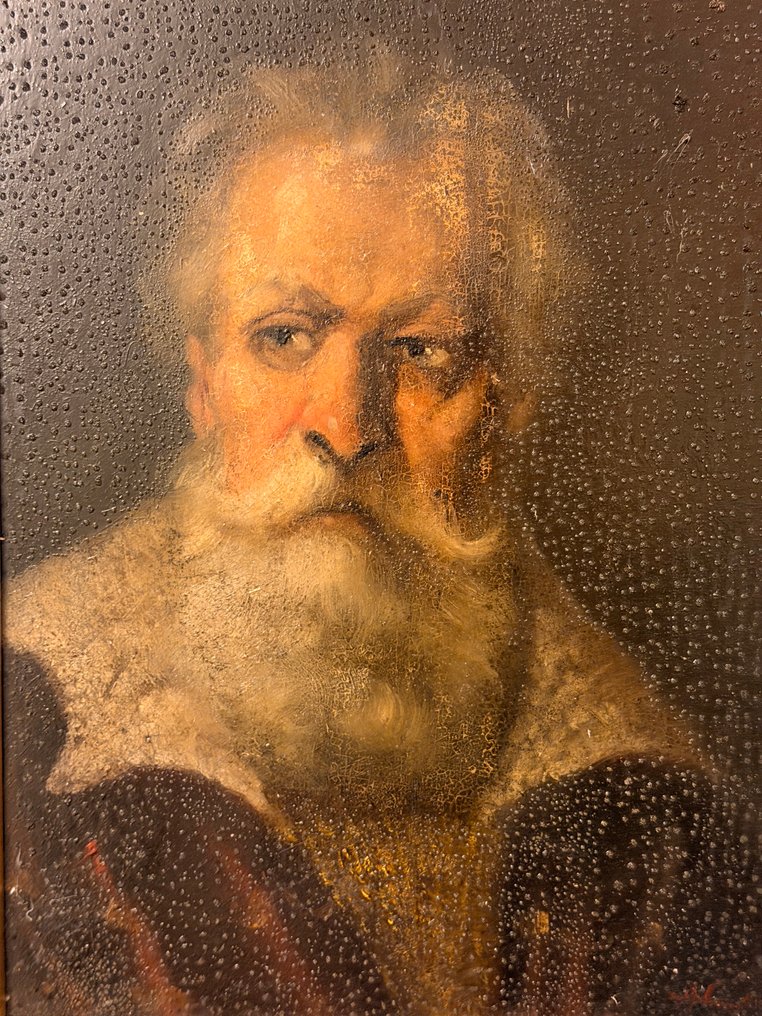
Portrait of a gentleman, an oil painting from Austria dating to the 19th century, handsigned, in good condition and sold with its frame, measuring 44 by 35 cm.
AI-assisted summary
Description from the seller
Title
Portrait paintings
Portrayed gentleman
The old frame is included and will be shipped well-packaged with the painting.
The object is probably an oil painting on a panel. However, this cannot be determined with 100% certainty.
Measurements see photos. Measured with the iPhone measuring app.
H 51cm
B 42cm
Measurements may vary due to AI measurement but are generally accurate.
Dating and provenance probably from the end of the 19th century or the 20th century, hand-signed (illegible and not identifiable, artist unknown).
Representation and iconography
The painting depicts a half-figure portrait of a somewhat older or mature man with a beard. The figure is shown in a frontal side view and does not look directly at the viewer but instead gazes into a somewhat distant corner of the room, creating a personal and calm atmosphere.
Clothing and accessories
The figure wears a voluminous costume from the early 19th century or possibly of Baroque origin. This could also be an indication that it is a copy of a Baroque painting.
The clothing in the shoulder area is accented by a white collar.
Gesture and expression: The expression is serious, yet calm and composed. The dark areas under the eyes, as well as the finely accentuated regions on the cheek, nose, and hair, indicate a naturalistic depiction that valued honest, unembellished representation. The portrait conveys intimacy and respect for the personality of the subject.
Technique and painting style
Painting technique: probably oil on fiberboard (cannot be definitively determined). The color is applied opaquely. Brushwork: The painting style is relatively summary, but very detailed and targeted in the face.
Face: Finer modeling of facial features, nose, cheeks, and eye area. The eyes are strongly accentuated, a typical iconography of folk portraiture that emphasizes health and vitality.
Clothing/background: The style here is precise and detailed, especially in the area of the details. The structures of the collar and the folds flow in warm lines and earthy tones.
Colorfulness: The image is characterized by warm brown, earthy tones and the man's calm, contemplative presence.
Stylistic and Historical Classification
Stylistic placement: The work stylistically belongs to the 19th century, but it may have been created in the 20th century as a copy of historicism. This cannot be definitively determined. An alternative painting technique to oil can also be considered due to the plate. However, it is also possible that the plate is only attached as reinforcement to the support material.
Portrait: Characteristically, it is oriented towards the bourgeois subject and domestic intimacy. Emphasis was placed on a realistic, often somewhat strict and psychologically insightful depiction without heroic exaggeration. The depiction of the gentleman aligns with the ideal of the grand bourgeois portrait and originally originates from the Baroque period and the Netherlands, where it reached its artistic zenith during the Golden Age from Holland to Flanders (today the Netherlands and Belgium).
Artist: Since the work is signed but not attributable, no expertise regarding the artist can be provided here. Precise biographical classification would require further art historical research.
Condition and documentation
The motif is generally stable and well-preserved. The old wooden frame is also in good, proper condition.
Title
Portrait paintings
Portrayed gentleman
The old frame is included and will be shipped well-packaged with the painting.
The object is probably an oil painting on a panel. However, this cannot be determined with 100% certainty.
Measurements see photos. Measured with the iPhone measuring app.
H 51cm
B 42cm
Measurements may vary due to AI measurement but are generally accurate.
Dating and provenance probably from the end of the 19th century or the 20th century, hand-signed (illegible and not identifiable, artist unknown).
Representation and iconography
The painting depicts a half-figure portrait of a somewhat older or mature man with a beard. The figure is shown in a frontal side view and does not look directly at the viewer but instead gazes into a somewhat distant corner of the room, creating a personal and calm atmosphere.
Clothing and accessories
The figure wears a voluminous costume from the early 19th century or possibly of Baroque origin. This could also be an indication that it is a copy of a Baroque painting.
The clothing in the shoulder area is accented by a white collar.
Gesture and expression: The expression is serious, yet calm and composed. The dark areas under the eyes, as well as the finely accentuated regions on the cheek, nose, and hair, indicate a naturalistic depiction that valued honest, unembellished representation. The portrait conveys intimacy and respect for the personality of the subject.
Technique and painting style
Painting technique: probably oil on fiberboard (cannot be definitively determined). The color is applied opaquely. Brushwork: The painting style is relatively summary, but very detailed and targeted in the face.
Face: Finer modeling of facial features, nose, cheeks, and eye area. The eyes are strongly accentuated, a typical iconography of folk portraiture that emphasizes health and vitality.
Clothing/background: The style here is precise and detailed, especially in the area of the details. The structures of the collar and the folds flow in warm lines and earthy tones.
Colorfulness: The image is characterized by warm brown, earthy tones and the man's calm, contemplative presence.
Stylistic and Historical Classification
Stylistic placement: The work stylistically belongs to the 19th century, but it may have been created in the 20th century as a copy of historicism. This cannot be definitively determined. An alternative painting technique to oil can also be considered due to the plate. However, it is also possible that the plate is only attached as reinforcement to the support material.
Portrait: Characteristically, it is oriented towards the bourgeois subject and domestic intimacy. Emphasis was placed on a realistic, often somewhat strict and psychologically insightful depiction without heroic exaggeration. The depiction of the gentleman aligns with the ideal of the grand bourgeois portrait and originally originates from the Baroque period and the Netherlands, where it reached its artistic zenith during the Golden Age from Holland to Flanders (today the Netherlands and Belgium).
Artist: Since the work is signed but not attributable, no expertise regarding the artist can be provided here. Precise biographical classification would require further art historical research.
Condition and documentation
The motif is generally stable and well-preserved. The old wooden frame is also in good, proper condition.
Details
Artist
Europäische Schule (XIX-XX)
Sold with frame
Yes
Title of artwork
Portrait eines Herren
Technique
Oil painting
Signature
Hand signed
Country of Origin
Austria
Condition
Good condition
Height
44 cm
Width
35 cm
Depiction/Theme
Portrait
Style
Realism
Period
19th century
Sold by
