Bernard Aubertin (1934-2015) - Tableau clous


12
days
15
hours
18
minutes
02
seconds
Starting bid
€ 1
Reserve price not met

Expert
Selected by Giulia Couzzi
Master’s in culture and arts innovation, with a decade in 20th-21st century Italian art.
Estimate € 2,000 - € 2,500
No bids placed
Catawiki Buyer Protection
Your payment’s safe with us until you receive your object.View details
Trustpilot 4.4 | 123641 reviews
Rated Excellent on Trustpilot.
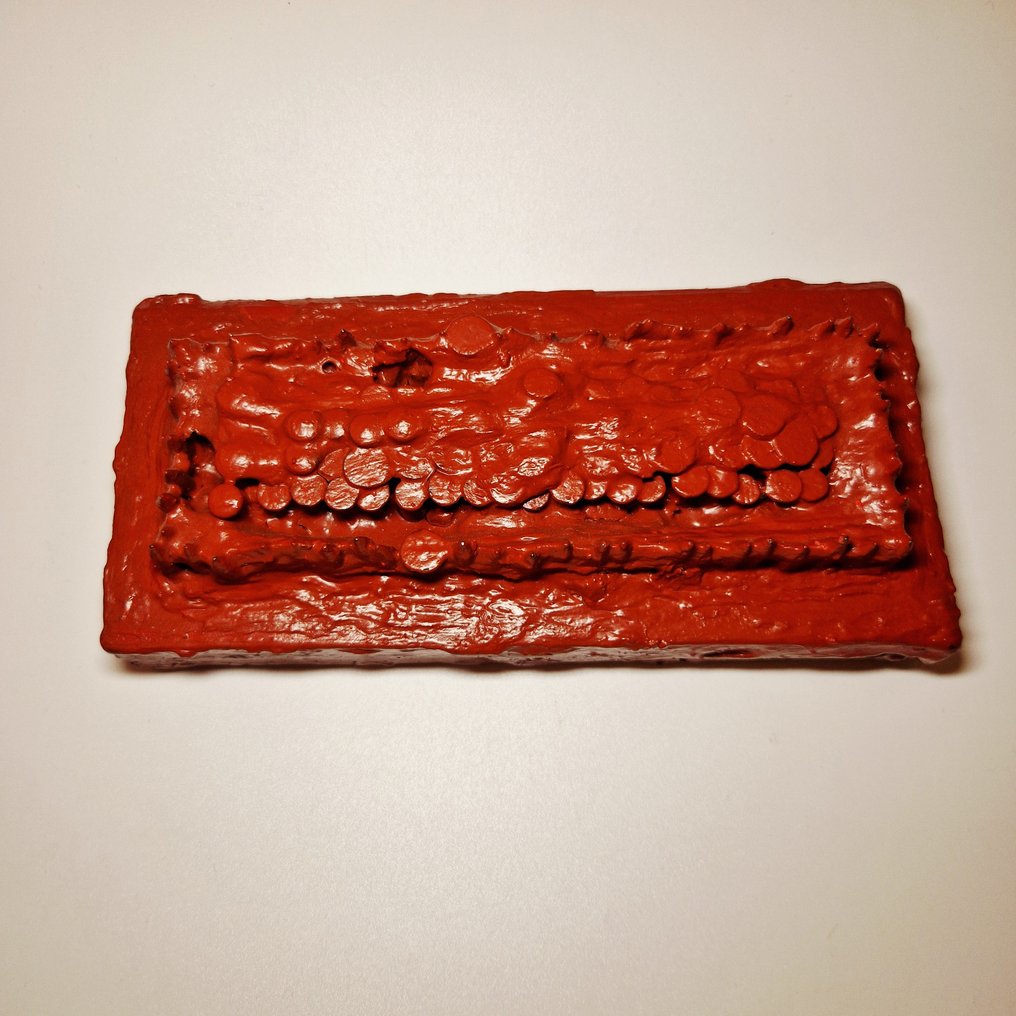
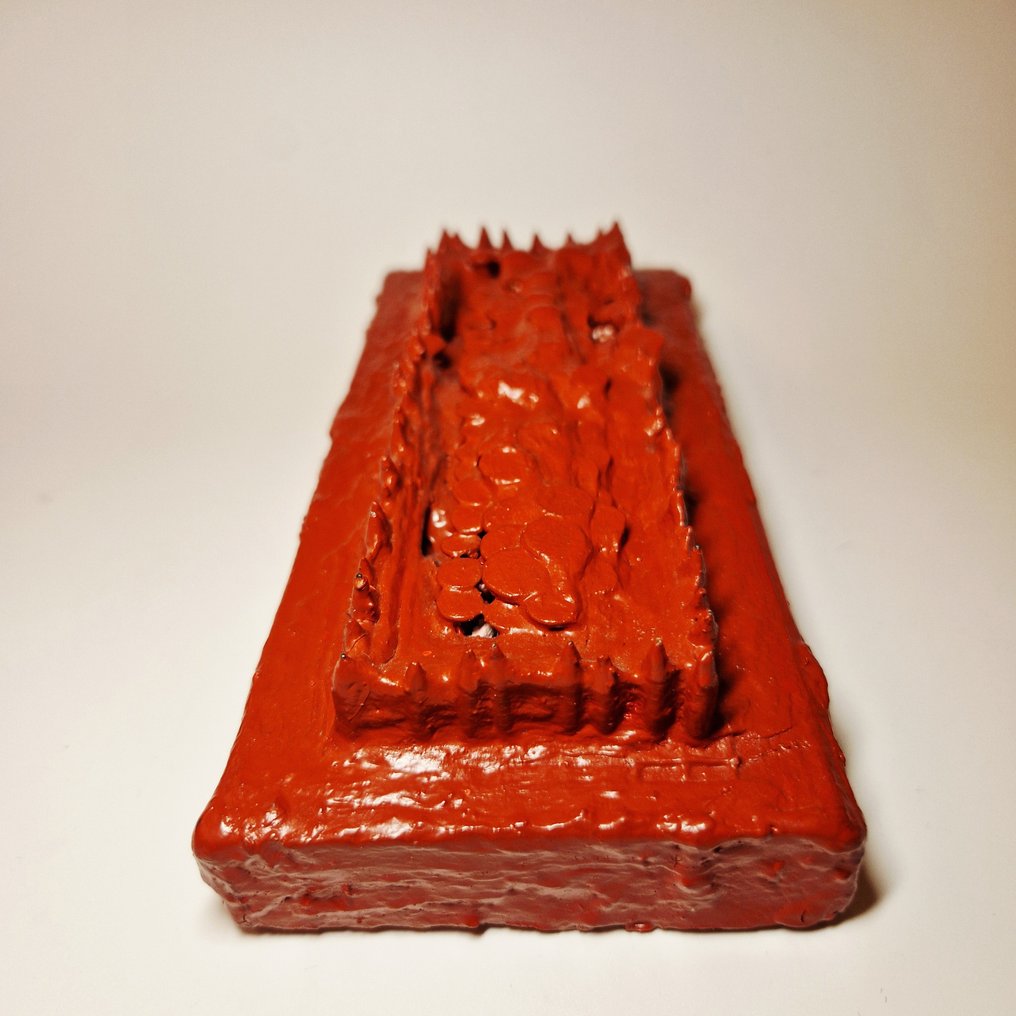
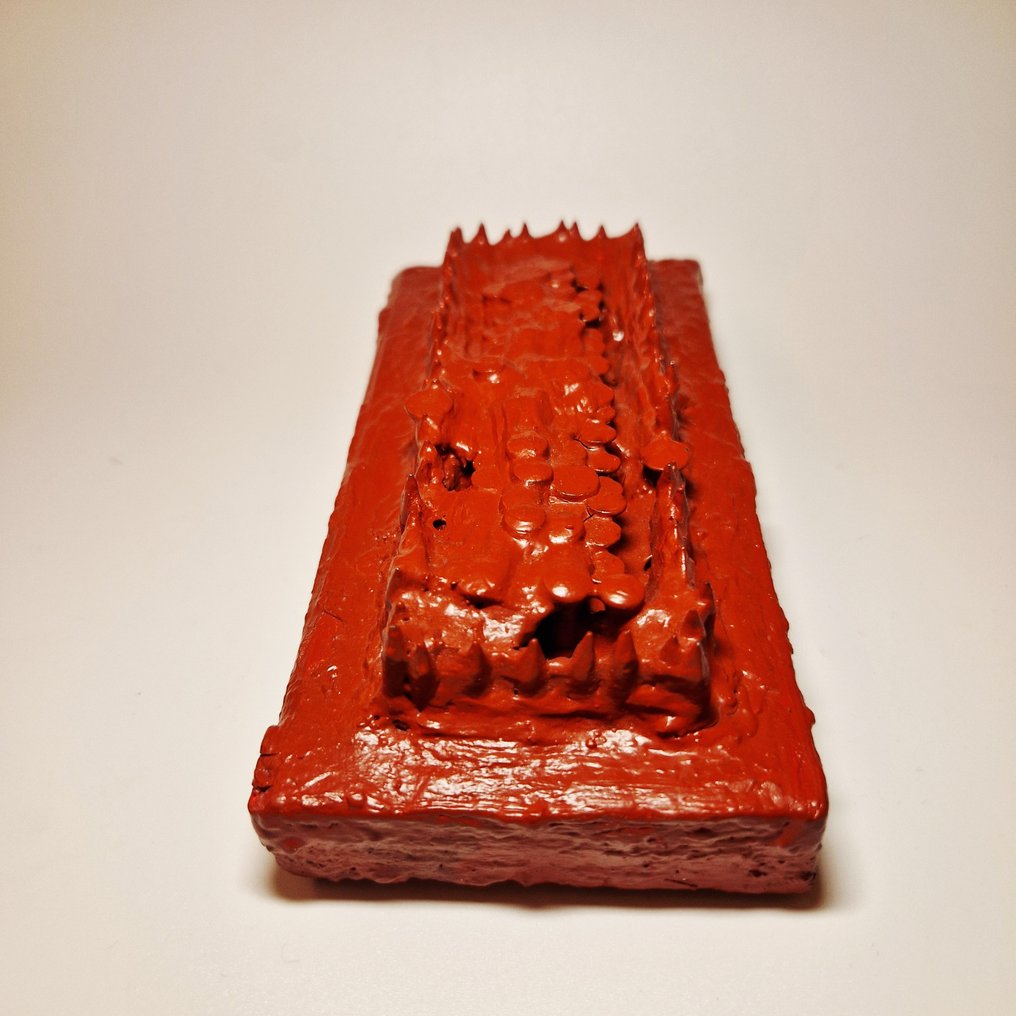
Bernard Aubertin’s Tableau clous (1967) is a red monochrome nail work on a rough wooden board, measuring 17 cm wide by 4.5 cm high and 9 cm deep, signed and produced in Italy with an accompanying certificate of authenticity and official archive registration.
AI-assisted summary
Description from the seller
Historical and very rare, created in 1967, in full adherence to the radical thought of the Zero movement, it belongs to one of the artist's most iconic cycles: monochrome red compositions with nails, a concrete manifestation of his concept of 'visual fire' and material tension.
This Tableau Clous is particularly important for its construction features typical of works from the 1960s: the nails, in a very high and dense quantity, are embedded with the tip into the board and not with the tip facing upwards, a characteristic that only the very first Tableau Clous created by the artist in the 1960s exhibit; the support of the work is a raw, irregular, and unique wooden board, not one of the standardized panels the artist used in the serial production at the end of the 1960s and the early 1970s.
These two distinctive features confer a great and significant uniqueness to the work in terms of compositional quality and historicization.
The work features tightly grouped nails arranged with the points facing downward, a significant choice in Bernard Aubertin's production and particularly typical of his works from the 1960s, a phase during which he was structuring his language with greater rigor and density. This material structure with nails amplifies the three-dimensionality and depth, emphasizing the artist's interest in the relationship between color and matter.
A work studied, felt, and desired by the artist, a powerful conceptual expression with a strong visual impact.
The work also stands out for the great materiality of the red pigment used and for its gestural character, which reflect the conceptual strength intended by Aubertin in this piece.
The Tableau Clous offered is archived at the Bernard Aubertin Official Archive, accompanied by a certificate of authenticity and storage issued.
Historical and very rare, created in 1967, in full adherence to the radical thought of the Zero movement, it belongs to one of the artist's most iconic cycles: monochrome red compositions with nails, a concrete manifestation of his concept of 'visual fire' and material tension.
This Tableau Clous is particularly important for its construction features typical of works from the 1960s: the nails, in a very high and dense quantity, are embedded with the tip into the board and not with the tip facing upwards, a characteristic that only the very first Tableau Clous created by the artist in the 1960s exhibit; the support of the work is a raw, irregular, and unique wooden board, not one of the standardized panels the artist used in the serial production at the end of the 1960s and the early 1970s.
These two distinctive features confer a great and significant uniqueness to the work in terms of compositional quality and historicization.
The work features tightly grouped nails arranged with the points facing downward, a significant choice in Bernard Aubertin's production and particularly typical of his works from the 1960s, a phase during which he was structuring his language with greater rigor and density. This material structure with nails amplifies the three-dimensionality and depth, emphasizing the artist's interest in the relationship between color and matter.
A work studied, felt, and desired by the artist, a powerful conceptual expression with a strong visual impact.
The work also stands out for the great materiality of the red pigment used and for its gestural character, which reflect the conceptual strength intended by Aubertin in this piece.
The Tableau Clous offered is archived at the Bernard Aubertin Official Archive, accompanied by a certificate of authenticity and storage issued.
Details
Era
1900-2000
Country of Origin
Italy
Material
Iron, Wood
Artist
Bernard Aubertin (1934-2015)
Title of artwork
Tableau clous
Signature
Signed
Year
1967
Colour
Red
Condition
Excellent condition
Height
4.5 cm
Width
17 cm
Depth
9 cm
Sold by
