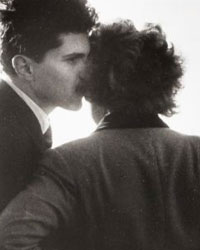
Ger Dekkers (1929-2020) - Goals, Dronten


02
days
11
hours
55
minutes
45
seconds
Current bid
€ 220
Reserve price not met

Expert
Selected by Kai Brückner
Over 35 years' experience; former gallery owner and Museum Folkwang curator.
Estimate € 800 - € 1,000
20 other people are watching this object
 Bidder 9109 Bidder 9109 | €220 | |
|---|---|---|
 Bidder 7702 Bidder 7702 | €200 | |
| Bidder 9109 | €150 | |
Catawiki Buyer Protection
Your payment’s safe with us until you receive your object.View details
Trustpilot 4.4 | 124625 reviews
Rated Excellent on Trustpilot.
Description from the seller
This is a series of photos of Gerrit Hendrik (Ger) Dekkers (Borne, August 21, 1929 – Zwolle, January 20, 2020), a Dutch photographer who lived and worked in Giethoorn.
Dimensions: 56 x 41 cm
Dimensions with frame: 54 x 39 cm
There is no glass in front.
Ger Dekkers studied from 1950 to 1954 at the AKI Kunstacademie in Enschede. He became especially known for his composite photographic sequences of the Dutch landscape. The camera was not just a recording tool for him but an essential instrument in the development of his autonomous artistry.
Dekkers' attention was drawn to alienating elements in the landscape: objects left behind or lost by people, such as pipes and tarpaulins. It was not about the 'beautiful picture,' as in his documentary photography, but about the act of looking itself — about the phenomenon of viewing. The conceptual art, which during that period reached Europe from the United States, found a fertile ground in Dekkers.
In later years, he focused on newly gained land, where human habitation is still absent, but where the human touch is clearly visible in the clean lines of dikes, canals, and subdivisions. This theme is convincingly expressed in this series.
Seller's Story
Over Art Dumay
Art Dumay in Nuenen is much more than just a gallery. It is a versatile art enterprise that brings together modern and classical art under one roof. From our gallery for contemporary painting and our art dealership with classical works, we are engaged in evaluating, purchasing, and selling art. We do this both directly and through carefully organized art auctions for modern and classical art.
Our selection is broad and varied — from modern Dutch artists to renowned masters from the past.
With more than 25 years of experience, we successfully guide purchase and sale processes for individuals, companies, governments, and institutions.
Art Dumay has an extensive regional, national, and international network of buyers and collectors.
In addition to our sales activities, we also provide professional appraisals, restorations, and repair work in-house. Thanks to our effective auction methodology, we are able to reach a large international audience, while our art collections are safely stored and insured in our 1,000 m² building in Nuenen.
At Art Dumay, expertise, a passion for art, and personal attention are at the core — each day again.
Translated by Google TranslateThis is a series of photos of Gerrit Hendrik (Ger) Dekkers (Borne, August 21, 1929 – Zwolle, January 20, 2020), a Dutch photographer who lived and worked in Giethoorn.
Dimensions: 56 x 41 cm
Dimensions with frame: 54 x 39 cm
There is no glass in front.
Ger Dekkers studied from 1950 to 1954 at the AKI Kunstacademie in Enschede. He became especially known for his composite photographic sequences of the Dutch landscape. The camera was not just a recording tool for him but an essential instrument in the development of his autonomous artistry.
Dekkers' attention was drawn to alienating elements in the landscape: objects left behind or lost by people, such as pipes and tarpaulins. It was not about the 'beautiful picture,' as in his documentary photography, but about the act of looking itself — about the phenomenon of viewing. The conceptual art, which during that period reached Europe from the United States, found a fertile ground in Dekkers.
In later years, he focused on newly gained land, where human habitation is still absent, but where the human touch is clearly visible in the clean lines of dikes, canals, and subdivisions. This theme is convincingly expressed in this series.
Seller's Story
Over Art Dumay
Art Dumay in Nuenen is much more than just a gallery. It is a versatile art enterprise that brings together modern and classical art under one roof. From our gallery for contemporary painting and our art dealership with classical works, we are engaged in evaluating, purchasing, and selling art. We do this both directly and through carefully organized art auctions for modern and classical art.
Our selection is broad and varied — from modern Dutch artists to renowned masters from the past.
With more than 25 years of experience, we successfully guide purchase and sale processes for individuals, companies, governments, and institutions.
Art Dumay has an extensive regional, national, and international network of buyers and collectors.
In addition to our sales activities, we also provide professional appraisals, restorations, and repair work in-house. Thanks to our effective auction methodology, we are able to reach a large international audience, while our art collections are safely stored and insured in our 1,000 m² building in Nuenen.
At Art Dumay, expertise, a passion for art, and personal attention are at the core — each day again.
Translated by Google TranslateDetails
Date of print
1974
Artist
Ger Dekkers (1929-2020)
Sold by
Gallery
Title of artwork
Goals, Dronten
Condition
Good condition
Technique
Digital print
Height
56 cm
Width
41 cm
Signature
Hand signed
Genre
Fine art photography