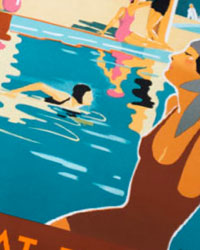
Edward Hopper - “Automat, 1927”. - 1920s


07
days
00
hours
02
minutes
28
seconds
Starting bid
€ 1
No reserve price

Expert
Selected by Juan Antonio Rodríguez
Eight years experience valuing posters, previously valuer at Balclis, Barcelona.
Estimate € 150 - € 200
No bids placed
Catawiki Buyer Protection
Your payment’s safe with us until you receive your object.View details
Trustpilot 4.4 | 127619 reviews
Rated Excellent on Trustpilot.
Description from the seller
Edward Hopper: “Automat, 1927”.
Never been framed and stored in a dark archive storage between protective acid-free paper. The photos shown are part of the description; the frame (size) displayed is for illustration purposes and is not included.
This artwork is carefully and securely packed and shipped in protective acid-free paper.
Edward Hopper was an American painter who
He is generally regarded as one of the most important realist artists of the 20th century. His work captures the quiet poetry of modern life in the United States, with scenes of isolation, stillness, and introspection that reveal the emotional undercurrents of daily existence.
Born in Nyack, New York, Hopper studied illustration and fine arts in New York City and later in Paris, where he absorbed the influence of Impressionism, but developed a much stricter and more psychological approach. In the twenties he had established his mature style: geometric clarity, sharp contrasts of light and shadow, and a restrained palette that conveyed a uniquely American atmosphere of loneliness and contemplation.
Hopper's paintings often depict urban
interiors, gas stations, hotel rooms, diners and street corners—places where time seems to stand still. His figures, usually isolated and introspective, evoke a sense of emotional distance, even within familiar surroundings.
Through this silent tension, Hopper created a
a powerful visual language that expresses both loneliness and
the dignity of modern existence reflects.
Hopper's careful control over light, whether natural or artificial, serves not only as illumination, but as a narrative force that reveals inner states and emotional ambiguity. His art bridges realism and symbolism and offers subtle social commentary on urban alienation at the beginning of the 20th century.
In the art market, Edward's works belong to it.
Hopper to the most sought-after of all
American painters. His important oil paintings are kept in prestigious institutions such as the Whitney Museum, MoMA, and the Art Institute of Chicago, and rarely come up for sale. When they do, they command exceptional prices: his 1934 painting Chop Suey was sold in 2018 for $91.9 million, establishing a record for the artist. Works from the same period and with similar subjects as Hotel Room are valued in the multi-million-dollar range, reflecting both their rarity and Hopper's enduring cultural impact.
Nowadays Hopper's influence reaches far beyond.
painting, and inspires filmmakers, photographers and contemporary artists. Hotel Room (1931) remains a prime example of his timeless exploration of silence, loneliness and the fragile poetry of modern life.
Comparable artists include: Klimt, Matisse, Hirst, Chagall, Koons, Basquiat, Hockney, Lichtenstein, Sorolla, Banksy, Brainwash, Delaunay, Nara, Soulages, Lagasse, Ramos, Rothko, Warhol, Lautrec, Haring, Indiana, Mondriaan, Groening, Richter, Monroe, Kusama, Murakami, Coa, Hopper, Ripolles, Wesselmann, Magritte, Jenk, Orlinski, Wille, Rizzi, Manara, Thiebaud, Herrera, Laurent, Klein, Dior, Vuitton, Kaws, Cappiello, Kandinsky, Warhol, Buffa, Tura, Castle, Katz, Braque, Mondrian, Groening, Richter, Monroe, Herrera, Laurent, Klein, Kusama, Murakami, Testa, Villemot, Oldenburg, Hopper, Ripolles, Wesselmann, Magritte, among others.
Edward Hopper: “Automat, 1927”.
Never been framed and stored in a dark archive storage between protective acid-free paper. The photos shown are part of the description; the frame (size) displayed is for illustration purposes and is not included.
This artwork is carefully and securely packed and shipped in protective acid-free paper.
Edward Hopper was an American painter who
He is generally regarded as one of the most important realist artists of the 20th century. His work captures the quiet poetry of modern life in the United States, with scenes of isolation, stillness, and introspection that reveal the emotional undercurrents of daily existence.
Born in Nyack, New York, Hopper studied illustration and fine arts in New York City and later in Paris, where he absorbed the influence of Impressionism, but developed a much stricter and more psychological approach. In the twenties he had established his mature style: geometric clarity, sharp contrasts of light and shadow, and a restrained palette that conveyed a uniquely American atmosphere of loneliness and contemplation.
Hopper's paintings often depict urban
interiors, gas stations, hotel rooms, diners and street corners—places where time seems to stand still. His figures, usually isolated and introspective, evoke a sense of emotional distance, even within familiar surroundings.
Through this silent tension, Hopper created a
a powerful visual language that expresses both loneliness and
the dignity of modern existence reflects.
Hopper's careful control over light, whether natural or artificial, serves not only as illumination, but as a narrative force that reveals inner states and emotional ambiguity. His art bridges realism and symbolism and offers subtle social commentary on urban alienation at the beginning of the 20th century.
In the art market, Edward's works belong to it.
Hopper to the most sought-after of all
American painters. His important oil paintings are kept in prestigious institutions such as the Whitney Museum, MoMA, and the Art Institute of Chicago, and rarely come up for sale. When they do, they command exceptional prices: his 1934 painting Chop Suey was sold in 2018 for $91.9 million, establishing a record for the artist. Works from the same period and with similar subjects as Hotel Room are valued in the multi-million-dollar range, reflecting both their rarity and Hopper's enduring cultural impact.
Nowadays Hopper's influence reaches far beyond.
painting, and inspires filmmakers, photographers and contemporary artists. Hotel Room (1931) remains a prime example of his timeless exploration of silence, loneliness and the fragile poetry of modern life.
Comparable artists include: Klimt, Matisse, Hirst, Chagall, Koons, Basquiat, Hockney, Lichtenstein, Sorolla, Banksy, Brainwash, Delaunay, Nara, Soulages, Lagasse, Ramos, Rothko, Warhol, Lautrec, Haring, Indiana, Mondriaan, Groening, Richter, Monroe, Kusama, Murakami, Coa, Hopper, Ripolles, Wesselmann, Magritte, Jenk, Orlinski, Wille, Rizzi, Manara, Thiebaud, Herrera, Laurent, Klein, Dior, Vuitton, Kaws, Cappiello, Kandinsky, Warhol, Buffa, Tura, Castle, Katz, Braque, Mondrian, Groening, Richter, Monroe, Herrera, Laurent, Klein, Kusama, Murakami, Testa, Villemot, Oldenburg, Hopper, Ripolles, Wesselmann, Magritte, among others.
Details
Era
1900-2000
Designer/Artist
Edward Hopper
Poster title
“Automat, 1927”.
Subject
Art
Estimated Period
1920s
Country of Origin
Netherlands
Condition
A (excellent - mint condition)
Nr of items
1
Height
30 cm
Width
40 cm
Sold by