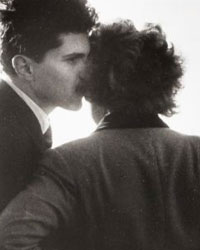
George Rodger (1908-1995) - Afrique du Nord, 1954


Opens tomorrow
Starting bid
€ 1
Add to your favourites to get an alert when the auction starts.

Catawiki Buyer Protection
Your payment’s safe with us until you receive your object.View details
Trustpilot 4.4 | 126498 reviews
Rated Excellent on Trustpilot.
Description from the seller
Rare and magnificent photogravure by the renowned photographer George Rodger titled "North Africa, 1954".
An iconic and meaningful print on the theme of the great outdoors in African land, created by one of the founding members of Magnum agency, on equal footing with Capa and Cartier-Bresson.
Limited edition copy, sold out commercially.
Description
Photogravure on thick art paper with a press agency/journal stamp (Photo credits: Magnum Agency)
Author(s): George Rodger (1908-1995)
Editor: Magnum Agency Fund
Publication: 2001
Condition: New (never framed since 2001) see photos.
Dimensions: 34.8 cm x 29.7 cm
Shipping: Professional, careful and secure packaging with tracking number and insurance via UPS or Colissimo.
Worldwide shipping
About the artist :
Born in Cheshire in 1908, George Rodger served in the British merchant navy. After a brief stay in the United States, he worked as a photographer for the BBC magazine The Listener, followed in 1938 by a short stint at the Black Star Agency.
His photos of the London blitz caught the attention of Life magazine, and he became a war correspondent. He won 18 campaign medals covering the activities of Free France in West Africa and later documented the war front in Eritrea, Abyssinia, and the Western Desert. He traveled to Iran, Burma, North Africa, Sicily, and Salerno, Italy, where he met and befriended Robert Capa.
After covering the liberation of France, Belgium, and Holland, Rodger was the first photographer to enter the Bergen-Belsen concentration camp in April 1945. In May, he photographed the German surrender at Lüneburg for Time and Life. Traumatized by the experience of searching for 'beautiful compositions' among the dead, Rodger embarked on a 28,000-mile journey across Africa and the Middle East, focusing on animal life, rituals, and lifestyles closely connected with nature.
In 1947, Rodger was invited to join Robert Capa, Henri Cartier-Bresson, David 'Chim' Seymour, and William Vandivert to found Magnum. His next major journey was a trans-African trip from Cape to Cairo, during which he took extraordinary photos of the Kordofan Nuba tribe that appeared for the first time in National Geographic in 1951. Africa remained a concern for him for over 30 years.
George Rodger died in Kent on July 24, 1995.
Rare and magnificent photogravure by the renowned photographer George Rodger titled "North Africa, 1954".
An iconic and meaningful print on the theme of the great outdoors in African land, created by one of the founding members of Magnum agency, on equal footing with Capa and Cartier-Bresson.
Limited edition copy, sold out commercially.
Description
Photogravure on thick art paper with a press agency/journal stamp (Photo credits: Magnum Agency)
Author(s): George Rodger (1908-1995)
Editor: Magnum Agency Fund
Publication: 2001
Condition: New (never framed since 2001) see photos.
Dimensions: 34.8 cm x 29.7 cm
Shipping: Professional, careful and secure packaging with tracking number and insurance via UPS or Colissimo.
Worldwide shipping
About the artist :
Born in Cheshire in 1908, George Rodger served in the British merchant navy. After a brief stay in the United States, he worked as a photographer for the BBC magazine The Listener, followed in 1938 by a short stint at the Black Star Agency.
His photos of the London blitz caught the attention of Life magazine, and he became a war correspondent. He won 18 campaign medals covering the activities of Free France in West Africa and later documented the war front in Eritrea, Abyssinia, and the Western Desert. He traveled to Iran, Burma, North Africa, Sicily, and Salerno, Italy, where he met and befriended Robert Capa.
After covering the liberation of France, Belgium, and Holland, Rodger was the first photographer to enter the Bergen-Belsen concentration camp in April 1945. In May, he photographed the German surrender at Lüneburg for Time and Life. Traumatized by the experience of searching for 'beautiful compositions' among the dead, Rodger embarked on a 28,000-mile journey across Africa and the Middle East, focusing on animal life, rituals, and lifestyles closely connected with nature.
In 1947, Rodger was invited to join Robert Capa, Henri Cartier-Bresson, David 'Chim' Seymour, and William Vandivert to found Magnum. His next major journey was a trans-African trip from Cape to Cairo, during which he took extraordinary photos of the Kordofan Nuba tribe that appeared for the first time in National Geographic in 1951. Africa remained a concern for him for over 30 years.
George Rodger died in Kent on July 24, 1995.
Details
Date of print
2001
Artist
George Rodger (1908-1995)
Sold by
Gallery
Title of artwork
Afrique du Nord, 1954
Condition
Original State
Technique
Photogravure
Height
29.7 cm
Edition
Magnum Photos Agency
Width
34.8 cm
Signature
Not signed
Genre
Fine art photography
Sold by