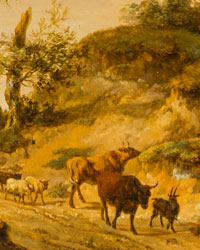
Jules Fontanez (1875-1918) - Marine


12
days
06
hours
45
minutes
08
seconds

No bids placed
Catawiki Buyer Protection
Your payment’s safe with us until you receive your object.View details
Trustpilot 4.4 | 126446 reviews
Rated Excellent on Trustpilot.
Jules Fontanez, Marine, an original oil painting by the Swiss artist dating from 1900–1910, measuring 26 × 35 cm, signed on the back and from the original edition.
AI-assisted summary
Description from the seller
Beautiful oil on panel by Swiss artist Jules Fontanez (1875-1918) depicting a sailor.
Dimensions H 26 cm L 35 cm.
Circa 1900
Signed on the back by J. Fontanez
Careful packaging and tracking
He was born on May 2, 1875 at No. 13, Place du Temple, in Geneva, in the heart of the Saint-Gervais district. His father Léon, a French citizen born in Lélex (Ain), is a commercial employee. His mother, Joséphine Mollard, works as a proofreader of musical pieces.
Jules is only four years old when his father dies on June 5, 1879. His mother remarries and marries a watchmaker, Louis Frédéric Zurlinden.
He spends his holidays in Lélex at his grandmother's. In Le Courrier Français of December 1, 1901, where his portrait by D.O. Widhopff appears, he writes: "Until the moment I came to Paris, I spent most of my time fishing for frogs in the Jura, while trying in the meantime to do cartography and architecture."
At fifteen he becomes an apprentice wood-engraver at the School of Industrial Arts. His fellow students are Forestier and Édouard Vallet. They have as professor Alfred Martin.
He specialized in caricature and contributed to several journals such as Sapajou, Passe-partout, and Papillon, a humorous newspaper appearing every other Wednesday, alternating with La Patrie suisse, which delighted the Genevans at the turn of the twentieth century.
At the same time, he receives his first commissions and produces color posters for Paris Bazar and Walner Opticien for the Société Suisse d'Affiches Artistiques de Genève.
In 1898, he goes to Paris where he will further his training, notably with Antonio de La Gandara (1862-1917), a former pupil of Jean-Léon Gérôme and a highly sought-after society portraitist.
He makes several trips to Brittany, where he paints melancholic landscapes.
He meets Jérôme Doucet, secretary of the Revue Illustrée, who will enlist him not only to regularly supply drawings or caricatures but also to illustrate humorous stories by Alphonse Allais or Alfred Capus. He also entrusts him with the illustration of his work Le livre des Masques, published under the pseudonym Montfrileux, where he depicts the characteristics of different social classes or occupations (sailors, lovers, rag-pickers, bakers), everyday-life characters on the principle of physiologies that were very fashionable in the nineteenth century.
He also supplied drawings to Le Courrier Français, which around 1900 characterized the light and sarcastic spirit of fin-de-siècle Paris and welcomed the elite of the period's cartoonists. The fashion was for the characters of the Commedia dell'arte: Pierrot, Pierette, Harlequin and Punchinello.
As early as 1902, Fontanez worked on the illustrations requested by Doucet, as editor of « Le Livre et l’Estampe » for a new work, Gaspard de la Nuit: Fantasies in the manner of Jacques Callot and Rembrandt by Aloysius Bertrand. There he demonstrates a perfect mastery of line, worthy of the first, while being able to express chiaroscuro worthy of the second.
During a stay in Geneva, his friend Antoine Dufau tells him about his book project. Dufau (1866-1936), engraver, journalist, later became curator of the Musée des Arts Décoratifs de Genève. In 1906, Figâsse et Duranpont appeared under the pseudonym Pierre Duniton, with sketches in which Fontanez expresses all his tenderness for the little people of Geneva, whom he knows well from having spent his youth in the Saint-Gervais district. In Geneva he frequents Henry Spiess, Jean Violette, Elie Moroy, Daniel Baud-Bovy.
Many newspapers solicit Fontanez and ask him for his drawings. Thus he collaborated with La Libre Parole, a nationalist and antisemitic newspaper of Édouard Drumont, as well as with Gil Blas Illustré, the weekly supplement (edited by Doucet) of the magazine Gil Blas, more controversial (1893-1912).
Fontanez moves in the circles of decadent aristocrats such as Jean Lorrain and Robert de Montesquiou, of artists mildly anarchist like Raoul Ponchon, and of the 'nocturnal extreme right' with Paul-Jean Toulet.
From 1907 onwards, Fontanez collaborates with the humor magazine Le Rire. Fontanez is also among Delagrave's in-house artists, the children's book publisher known for its superb polychrome percaline bindings. Thus he illustrated successively the works of Jules Chancel, author of adventure novels for children, Le petit Fauconnier de Louis XIII or Petit Marmiton, Grand Musicien. In 1909, Daniel Baud-Bovy asked Jules Fontanez to participate with other Swiss artists in illustrating his book Vacances d'artistes.
In August 1914, when World War I breaks out, Fontanez returns to Geneva. He creates the cover for La Fête de juin for the celebration of the centenary of Geneva's entry into the Confederation (1814-1914). The photos are by Frédéric Boissonnas, a friend of Baud-Bovy.
In France, authors and illustrators are called upon to exalt patriotic ardor. Fontanez continues his collaboration with Delagrave and then illustrates Le petit Bé et le vilain Boche, followed by La Classe 1925. That same year, struck by illness, Fontanez ceases painting and goes to live with his mother in the Paquis. Sick, blind, paralyzed, he spends his days in a wheelchair, “dependent like a child of those who watch over him.”
On January 21, 1917, at the Athénée, an exhibition-sale organized by friends of the artist, aiming to help him, was inaugurated. Sixty-five canvases are presented there. The Geneva press devotes numerous articles to it. In the same year, the Geneva Museum of Decorative Arts publishes a portfolio of etchings.
At the height of the Spanish flu epidemic that struck Geneva, Jules Fontanez died on November 28, 1918 at the age of 43 and was buried in St Georges Cemetery.
Beautiful oil on panel by Swiss artist Jules Fontanez (1875-1918) depicting a sailor.
Dimensions H 26 cm L 35 cm.
Circa 1900
Signed on the back by J. Fontanez
Careful packaging and tracking
He was born on May 2, 1875 at No. 13, Place du Temple, in Geneva, in the heart of the Saint-Gervais district. His father Léon, a French citizen born in Lélex (Ain), is a commercial employee. His mother, Joséphine Mollard, works as a proofreader of musical pieces.
Jules is only four years old when his father dies on June 5, 1879. His mother remarries and marries a watchmaker, Louis Frédéric Zurlinden.
He spends his holidays in Lélex at his grandmother's. In Le Courrier Français of December 1, 1901, where his portrait by D.O. Widhopff appears, he writes: "Until the moment I came to Paris, I spent most of my time fishing for frogs in the Jura, while trying in the meantime to do cartography and architecture."
At fifteen he becomes an apprentice wood-engraver at the School of Industrial Arts. His fellow students are Forestier and Édouard Vallet. They have as professor Alfred Martin.
He specialized in caricature and contributed to several journals such as Sapajou, Passe-partout, and Papillon, a humorous newspaper appearing every other Wednesday, alternating with La Patrie suisse, which delighted the Genevans at the turn of the twentieth century.
At the same time, he receives his first commissions and produces color posters for Paris Bazar and Walner Opticien for the Société Suisse d'Affiches Artistiques de Genève.
In 1898, he goes to Paris where he will further his training, notably with Antonio de La Gandara (1862-1917), a former pupil of Jean-Léon Gérôme and a highly sought-after society portraitist.
He makes several trips to Brittany, where he paints melancholic landscapes.
He meets Jérôme Doucet, secretary of the Revue Illustrée, who will enlist him not only to regularly supply drawings or caricatures but also to illustrate humorous stories by Alphonse Allais or Alfred Capus. He also entrusts him with the illustration of his work Le livre des Masques, published under the pseudonym Montfrileux, where he depicts the characteristics of different social classes or occupations (sailors, lovers, rag-pickers, bakers), everyday-life characters on the principle of physiologies that were very fashionable in the nineteenth century.
He also supplied drawings to Le Courrier Français, which around 1900 characterized the light and sarcastic spirit of fin-de-siècle Paris and welcomed the elite of the period's cartoonists. The fashion was for the characters of the Commedia dell'arte: Pierrot, Pierette, Harlequin and Punchinello.
As early as 1902, Fontanez worked on the illustrations requested by Doucet, as editor of « Le Livre et l’Estampe » for a new work, Gaspard de la Nuit: Fantasies in the manner of Jacques Callot and Rembrandt by Aloysius Bertrand. There he demonstrates a perfect mastery of line, worthy of the first, while being able to express chiaroscuro worthy of the second.
During a stay in Geneva, his friend Antoine Dufau tells him about his book project. Dufau (1866-1936), engraver, journalist, later became curator of the Musée des Arts Décoratifs de Genève. In 1906, Figâsse et Duranpont appeared under the pseudonym Pierre Duniton, with sketches in which Fontanez expresses all his tenderness for the little people of Geneva, whom he knows well from having spent his youth in the Saint-Gervais district. In Geneva he frequents Henry Spiess, Jean Violette, Elie Moroy, Daniel Baud-Bovy.
Many newspapers solicit Fontanez and ask him for his drawings. Thus he collaborated with La Libre Parole, a nationalist and antisemitic newspaper of Édouard Drumont, as well as with Gil Blas Illustré, the weekly supplement (edited by Doucet) of the magazine Gil Blas, more controversial (1893-1912).
Fontanez moves in the circles of decadent aristocrats such as Jean Lorrain and Robert de Montesquiou, of artists mildly anarchist like Raoul Ponchon, and of the 'nocturnal extreme right' with Paul-Jean Toulet.
From 1907 onwards, Fontanez collaborates with the humor magazine Le Rire. Fontanez is also among Delagrave's in-house artists, the children's book publisher known for its superb polychrome percaline bindings. Thus he illustrated successively the works of Jules Chancel, author of adventure novels for children, Le petit Fauconnier de Louis XIII or Petit Marmiton, Grand Musicien. In 1909, Daniel Baud-Bovy asked Jules Fontanez to participate with other Swiss artists in illustrating his book Vacances d'artistes.
In August 1914, when World War I breaks out, Fontanez returns to Geneva. He creates the cover for La Fête de juin for the celebration of the centenary of Geneva's entry into the Confederation (1814-1914). The photos are by Frédéric Boissonnas, a friend of Baud-Bovy.
In France, authors and illustrators are called upon to exalt patriotic ardor. Fontanez continues his collaboration with Delagrave and then illustrates Le petit Bé et le vilain Boche, followed by La Classe 1925. That same year, struck by illness, Fontanez ceases painting and goes to live with his mother in the Paquis. Sick, blind, paralyzed, he spends his days in a wheelchair, “dependent like a child of those who watch over him.”
On January 21, 1917, at the Athénée, an exhibition-sale organized by friends of the artist, aiming to help him, was inaugurated. Sixty-five canvases are presented there. The Geneva press devotes numerous articles to it. In the same year, the Geneva Museum of Decorative Arts publishes a portfolio of etchings.
At the height of the Spanish flu epidemic that struck Geneva, Jules Fontanez died on November 28, 1918 at the age of 43 and was buried in St Georges Cemetery.
Details
Artist
Jules Fontanez (1875-1918)
Sold with frame
No
Sold by
Owner or reseller
Edition
Original
Title of artwork
Marine
Technique
Oil painting
Signature
Hand signed
Country of Origin
Switzerland
Condition
Good condition
Height
26 cm
Width
35 cm
Depiction/Theme
Seascape
Style
Classical
Period
1900-1910
Sold by