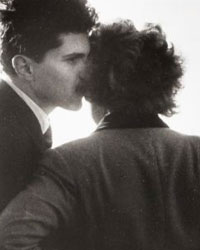
Hans Windisch - Weiblicher Akt

05
days
02
hours
46
minutes
01
second
Starting bid
€ 1
No reserve price
No bids placed

Catawiki Buyer Protection

Your payment’s safe with us until you receive your object.View details

Trustpilot 4.4 | 127145 reviews

Rated Excellent on Trustpilot.

Description from the seller

There is in the auction a very rare original photogravure print produced in the gravure printing process by
of the photographer H. Windisch.

The offered photo print in intaglio (gravure) comes from a lot of a photo book from 1927—the Das Deutsche Lichtbild—that is no longer complete and cannot be restored due to its condition. The selection of photographs offered (there are additional photographs from this context currently available) is very rare and presents a rare opportunity to acquire original photography from a limited edition in very high quality as an intaglio print. They come from my own private collection.

Due to partly significant edge defects, the photo pages were uniformly trimmed and mounted on acid-free photo board (DIN A3). The photographs are in excellent and collectible condition. They will be shipped without a frame in professional packaging.

This first volume of the series, in particular, was a worldwide success and was distributed to many countries in Europe and beyond (including an English-language insert) and served as an inspiration for the genre of photo books.

The first volume is extremely rare. It appeared as the publisher Bruno Schultz's anniversary edition in a one-off photogravure edition of the photographs. The first edition sold out so quickly that the publisher began to buy back copies.

The first issue appeared until 1938. From 1934, the selection of photographs changed radically after Adolf Hitler came to power, which opened the 1934 issue with its own foreword (“In eigener Sache” -> “In Our Own Interest”). Until 1933, Das Deutsche LICHTBILD was distinguished by a significant selection of contemporary women and men photographers who are today regarded as important protagonists in the early photography of modernism:

among others Yva, Franz Grainer, Arthur Benda, Erich Angenendt, Charlotte Rudolph, Hajek-Halke (1928), Käthe Hecht (1928), Albert Renger-Patzsch, Hans Windisch, Max Baur (1930), Hannes Maria Flach (1930), as well as texts (and some photographs) by László Moholy-Nagy (1927), Franz Werfel, Raoul Hausmann, Kurt Tucholsky (as Peter Panther, 1930) and other authors.

About the person: https://de.wikipedia.org/wiki/Hans_Windisch_(Fotograf)

Hans Windisch (born February 21, 1891 in Niederlößnitz; died June 15, 1965 at Lake Chiemsee) was a German photographer, bestselling author, graphic designer and illustrator.

Work as a visual artist

In the early 1920s, he designed, as a painter and graphic artist, precious bibliographic portfolios and “cycles” that today are being rediscovered and reprinted. His style of that time is described by the Spencer Museum of Art at the University of Kansas as a “fusion of Expressionism and Constructivism, reminiscent of Fritz Lang’s later film classic Metropolis.” From high-quality art in small editions, Windisch’s work shifted to illustrating rather popular works in larger print runs. After Rittner’s Die Brücke (1920) for Ullstein with an original lithograph, he spent the following years working as a draftsman and illustrator with the Berlin publisher Neufeld & Henius. In 1922 he created the graphic portfolio Ten Lithographs to Charlotte Bara’s Danse Macabre. Charlotte Bara was aExpression dancer of that era. The sought-after portfolio was reprinted in 2000.

In 1924 he won the competition for the new publisher's emblem for the publishing house J.H.W. Dietz Nachf. Bonn, which is still used today.
The Beginning of the Photographic Career

Alongside his graphic work, he completed training in phototechnical techniques. In 1926 he became editor-in-chief of the house magazine of Photo-Schaja in Munich. In the following year, Windisch published the first volume (Annual Show 1927) of Das deutsche Lichtbild in the Berlin publisher Robert & Bruno Schultz, which was “enthusiastically welcomed” by Reich kunstwart Edwin Redslob and by the Bauhaus professor László Moholy-Nagy: “The photographic process is unparalleled compared to the optical methods known to date.” This issue was the only one printed using gravure printing.

Toward the end of the twenties, Windisch left graphic arts and dedicated himself entirely to advertising for photography as well as to photography itself, especially the imparting of photographic knowledge to interested “amateurs,” as in his work Knipsen – aber mit Verstand! A Guide for Amateurs who want to take good pictures, announced in 1929. In 1930 he turned to advertising for the Görlitzer Optisch-Mechanische Industrie-Anstalt Hugo Meyer and their Plasmat lenses in Mein Freund, der Plasmat!. In 1933, published by the Photo-Schaja publishing house, appeared his first non-fiction bestseller Der Photo-Amateur, which went through several editions in the 1930s.

During the Nazi era he could continue to work as a photographer, even though he did not agree with the politics, since the rulers valued this medium. His expressionist graphic work, which in the sense of National Socialist aesthetics could have been deemed “degenerate,” was known to only a few insiders.[4] For professional reasons he had to join the Reich Chamber of Literature.[4] After World War II he described this time as an “intellectual concentration camp on the unobtrusive domain of phototechnical textbooks.”[6]
Collaboration with Heering

In the mid-1930s, Windisch met the publisher Walther Heering, who had founded a photography publishing house in Halle in 1932. In 1936, Heering and Windisch released the Neue Foto-Schule, which made Windisch an international bestselling author. After the German first edition of 20,000 copies, the world’s most widely distributed photography textbook continued to appear in several editions in English and French up to 1939.

In 1935 Windisch suffered a serious accident. As a result of the ensuing disability, he was discharged from the Wehrmacht. Windisch moved with his wife from Berlin to the Chiemsee, where they lived in seclusion and, besides photography, engaged in alternative gardening techniques. In 1940 he began work on his manuscript Führer und Verführte, in which, shaped by Kantian philosophy, he confronted National Socialism. Still during the war, the publisher Heering followed him to the Chiemsee, to Seebruck, from where he subsequently ran his publishing house. Right after the war, Heering submitted Windisch’s manuscript to the American military authorities and obtained the printing authorization. In 1946 Führer und Verführte. Eine Analyse deutschen Schicksals appeared. In 1947 Windisch’s work Genius und Dämon. Der Fall Deutschland. Ein Manifest followed. In 1948 Windisch wrote »Daimonion«. Über das Menschliche, which appeared in Augsburg in 1948. With the third work he closed the two preceding ones and regarded them himself as irrelevant.[7]

On the German Lichtbild: (SOURCE; https://de.wikipedia.org/wiki/Das_Deutsche_Lichtbild)

In 1927, photographer Hans Windisch founded the yearbook Das Deutsche Lichtbild at the Verlag von Bruno Schultz in Berlin. It was to contain the most important photographs of a year and some text contributions. The graphic designer László Moholy-Nagy created the title emblem. The Reichskunstwart Edwin Redslob enthusiastically praised the first issue.

In 1930, it was stated in the issue.

The Deutsche Lichtbild annually brings together from all photographic fields the 100 strongest images of the year by German professional and amateur photographers, in incomparable reproductions and in an ideal book presentation. It has been described by the judgments cited here from home and abroad as the best Lichtbilder yearbook in the world.

There is in the auction a very rare original photogravure print produced in the gravure printing process by
of the photographer H. Windisch.

The offered photo print in intaglio (gravure) comes from a lot of a photo book from 1927—the Das Deutsche Lichtbild—that is no longer complete and cannot be restored due to its condition. The selection of photographs offered (there are additional photographs from this context currently available) is very rare and presents a rare opportunity to acquire original photography from a limited edition in very high quality as an intaglio print. They come from my own private collection.

Due to partly significant edge defects, the photo pages were uniformly trimmed and mounted on acid-free photo board (DIN A3). The photographs are in excellent and collectible condition. They will be shipped without a frame in professional packaging.

This first volume of the series, in particular, was a worldwide success and was distributed to many countries in Europe and beyond (including an English-language insert) and served as an inspiration for the genre of photo books.

The first volume is extremely rare. It appeared as the publisher Bruno Schultz's anniversary edition in a one-off photogravure edition of the photographs. The first edition sold out so quickly that the publisher began to buy back copies.

The first issue appeared until 1938. From 1934, the selection of photographs changed radically after Adolf Hitler came to power, which opened the 1934 issue with its own foreword (“In eigener Sache” -> “In Our Own Interest”). Until 1933, Das Deutsche LICHTBILD was distinguished by a significant selection of contemporary women and men photographers who are today regarded as important protagonists in the early photography of modernism:

among others Yva, Franz Grainer, Arthur Benda, Erich Angenendt, Charlotte Rudolph, Hajek-Halke (1928), Käthe Hecht (1928), Albert Renger-Patzsch, Hans Windisch, Max Baur (1930), Hannes Maria Flach (1930), as well as texts (and some photographs) by László Moholy-Nagy (1927), Franz Werfel, Raoul Hausmann, Kurt Tucholsky (as Peter Panther, 1930) and other authors.

About the person: https://de.wikipedia.org/wiki/Hans_Windisch_(Fotograf)

Hans Windisch (born February 21, 1891 in Niederlößnitz; died June 15, 1965 at Lake Chiemsee) was a German photographer, bestselling author, graphic designer and illustrator.

Work as a visual artist

In the early 1920s, he designed, as a painter and graphic artist, precious bibliographic portfolios and “cycles” that today are being rediscovered and reprinted. His style of that time is described by the Spencer Museum of Art at the University of Kansas as a “fusion of Expressionism and Constructivism, reminiscent of Fritz Lang’s later film classic Metropolis.” From high-quality art in small editions, Windisch’s work shifted to illustrating rather popular works in larger print runs. After Rittner’s Die Brücke (1920) for Ullstein with an original lithograph, he spent the following years working as a draftsman and illustrator with the Berlin publisher Neufeld & Henius. In 1922 he created the graphic portfolio Ten Lithographs to Charlotte Bara’s Danse Macabre. Charlotte Bara was aExpression dancer of that era. The sought-after portfolio was reprinted in 2000.

In 1924 he won the competition for the new publisher's emblem for the publishing house J.H.W. Dietz Nachf. Bonn, which is still used today.
The Beginning of the Photographic Career

Alongside his graphic work, he completed training in phototechnical techniques. In 1926 he became editor-in-chief of the house magazine of Photo-Schaja in Munich. In the following year, Windisch published the first volume (Annual Show 1927) of Das deutsche Lichtbild in the Berlin publisher Robert & Bruno Schultz, which was “enthusiastically welcomed” by Reich kunstwart Edwin Redslob and by the Bauhaus professor László Moholy-Nagy: “The photographic process is unparalleled compared to the optical methods known to date.” This issue was the only one printed using gravure printing.

Toward the end of the twenties, Windisch left graphic arts and dedicated himself entirely to advertising for photography as well as to photography itself, especially the imparting of photographic knowledge to interested “amateurs,” as in his work Knipsen – aber mit Verstand! A Guide for Amateurs who want to take good pictures, announced in 1929. In 1930 he turned to advertising for the Görlitzer Optisch-Mechanische Industrie-Anstalt Hugo Meyer and their Plasmat lenses in Mein Freund, der Plasmat!. In 1933, published by the Photo-Schaja publishing house, appeared his first non-fiction bestseller Der Photo-Amateur, which went through several editions in the 1930s.

During the Nazi era he could continue to work as a photographer, even though he did not agree with the politics, since the rulers valued this medium. His expressionist graphic work, which in the sense of National Socialist aesthetics could have been deemed “degenerate,” was known to only a few insiders.[4] For professional reasons he had to join the Reich Chamber of Literature.[4] After World War II he described this time as an “intellectual concentration camp on the unobtrusive domain of phototechnical textbooks.”[6]
Collaboration with Heering

In the mid-1930s, Windisch met the publisher Walther Heering, who had founded a photography publishing house in Halle in 1932. In 1936, Heering and Windisch released the Neue Foto-Schule, which made Windisch an international bestselling author. After the German first edition of 20,000 copies, the world’s most widely distributed photography textbook continued to appear in several editions in English and French up to 1939.

In 1935 Windisch suffered a serious accident. As a result of the ensuing disability, he was discharged from the Wehrmacht. Windisch moved with his wife from Berlin to the Chiemsee, where they lived in seclusion and, besides photography, engaged in alternative gardening techniques. In 1940 he began work on his manuscript Führer und Verführte, in which, shaped by Kantian philosophy, he confronted National Socialism. Still during the war, the publisher Heering followed him to the Chiemsee, to Seebruck, from where he subsequently ran his publishing house. Right after the war, Heering submitted Windisch’s manuscript to the American military authorities and obtained the printing authorization. In 1946 Führer und Verführte. Eine Analyse deutschen Schicksals appeared. In 1947 Windisch’s work Genius und Dämon. Der Fall Deutschland. Ein Manifest followed. In 1948 Windisch wrote »Daimonion«. Über das Menschliche, which appeared in Augsburg in 1948. With the third work he closed the two preceding ones and regarded them himself as irrelevant.[7]

On the German Lichtbild: (SOURCE; https://de.wikipedia.org/wiki/Das_Deutsche_Lichtbild)

In 1927, photographer Hans Windisch founded the yearbook Das Deutsche Lichtbild at the Verlag von Bruno Schultz in Berlin. It was to contain the most important photographs of a year and some text contributions. The graphic designer László Moholy-Nagy created the title emblem. The Reichskunstwart Edwin Redslob enthusiastically praised the first issue.

In 1930, it was stated in the issue.

The Deutsche Lichtbild annually brings together from all photographic fields the 100 strongest images of the year by German professional and amateur photographers, in incomparable reproductions and in an ideal book presentation. It has been described by the judgments cited here from home and abroad as the best Lichtbilder yearbook in the world.

Details

Date of print
1927
Artist
Hans Windisch
Sold by
Owner or reseller
Title of artwork
Weiblicher Akt
Condition
Very fine
Technique
Photogravure
Height
27 cm
Edition
Limited Edition
Width
22 cm
Signature
Not signed
Genre
Fine art photography
GermanyVerified
38
Objects sold
Private

Similar objects

For you in

Photography