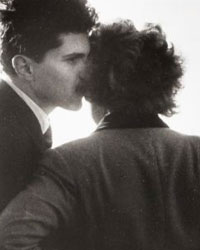
Isabel Muńoz - En Jambes


Opens 11:00
Starting bid
€ 1
Add to your favourites to get an alert when the auction starts.

Expert
Selected by Elena Vaninetti
Has over ten years of experience in art, specialising in post-war photography and contemporary art.
Estimate € 200 - € 250
Catawiki Buyer Protection
Your payment’s safe with us until you receive your object.View details
Trustpilot 4.4 | 127239 reviews
Rated Excellent on Trustpilot.
Description from the seller
This original photolithograph was pulled on BFK Rives 270 g vellum in Paris, at the presses of the lithography workshop À Fleur de Pierre, in 1995.
It bears the number 40 of 300 copies and is signed by the artist.
The workshop's red seal also appears in the margin.
This image is part of a collection called 'En jambes'. It is both a tribute to the elegance of legs and to tango.
Large Format 40 x 50
In the early 1970s, Isabel Muñoz studied photography at Fotocentro in Madrid, then at the Department of Visual and Cultural Studies at the University of Rochester (New York). She would return several times to the United States to become familiar with the various techniques of shooting and laboratory work. Her first solo exhibition took place in 1986 in Madrid, marking the beginning of a long series. Since the mid-1970s, she has developed a body of work that presents itself as a true hymn to the human body and to its diverse expressive possibilities. Through photography, she aims to capture the movements of the body, particularly through dance, which constitutes a privileged means of expression.
This original photolithograph was pulled on BFK Rives 270 g vellum in Paris, at the presses of the lithography workshop À Fleur de Pierre, in 1995.
It bears the number 40 of 300 copies and is signed by the artist.
The workshop's red seal also appears in the margin.
This image is part of a collection called 'En jambes'. It is both a tribute to the elegance of legs and to tango.
Large Format 40 x 50
In the early 1970s, Isabel Muñoz studied photography at Fotocentro in Madrid, then at the Department of Visual and Cultural Studies at the University of Rochester (New York). She would return several times to the United States to become familiar with the various techniques of shooting and laboratory work. Her first solo exhibition took place in 1986 in Madrid, marking the beginning of a long series. Since the mid-1970s, she has developed a body of work that presents itself as a true hymn to the human body and to its diverse expressive possibilities. Through photography, she aims to capture the movements of the body, particularly through dance, which constitutes a privileged means of expression.
Details
Date of print
1995
Artist
Isabel Muńoz
Sold by
Owner or reseller
Title of artwork
En Jambes
Condition
Good condition
Technique
Photolithography
Height
50 cm
Width
40 cm
Signature
Hand signed
Genre
Fine art photography
Sold by