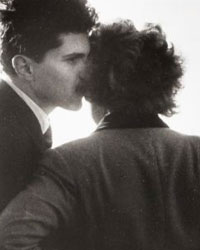
Denis Brihat - Inde - La voyageuse - 1955


05
days
21
hours
31
minutes
43
seconds
Starting bid
€ 1
Reserve price not met

Expert
Selected by Kai Brückner
Over 35 years' experience; former gallery owner and Museum Folkwang curator.
Estimate € 1,300 - € 1,500
No bids placed
Catawiki Buyer Protection
Your payment’s safe with us until you receive your object.View details
Trustpilot 4.4 | 132329 reviews
Rated Excellent on Trustpilot.
Description from the seller
DENIS BRIHAT, A PHOTOGRAPHER COMMITTED TO RECOGNIZING HIS ART
Denis Brihat was born in Paris in 1928. laureate of the Niépce Prize in 1957, he opened the way for a generation of photographer-authors. He is one of the first to advocate that photography be recognized as a full artistic expression, thanks to carefully made prints, numbered in small editions and often in large format.
From 1958, the photographer left the capital to lead a frugal life close to nature in the Luberon. There he met remarkable people such as Pablo Picasso or Fernand Léger, with whom he participated in the Groupe Espace, bringing together artists and architects with a common ambition, that of the unity of art.
Regularly invited to the United States, he was one of the first French photographers to be exhibited by John Szarkowski in 1967 at the MoMA in New York, with his friends Jean-Pierre Sudre and Pierre Cordier.
Denis Brihat is also a fervent advocate of a democratic valorizaton of photography. He participated in the exhibitions of Agathe Gaillard Gallery, one of the first photography galleries in Paris, opened in 1975. He is among the founders of the Arles International Photography Encounter festival with Lucien Clergue, and is also part of the Château d’eau in Toulouse with Jean and Michel Dieuzaide.
BETWEEN VISUAL LYRICISM AND FORMAL RIGOR
Over the years, Denis Brihat develops his visual research: the careful study of nature and, more specifically, the plant world. He sees his garden, which he cultivates with passion, in particular as a metaphor for the world. Nourished by philosophy and literature, the artist is fascinated by the music of Johann Sebastian Bach. He transposes the musical system of counterpoint to create, from a single motif – a vegetable, a flower, a tree, etc. – a true polyphony.
A great admirer of Edward Weston, close to American photographers Aaron Siskind, Paul Caponigro and Irving Penn, Denis Brihat photographs as closely as possible to his subject of study – lichens, onions, poppies. Abstraction and fragment form the basis of his visual syntax. The shift from microcosm to macrocosm is as important to him as the shift from black-and-white to color. His astonishing photographs, taken in black and white and then toned with a multitude of metals and pigments to come as close as possible to natural color, bear witness to his experimental audacity. Denis Brihat asserts the materiality of the print and seeks excellence.
A ferryer of images and know-how, he quickly set a standard with his technical demands: photographers from around the world came to study at his Bonnieux home-studio under the master’s tutelage, such as photographer Jean-Marc Bustamante, impressed by Denis Brihat’s originality and by the way, very early on, he chose to emphasize the pictorial and ornamental quality of photography.
DENIS BRIHAT, A PHOTOGRAPHER COMMITTED TO RECOGNIZING HIS ART
Denis Brihat was born in Paris in 1928. laureate of the Niépce Prize in 1957, he opened the way for a generation of photographer-authors. He is one of the first to advocate that photography be recognized as a full artistic expression, thanks to carefully made prints, numbered in small editions and often in large format.
From 1958, the photographer left the capital to lead a frugal life close to nature in the Luberon. There he met remarkable people such as Pablo Picasso or Fernand Léger, with whom he participated in the Groupe Espace, bringing together artists and architects with a common ambition, that of the unity of art.
Regularly invited to the United States, he was one of the first French photographers to be exhibited by John Szarkowski in 1967 at the MoMA in New York, with his friends Jean-Pierre Sudre and Pierre Cordier.
Denis Brihat is also a fervent advocate of a democratic valorizaton of photography. He participated in the exhibitions of Agathe Gaillard Gallery, one of the first photography galleries in Paris, opened in 1975. He is among the founders of the Arles International Photography Encounter festival with Lucien Clergue, and is also part of the Château d’eau in Toulouse with Jean and Michel Dieuzaide.
BETWEEN VISUAL LYRICISM AND FORMAL RIGOR
Over the years, Denis Brihat develops his visual research: the careful study of nature and, more specifically, the plant world. He sees his garden, which he cultivates with passion, in particular as a metaphor for the world. Nourished by philosophy and literature, the artist is fascinated by the music of Johann Sebastian Bach. He transposes the musical system of counterpoint to create, from a single motif – a vegetable, a flower, a tree, etc. – a true polyphony.
A great admirer of Edward Weston, close to American photographers Aaron Siskind, Paul Caponigro and Irving Penn, Denis Brihat photographs as closely as possible to his subject of study – lichens, onions, poppies. Abstraction and fragment form the basis of his visual syntax. The shift from microcosm to macrocosm is as important to him as the shift from black-and-white to color. His astonishing photographs, taken in black and white and then toned with a multitude of metals and pigments to come as close as possible to natural color, bear witness to his experimental audacity. Denis Brihat asserts the materiality of the print and seeks excellence.
A ferryer of images and know-how, he quickly set a standard with his technical demands: photographers from around the world came to study at his Bonnieux home-studio under the master’s tutelage, such as photographer Jean-Marc Bustamante, impressed by Denis Brihat’s originality and by the way, very early on, he chose to emphasize the pictorial and ornamental quality of photography.
Details
Artist
Denis Brihat
Sold by
Owner or reseller
Title of artwork
Inde - La voyageuse - 1955
Condition
Fine
Technique
Gelatin-silver print
Height
38 cm
Width
28 cm
Signature
Hand signed
Genre
Nude
Sold by