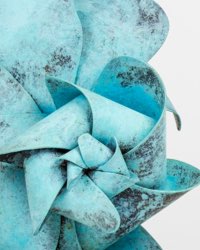
Jerzy Kujawski (1921-1998) - Composition


06
days
08
hours
18
minutes
23
seconds
Current bid
€ 500
Reserve price not met

Expert
Selected by Giulia Couzzi
Master’s in culture and arts innovation, with a decade in 20th-21st century Italian art.
Estimate € 3,000 - € 3,500
5 other people are watching this object
 Bidder 8302 Bidder 8302 | €500 |
|---|
Catawiki Buyer Protection
Your payment’s safe with us until you receive your object.View details
Trustpilot 4.4 | 130088 reviews
Rated Excellent on Trustpilot.
Description from the seller
Very beautiful and rare work (on paper) by the artist Kujawski, from around 1960
Private collection, Paris, unframed.
From post-war surrealism to erotic surrealism
Jerzy Kujawski worked with a large number of artists tied to the post-war surrealist movement. In the second half of the 1940s, Kujawski's art is characterized by surrealist painting, graphic works, and drawings that play at the boundaries between dream and reality. Later, he became one of the first lyrical abstract painters devoted to informal abstract painting. In the 1960s, he experimented with various techniques and above all decoupage (transfer printing). Then a major transformation occurred in his art. He abandoned abstract art and returned to figurative painting. He then explored techniques of monotype, tracing paper, and silkscreen – techniques used by pop culture artists. Finally, the surrealist technique of layering bodies and his erotic obsessions mark his works.
A Polish artist in Paris:
Jerzy Kujawski was born in Ostrow in 1921. Initially deported with his family to the Wielkopolska region, he would later spend the war period between Krakow and Warsaw, where he respectively frequented Marian Bogusz and the circle of young artists. It is thus that Jerzy Kujawski counted among his friends Tadeusz Kantor, Tadeusz Brzozowski, and Jerzy Nowosielski, better known as Kantor.
In 1945 he settled in Paris to attend the École des Beaux-Arts and entered the intimate circle of André Breton’s friends. Kujawski has always maintained contacts with Polish artists such as Bogusz, Alfred Lenica and Jerzy Skarżyński, and had the opportunity to meet Topor, Alina Szapocznikow and Roman Cieślewicz. In international exhibitions he presented himself as a Polish painter living in Paris.
Kujawski died in 1998 in Paris, in a certain artistic solitude he had maintained since the 1970s.
#ESArtMarch
Very beautiful and rare work (on paper) by the artist Kujawski, from around 1960
Private collection, Paris, unframed.
From post-war surrealism to erotic surrealism
Jerzy Kujawski worked with a large number of artists tied to the post-war surrealist movement. In the second half of the 1940s, Kujawski's art is characterized by surrealist painting, graphic works, and drawings that play at the boundaries between dream and reality. Later, he became one of the first lyrical abstract painters devoted to informal abstract painting. In the 1960s, he experimented with various techniques and above all decoupage (transfer printing). Then a major transformation occurred in his art. He abandoned abstract art and returned to figurative painting. He then explored techniques of monotype, tracing paper, and silkscreen – techniques used by pop culture artists. Finally, the surrealist technique of layering bodies and his erotic obsessions mark his works.
A Polish artist in Paris:
Jerzy Kujawski was born in Ostrow in 1921. Initially deported with his family to the Wielkopolska region, he would later spend the war period between Krakow and Warsaw, where he respectively frequented Marian Bogusz and the circle of young artists. It is thus that Jerzy Kujawski counted among his friends Tadeusz Kantor, Tadeusz Brzozowski, and Jerzy Nowosielski, better known as Kantor.
In 1945 he settled in Paris to attend the École des Beaux-Arts and entered the intimate circle of André Breton’s friends. Kujawski has always maintained contacts with Polish artists such as Bogusz, Alfred Lenica and Jerzy Skarżyński, and had the opportunity to meet Topor, Alina Szapocznikow and Roman Cieślewicz. In international exhibitions he presented himself as a Polish painter living in Paris.
Kujawski died in 1998 in Paris, in a certain artistic solitude he had maintained since the 1970s.
#ESArtMarch
Details
Artist
Jerzy Kujawski (1921-1998)
Sold by
Owner or reseller
Edition
Original
Title of artwork
Composition
Technique
Ink
Signature
Hand signed
Country of origin
Poland
Condition
Excellent condition
Height
51 cm
Width
33 cm
Style
Abstract
Period
1950-1960
Sold by