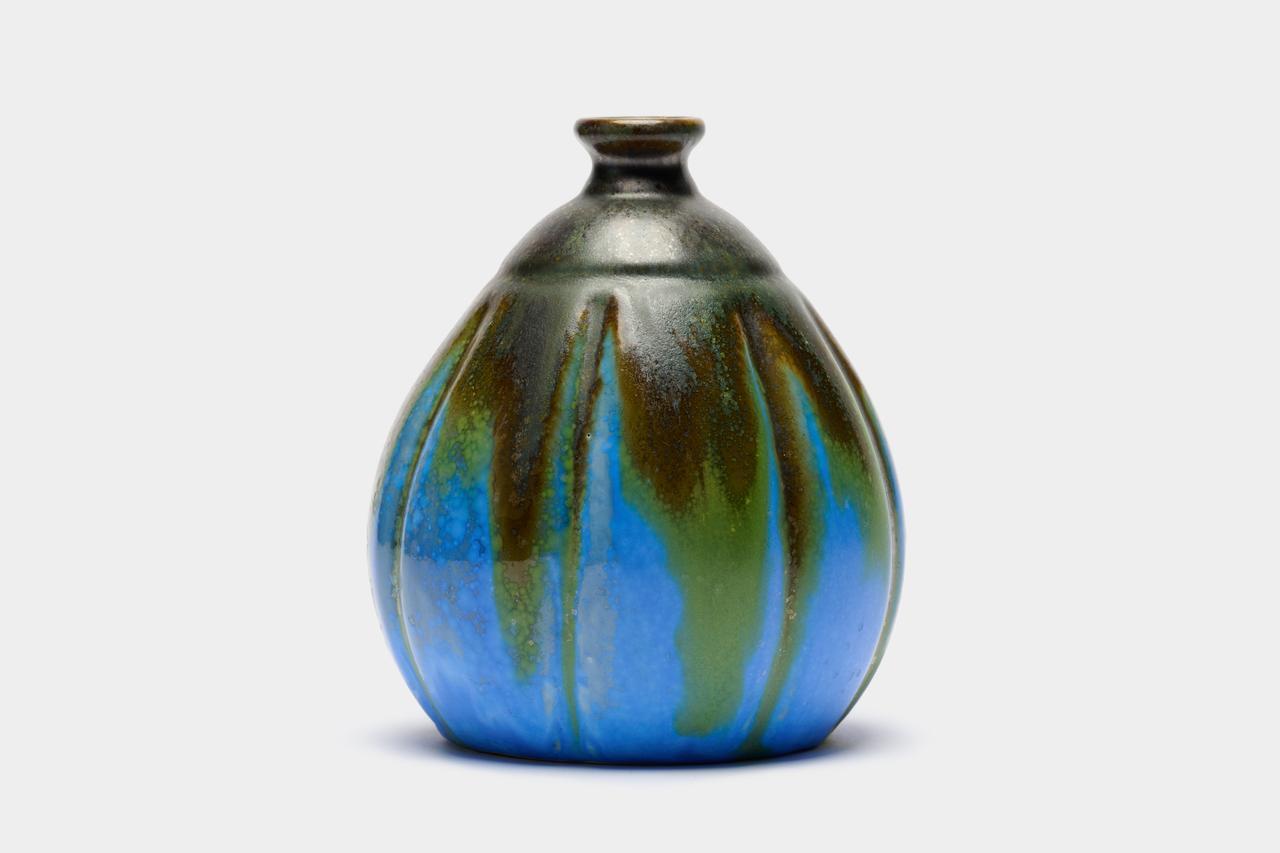
Ivo Sassi (1937-2020) - Vase - Height: 50 cm - Ceramic


00
days
12
hours
38
minutes
24
seconds
Current bid
€ 60
Reserve price not met

Expert
Selected by Sophie Aziz
Held roles at Sotheby’s Paris with five years’ expertise in ceramics and glass.
Estimate € 220 - € 250
35 other people are watching this object
 | €60 | |
|---|---|---|
 | €50 | |
 | €2 | |
Catawiki Buyer Protection
Your payment’s safe with us until you receive your object.View details
Trustpilot 4.4 | 133188 reviews
Rated Excellent on Trustpilot.
Ivo Sassi Faenza red glazed ceramic vase, with polychrome drawings, 50 cm high, 10 cm top diameter, 20 cm mid diameter, 11 cm base diameter, marked and signed underneath, in good condition with minor signs of age.
AI-assisted summary
Description from the seller
Vase, Ivo Sassi mark (Faenza) 1937-2020
Dimensions: 50 cm high x 10 cm top diameter x 20 cm middle diameter x 11 cm base diameter
Red glazed ceramic with polychrome designs
Mark and signature written on the underside
Ivo Sassi was born in Brisighella in 1937. In 1950 he began attending the State Institute of Art for Ceramics in Faenza, with sculptors Anselmo Bucci and Angelo Biancini as teachers and Nanni Valentini and Carlo Negri as colleagues. In 1954 he worked in Carlo Zauli's workshop, a relationship that ended in 1959 when he opened a personal studio in Faenza. In 1965 he created three large polychrome majolica panels for the motonaves “Angelina” and “Achille Lauro.” In 1968 he won first prize at the IV National Ceramic and Sculpture Competition “Francesca da Rimini” and the Gold Medal at the VI Ceramic Art Competition in Cervia; in 1969 the First Prize at the XI International Competition of Gualdo Tadino and in 1970 the “Faenza Prize” at the XXVIII International Competition of Contemporary Ceramic Art in Faenza. In the same year he received the Sculpture Prize at the Vallauris International Biennale. Among his works installed in public spaces are: the Grand Wing (1988-1989) at the Faenza headquarters of Banca di Romagna, the Grand Nike (1988-1989) in Brisighella, the Grand Fire (1990-1991) in Faenza, the Red Column (1996) in Bagnacavallo, the Grand Stele (1999) at the Bargellini Art Museum in Pieve di Cento, the Stele of Life (1996-2002) at the Ravenna Chamber of Commerce, Vertical Red in Cesena (2002), and in Cesena the two Towers for the large roundabout, and a Sculpture in 2007 at the Cefla plant in Imola.
Since 1965 his work acquired a distinct form and formal autonomy: until 1971 he developed the Era tecnologica cycle, mainly using white majolica, and from that date he began the E.T. Genesis cycle, in which he fused geometric elements with broadly informal organic forms using black, gold, and platinum finishes at three-quarter firing.
Alongside his sculpture, Sassi collaborated with tile manufacturers: Ceramica Artistica Italia 68 of Fiorano Modenese (late 1960s), Ceramica L’Astorre of Faenza (1970s and 1980s), Ceramica Del Conca (2002).
Internationally he was invited to major exhibitions in Hamburg, Madrid, Nagoya, Moscow, Japan, Innsbruck, Lucerne, Kecskemét, Lisbon, Lima, Kyushu, Athens, Budapest, Limoges, Stoke-on-Trent, Selb-Plossberg, Schwaebisch Gmuend.
In 2007 the Municipality of Faenza organized a large solo show at the Palazzo delle Esposizioni of Faenza, with a volume curated by Franco Bertoni.
In the same period, to celebrate his seventieth birthday, the International Museum of Ceramics in Faenza dedicated an exhibition to all his works owned by the International Museum of Ceramics in Faenza.
Original item and in good condition
Insured shipping and careful packing with a wooden crate
Vase, Ivo Sassi mark (Faenza) 1937-2020
Dimensions: 50 cm high x 10 cm top diameter x 20 cm middle diameter x 11 cm base diameter
Red glazed ceramic with polychrome designs
Mark and signature written on the underside
Ivo Sassi was born in Brisighella in 1937. In 1950 he began attending the State Institute of Art for Ceramics in Faenza, with sculptors Anselmo Bucci and Angelo Biancini as teachers and Nanni Valentini and Carlo Negri as colleagues. In 1954 he worked in Carlo Zauli's workshop, a relationship that ended in 1959 when he opened a personal studio in Faenza. In 1965 he created three large polychrome majolica panels for the motonaves “Angelina” and “Achille Lauro.” In 1968 he won first prize at the IV National Ceramic and Sculpture Competition “Francesca da Rimini” and the Gold Medal at the VI Ceramic Art Competition in Cervia; in 1969 the First Prize at the XI International Competition of Gualdo Tadino and in 1970 the “Faenza Prize” at the XXVIII International Competition of Contemporary Ceramic Art in Faenza. In the same year he received the Sculpture Prize at the Vallauris International Biennale. Among his works installed in public spaces are: the Grand Wing (1988-1989) at the Faenza headquarters of Banca di Romagna, the Grand Nike (1988-1989) in Brisighella, the Grand Fire (1990-1991) in Faenza, the Red Column (1996) in Bagnacavallo, the Grand Stele (1999) at the Bargellini Art Museum in Pieve di Cento, the Stele of Life (1996-2002) at the Ravenna Chamber of Commerce, Vertical Red in Cesena (2002), and in Cesena the two Towers for the large roundabout, and a Sculpture in 2007 at the Cefla plant in Imola.
Since 1965 his work acquired a distinct form and formal autonomy: until 1971 he developed the Era tecnologica cycle, mainly using white majolica, and from that date he began the E.T. Genesis cycle, in which he fused geometric elements with broadly informal organic forms using black, gold, and platinum finishes at three-quarter firing.
Alongside his sculpture, Sassi collaborated with tile manufacturers: Ceramica Artistica Italia 68 of Fiorano Modenese (late 1960s), Ceramica L’Astorre of Faenza (1970s and 1980s), Ceramica Del Conca (2002).
Internationally he was invited to major exhibitions in Hamburg, Madrid, Nagoya, Moscow, Japan, Innsbruck, Lucerne, Kecskemét, Lisbon, Lima, Kyushu, Athens, Budapest, Limoges, Stoke-on-Trent, Selb-Plossberg, Schwaebisch Gmuend.
In 2007 the Municipality of Faenza organized a large solo show at the Palazzo delle Esposizioni of Faenza, with a volume curated by Franco Bertoni.
In the same period, to celebrate his seventieth birthday, the International Museum of Ceramics in Faenza dedicated an exhibition to all his works owned by the International Museum of Ceramics in Faenza.
Original item and in good condition
Insured shipping and careful packing with a wooden crate
Details
Era
1900-2000
Specific region of origin
Faenza
Country of origin
Italy
Model
Height: 50 cm
Designer/artist/maker
Ivo Sassi (1937-2020)
Material
Ceramic
Colour
Red
Condition
Good condition - used with small signs of aging & blemishes
Height
50 cm
Width
10 cm
Depth
20 cm
Diameter
11 cm
Estimated period
1950-1960
Sold by