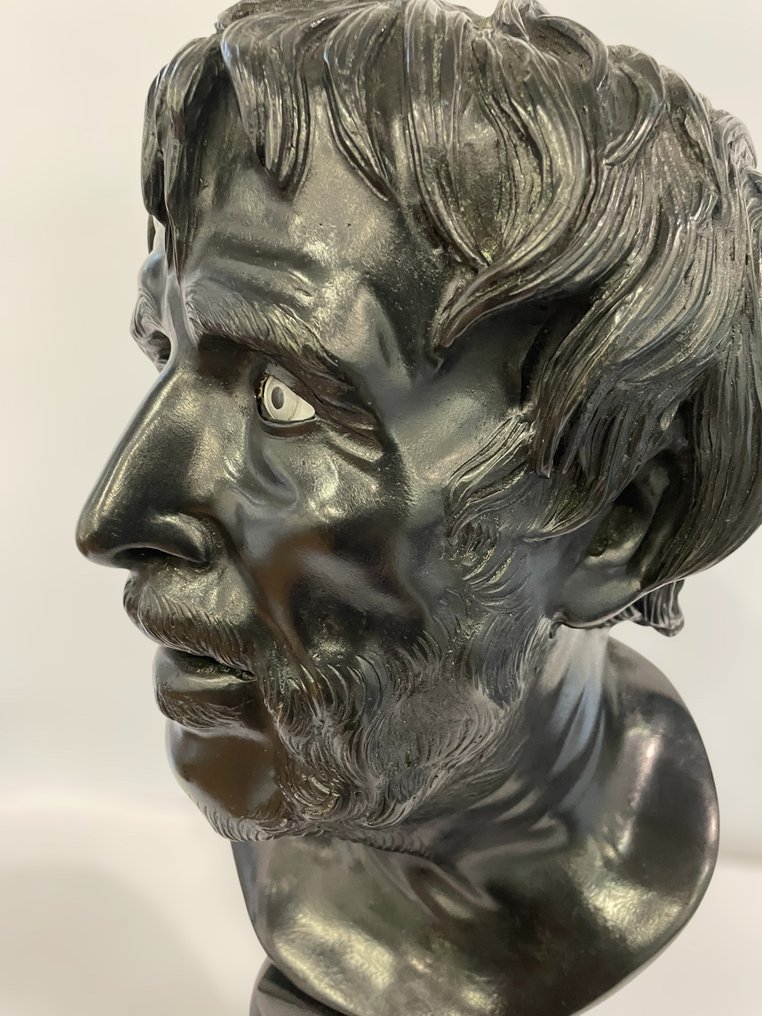
Sculpture, Testa di Seneca - 50 cm - Plaster

05
days
16
hours
24
minutes
04
seconds
Starting bid
€ 1
Reserve price not met

Paul Wullems
Expert
Selected by Paul Wullems

He accumulated 18 years' experience, worked as junior specialist at Sotheby’s and managed Kunsthandel Jacques Fijnaut.

Estimate  € 450 - € 550
No bids placed

Catawiki Buyer Protection

Your payment’s safe with us until you receive your object.View details

Trustpilot 4.4 | 131293 reviews

Rated Excellent on Trustpilot.
Description from the seller

This Seneca head is a faithful plaster reproduction of a Roman bust dating to the end of the 1st century BC. Found in Herculaneum in 1754, the original is today housed at the Archaeological Museum of Naples.

It is believed that the bust depicts Lucius Annaeus Seneca, famous Roman philosopher and central figure in the regency of the empire during Nero's government, alongside Agrippina.

Product features
• Material: plaster
• Dimensions: 50 x 35 cm
• Weight: 10 kg
• Origin: Made in Italy

Historical insights

Seneca argued that political action should be guided by the principles of aristocracy to ensure positive results. His Stoic philosophy promoted control of destructive emotions, such as anger and pain, and the balance between wealth and virtue. For Seneca, man should not withdraw from difficulties but face them with strength of mind. This ideal of self-sufficiency, called autarky, represented detachment from the body's influences and the achievement of complete inner autonomy.

This Seneca head is a faithful plaster reproduction of a Roman bust dating to the end of the 1st century BC. Found in Herculaneum in 1754, the original is today housed at the Archaeological Museum of Naples.

It is believed that the bust depicts Lucius Annaeus Seneca, famous Roman philosopher and central figure in the regency of the empire during Nero's government, alongside Agrippina.

Product features
• Material: plaster
• Dimensions: 50 x 35 cm
• Weight: 10 kg
• Origin: Made in Italy

Historical insights

Seneca argued that political action should be guided by the principles of aristocracy to ensure positive results. His Stoic philosophy promoted control of destructive emotions, such as anger and pain, and the balance between wealth and virtue. For Seneca, man should not withdraw from difficulties but face them with strength of mind. This ideal of self-sufficiency, called autarky, represented detachment from the body's influences and the achievement of complete inner autonomy.

Details

Era
1900-2000
Country of origin
Italy
Material
Plaster
Title of artwork
Testa di Seneca
Signature
Not signed
Colour
Black
Condition
Good condition
Height
50 cm
Width
35 cm
Depth
15 cm
Weight
10 kg
ItalyVerified
205
Objects sold
100%
Private

Similar objects

For you in

Sculptures & Figurines