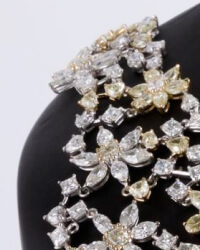
Ring - 18 kt. Yellow gold


05
days
19
hours
25
minutes
05
seconds
Current bid
€ 2
Reserve price not met

Expert
Selected by Laura Trevino
She has 15 years' auction experience, specialising in vintage jewellery from 1920 to 2000.
Estimate € 2,200 - € 2,700
25 other people are watching this object
 | €2 | |
|---|---|---|
 | €1 |
Catawiki Buyer Protection
Your payment’s safe with us until you receive your object.View details
Trustpilot 4.4 | 132109 reviews
Rated Excellent on Trustpilot.
Georgian-style ring in 18k yellow gold, total weight 4.77 g, featuring a central pink rose-cut diamond of about 0.50 ct, flanked by two similarly cut diamonds and ten small 0.01 ct diamonds, EU size 55 (US 7 ¼), dating to 1850–1900, with no laboratory report and not brand jewellery.
AI-assisted summary
Description from the seller
Exceptional Georgian ring dated between 1780 and 1820, a genuine historical jewel that reflects the elegance and refinement of its era.
Made in yellow gold, it features in its center a diamond of approximately 0.50 carats in a rose cut, accompanied by two additional diamonds of the same cut and ten small diamonds of 0.01 ct that provide a delicate and harmonious sparkle.
The design stands out for its floral and stylized foliage motifs, with soft scrolls that frame and connect the stones, evoking the period's fascination with nature and organic beauty.
This type of rings were not only decorative pieces, but also clear symbols of status and social distinction.
The rose cut, characteristic of the time, is designed to catch light subtly, as back then jewelry was worn mainly by candlelight, which adds a unique and romantic charm to the piece.
The craftsmanship is meticulous and authentic, preserving the patina and wear typical of more than two centuries of history, making this ring an unrepeatable piece with soul and character, ideal for collectors or lovers of antique jewelry.
The precious stones are commonly treated to improve color or clarity. This has not been investigated for this specific item.
The piece shows no distinguishing hallmark; the gold has been previously inspected by a professional.
It ships perfectly packaged, by certified mail and insured.
The piece ships with standard packaging.
It can be picked up in Madrid or Barcelona, with prior notice.
Seller's Story
KILATES IS THE TRADE BRAND OF THE LEADING COMPANY IN THE SALE OF SECOND-HAND JEWELRY PRODUCTS, WHICH TRIES TO BRING UNIQUE PIECES TO CUSTOMERS WHO APPRECIATE THE WORK OF GOOD JEWELRY OF NOW OR OF YES.
Translated by Google TranslateExceptional Georgian ring dated between 1780 and 1820, a genuine historical jewel that reflects the elegance and refinement of its era.
Made in yellow gold, it features in its center a diamond of approximately 0.50 carats in a rose cut, accompanied by two additional diamonds of the same cut and ten small diamonds of 0.01 ct that provide a delicate and harmonious sparkle.
The design stands out for its floral and stylized foliage motifs, with soft scrolls that frame and connect the stones, evoking the period's fascination with nature and organic beauty.
This type of rings were not only decorative pieces, but also clear symbols of status and social distinction.
The rose cut, characteristic of the time, is designed to catch light subtly, as back then jewelry was worn mainly by candlelight, which adds a unique and romantic charm to the piece.
The craftsmanship is meticulous and authentic, preserving the patina and wear typical of more than two centuries of history, making this ring an unrepeatable piece with soul and character, ideal for collectors or lovers of antique jewelry.
The precious stones are commonly treated to improve color or clarity. This has not been investigated for this specific item.
The piece shows no distinguishing hallmark; the gold has been previously inspected by a professional.
It ships perfectly packaged, by certified mail and insured.
The piece ships with standard packaging.
It can be picked up in Madrid or Barcelona, with prior notice.
Seller's Story
KILATES IS THE TRADE BRAND OF THE LEADING COMPANY IN THE SALE OF SECOND-HAND JEWELRY PRODUCTS, WHICH TRIES TO BRING UNIQUE PIECES TO CUSTOMERS WHO APPRECIATE THE WORK OF GOOD JEWELRY OF NOW OR OF YES.
Translated by Google TranslateDetails
Era
1400-1900
Laboratory report
No laboratory report
Estimated period
1850-1900
Metal
Yellow gold
Brand jewellery
No
Fineness
18 kt.
Total weight
4.77 g
Condition
Very good condition - slightly used with small signs of wear
Gender
Women
Ring size
55 (EU) / 15 (IT) / 7 ¼ (US)
Disclaimer
Catawiki always aims to offer you the best possible buying experience. Our experts virtually review and select every object in line with our submission guidelines. While we strive to provide a detailed description and photographs of each jewellery object, discrepancies or inaccuracies may occur. It is your responsibility to review all of the information provided about an object, including the condition and description, before placing an order. Sellers are responsible for the information, pictures and description provided, including the quality, quantity and nature of the jewelry supplied. A small imperfection that cannot be seen in the photo but is included in the description is not a non-conformity. A Lab Report is not a guarantee, valuation or appraisal regarding the articles described therein. A Lab Report contains only the characteristics of an article described after it has been graded, tested, examined, and analyzed using the techniques and equipment used at the time of the examination from that specific Lab. The results of any other examination performed on the article may differ depending when, how, by whom and with which grading standard the article is examined. In addition, any changes and improvements in techniques and equipment that may have occurred which may enable the examiner to detect, among other things, the use of processes for altering the characteristics of an article which use was previously undetectable, does not automatically mean the object does not conform to its description.
Catawiki always aims to offer you the best possible buying experience. Our experts virtually review and select every object in line with our submission guidelines. While we strive to provide a detailed description and photographs of each jewellery object, discrepancies or inaccuracies may occur. It is your responsibility to review all of the information provided about an object, including the condition and description, before placing an order. Sellers are responsible for the information, pictures and description provided, including the quality, quantity and nature of the jewelry supplied. A small imperfection that cannot be seen in the photo but is included in the description is not a non-conformity. A Lab Report is not a guarantee, valuation or appraisal regarding the articles described therein. A Lab Report contains only the characteristics of an article described after it has been graded, tested, examined, and analyzed using the techniques and equipment used at the time of the examination from that specific Lab. The results of any other examination performed on the article may differ depending when, how, by whom and with which grading standard the article is examined. In addition, any changes and improvements in techniques and equipment that may have occurred which may enable the examiner to detect, among other things, the use of processes for altering the characteristics of an article which use was previously undetectable, does not automatically mean the object does not conform to its description.