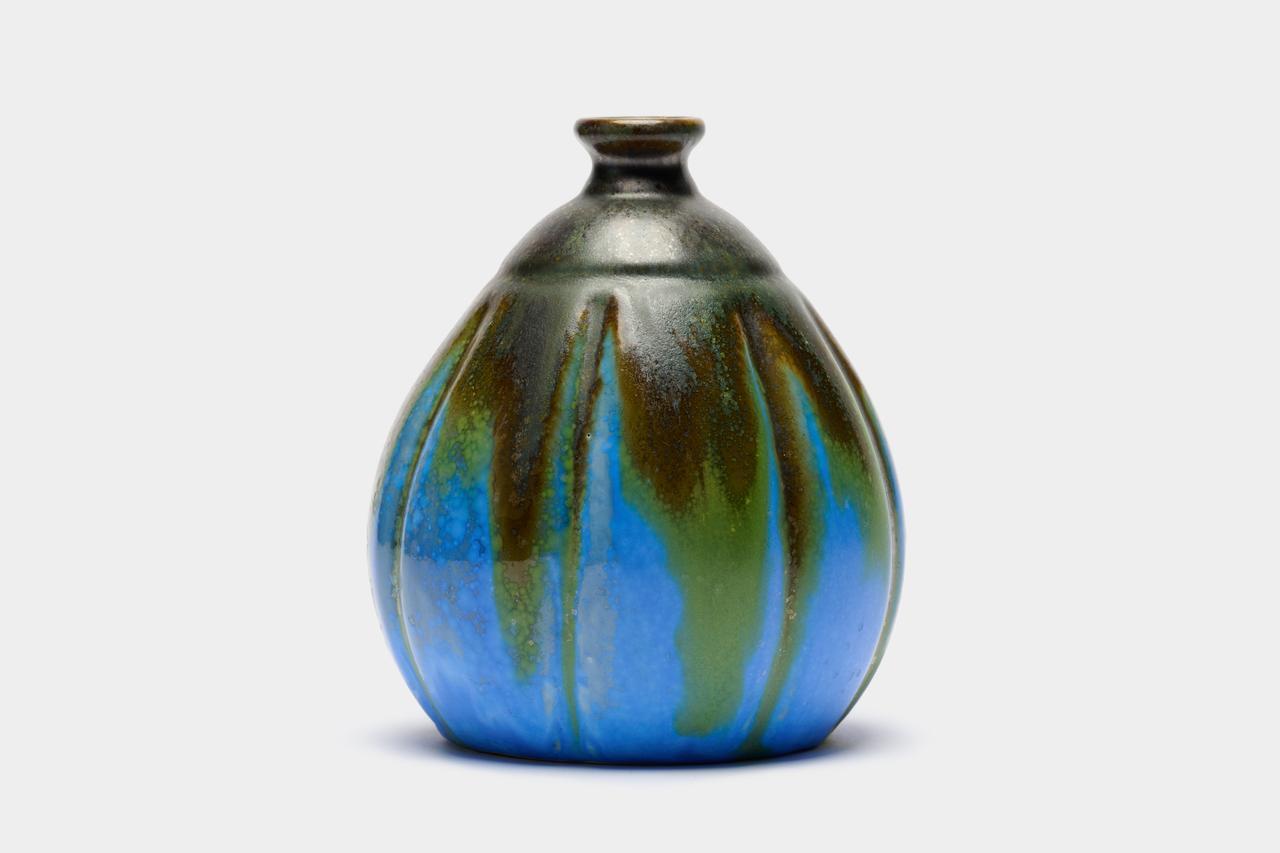
Helmut Schäffenacker - Vase - nine hundred thirteen - Stoneware


05
days
13
hours
33
minutes
14
seconds
Current bid
€ 7
No reserve price

Expert
Selected by Sophie Aziz
Held roles at Sotheby’s Paris with five years’ expertise in ceramics and glass.
Estimate € 170 - € 200
20 other people are watching this object
 | €7 | |
|---|---|---|
| €4 | |
| €1 |
Catawiki Buyer Protection
Your payment’s safe with us until you receive your object.View details
Trustpilot 4.4 | 132849 reviews
Rated Excellent on Trustpilot.
Ceramic stoneware piece, model 913, by Helmut Schäffenacker (Germany), in Grün, with Brutalismus decor, dimensions 27 cm wide by 27 cm high and 6 cm deep, weighing 2650 g, dating to the 1960s–1970s and in excellent condition with only minimal signs of wear.
AI-assisted summary
Description from the seller
Helmut Friedrich Schäffenacker (1921–2010) was one of the most significant German ceramicists and artists of the post-war period. His work encompasses far more than classical vessels; he is regarded as a pioneer of sculptural studio ceramics.
Here are the key points about his life and work:
1. The Studio in Ulm
After his studies (including painting and sculpture) he founded his own studio in Ulm in 1948. Unlike the industrial mass production of that time, he relied on craftsmanship perfection and artistic freedom. In his atelier, designs were created that were produced in small batches by specialized craftsmen under his supervision.
2. The "Brutalism" in Ceramics
Schäffenacker is famous for his brutalist style. His objects often appear archaic, massive and almost as if carved from stone or metal. Typical are:
Organic forms: He disrupted classical symmetry.
Durchbrüche: Many of his vases have holes or windows ("Pierced Vases"), which fuse space and object.
Textures: He experimented extensively with glazes, which often bled bubbles, were crackled (Craquelé) or reminded of volcanic rock.
3. Known Works
Wall Reliefs: In particular, his ceramic wall panels are highly sought after, often depicting stylized animals (horses, fish, owls) or abstract geometric patterns.
Vase Series: His large floor vases and sculptural vessels are today worldwide coveted collectibles.
Helmut Friedrich Schäffenacker (1921–2010) was one of the most significant German ceramicists and artists of the post-war period. His work encompasses far more than classical vessels; he is regarded as a pioneer of sculptural studio ceramics.
Here are the key points about his life and work:
1. The Studio in Ulm
After his studies (including painting and sculpture) he founded his own studio in Ulm in 1948. Unlike the industrial mass production of that time, he relied on craftsmanship perfection and artistic freedom. In his atelier, designs were created that were produced in small batches by specialized craftsmen under his supervision.
2. The "Brutalism" in Ceramics
Schäffenacker is famous for his brutalist style. His objects often appear archaic, massive and almost as if carved from stone or metal. Typical are:
Organic forms: He disrupted classical symmetry.
Durchbrüche: Many of his vases have holes or windows ("Pierced Vases"), which fuse space and object.
Textures: He experimented extensively with glazes, which often bled bubbles, were crackled (Craquelé) or reminded of volcanic rock.
3. Known Works
Wall Reliefs: In particular, his ceramic wall panels are highly sought after, often depicting stylized animals (horses, fish, owls) or abstract geometric patterns.
Vase Series: His large floor vases and sculptural vessels are today worldwide coveted collectibles.
Details
Era
1900-2000
Weight
2650 g
Ceramics type
Stoneware
Country of origin
Germany
Model
nine hundred thirteen
Designer/artist/maker
Helmut Schäffenacker
Material
Ceramic
Style
Mid-century modern
Colour
Green
Condition
Excellent condition: barely used with minimal signs of wear
Height
27 cm
Width
27 cm
Depth
6 cm
Decor
Brutalism
Estimated period
1960-1970
Sold by