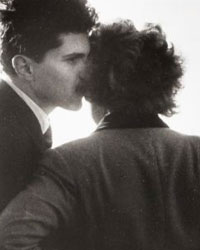
Lídia Vives - Honey lips


02
days
22
hours
51
minutes
50
seconds
Current bid
€ 90
Reserve price not met

Expert
Selected by Kai Brückner
Over 35 years' experience; former gallery owner and Museum Folkwang curator.
Estimate € 400 - € 500
13 other people are watching this object
 | €90 |
|---|
Catawiki Buyer Protection
Your payment’s safe with us until you receive your object.View details
Trustpilot 4.4 | 132495 reviews
Rated Excellent on Trustpilot.
Description from the seller
Print and authenticity
Fine Art print on Hahnemühle Baryta paper with an extra-glossy finish.
The work is delivered signed and numbered, with a certificate of authenticity.
Edition
Limited edition 5/30.
Recognitions
Best of Vogue (Vogue.it) · Pic of the Day (Worbz)
Shipping
The piece is shipped in a rigid mailer, with insured shipping.
Includes cotton gloves and a signed postcard.
ABOUT THE WORK — Honey Lips
Honey Lips captures a moment of silent tension between beauty and nature. The close-up directs attention to every detail: freckled skin, the intense blue gaze, and red lips that seem to conceal a secret.
A bee delicately alights on the lips, as if mistaking them for nectar. That minimal gesture makes the scene intimate and, at the same time, unsettling: the insect’s fragility contrasts with the image’s magnetic allure, and beauty becomes ambiguous, perched on the fine line between desire and danger.
In its treatment of portraiture and its formal precision, the work dialogues with the tradition of authorial studio photography, with a nod to the classic elegance of Irving Penn.
Seller's Story
Lídia Vives is a visual artist and fine art photographer in Barcelona. Her work draws from pictorial tradition, symbolic storytelling and contemporary fashion aesthetics, creating carefully constructed images that go beyond surface beauty to reveal hidden layers of meaning.
She is known for embedding subtle narrative details and recurring symbolic elements within her photographs, inviting viewers to slow down and engage with the image beyond its first reading. These visual cues have become a distinctive part of her artistic language.
Influenced by Renaissance and Baroque painting, Vives balances the timeless and the surreal, often working with staged environments, custom-made props and self-portraiture. Her practice combines meticulous art direction with a strong sense of atmosphere and visual cohesion.
Alongside her personal artistic work, she collaborates with brands, media and institutions on editorial, cultural and commercial projects, always maintaining a concept-driven approach and a consistent visual identity.
Her work has been exhibited in museums, galleries and international art fairs, and featured in publications such as Esquire. She has collaborated with institutions and brands including RTVE and Penguin Random House, and her works are held in private collections worldwide
Translated by Google TranslatePrint and authenticity
Fine Art print on Hahnemühle Baryta paper with an extra-glossy finish.
The work is delivered signed and numbered, with a certificate of authenticity.
Edition
Limited edition 5/30.
Recognitions
Best of Vogue (Vogue.it) · Pic of the Day (Worbz)
Shipping
The piece is shipped in a rigid mailer, with insured shipping.
Includes cotton gloves and a signed postcard.
ABOUT THE WORK — Honey Lips
Honey Lips captures a moment of silent tension between beauty and nature. The close-up directs attention to every detail: freckled skin, the intense blue gaze, and red lips that seem to conceal a secret.
A bee delicately alights on the lips, as if mistaking them for nectar. That minimal gesture makes the scene intimate and, at the same time, unsettling: the insect’s fragility contrasts with the image’s magnetic allure, and beauty becomes ambiguous, perched on the fine line between desire and danger.
In its treatment of portraiture and its formal precision, the work dialogues with the tradition of authorial studio photography, with a nod to the classic elegance of Irving Penn.
Seller's Story
Lídia Vives is a visual artist and fine art photographer in Barcelona. Her work draws from pictorial tradition, symbolic storytelling and contemporary fashion aesthetics, creating carefully constructed images that go beyond surface beauty to reveal hidden layers of meaning.
She is known for embedding subtle narrative details and recurring symbolic elements within her photographs, inviting viewers to slow down and engage with the image beyond its first reading. These visual cues have become a distinctive part of her artistic language.
Influenced by Renaissance and Baroque painting, Vives balances the timeless and the surreal, often working with staged environments, custom-made props and self-portraiture. Her practice combines meticulous art direction with a strong sense of atmosphere and visual cohesion.
Alongside her personal artistic work, she collaborates with brands, media and institutions on editorial, cultural and commercial projects, always maintaining a concept-driven approach and a consistent visual identity.
Her work has been exhibited in museums, galleries and international art fairs, and featured in publications such as Esquire. She has collaborated with institutions and brands including RTVE and Penguin Random House, and her works are held in private collections worldwide
Translated by Google TranslateDetails
Sold by