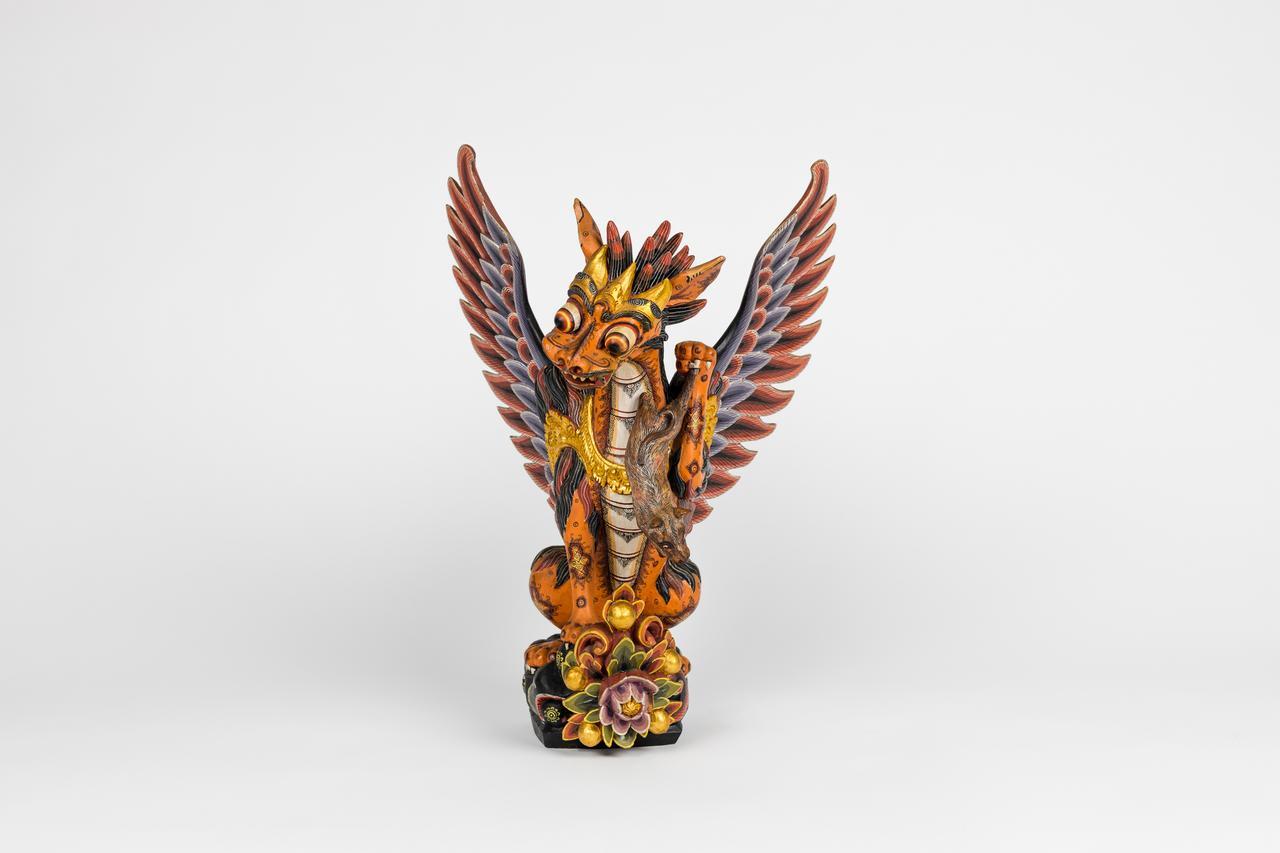
Amitabha Buddha statue from Java - Bronze - Indonesia - Late 20th century


04
days
05
hours
45
minutes
13
seconds

No bids placed
Catawiki Buyer Protection
Your payment’s safe with us until you receive your object.View details
Trustpilot 4.4 | 133456 reviews
Rated Excellent on Trustpilot.
Bronze statue of an Indonesian Amitabha Buddha, seated in vajraparyankasana on a double lotus pedestal, 22.5 cm high, 17.5 cm wide and 12 cm deep, from the late 20th century, original and in excellent condition.
AI-assisted summary
Description from the seller
Antique Indonesian-style bronze seated Amitabha Buddha statue
Height 22.5 cm
width 17.5 cm
depth 12 cm
This charming Buddha is seated on a double lotus pedestal, in the adamantine vajraparyankasana position, the right leg resting on the left, with the soles of both feet facing upward. His robes are draped over both shoulders, and a portion of the garment that covers the left wrist falls behind the silhouette. The lower hem of the robe is fully unfurled so that the undergarment or skirt is completely covered.
The seated Buddha rests on a lotus-petal pedestal that he is itself mounted on a decorated square pedestal. The hands of Amitabha Buddha are held in a Mudra. The fingers barely touch and gently fold over the knees with the palms facing upward, representing gentleness and purity.
In his hands, he holds a bowl of alms, demonstrating the Buddha's charitable association and generosity. His eyes are dark, his compassionate face grants him peace, blessing and inner serenity to his devotees.
The Buddha of Amitabha symbolizes mercy and wisdom. Tantric meditation on Amitabha is an antidote to desire. He reigns over Sukhavati (the Western Paradise), also called the Pure Land. Those who return to the Pure Land experience the joy of hearing Amitabha, learn the Dharma until they are ready to enter Nirvana. The Buddha is supported by a mandala wheel and a halo with a beaded border and a flamboyant edge, surmounted by a lotus blossom. This symbolizes his divinity.
He has a third eye or a urna on his forehead, symbolizing the Buddha's ability to see beyond our worldly universe of suffering. The great ushnisha prominence on the top of his head symbolizes his high level of spiritual development.
Antique Indonesian-style bronze seated Amitabha Buddha statue
Height 22.5 cm
width 17.5 cm
depth 12 cm
This charming Buddha is seated on a double lotus pedestal, in the adamantine vajraparyankasana position, the right leg resting on the left, with the soles of both feet facing upward. His robes are draped over both shoulders, and a portion of the garment that covers the left wrist falls behind the silhouette. The lower hem of the robe is fully unfurled so that the undergarment or skirt is completely covered.
The seated Buddha rests on a lotus-petal pedestal that he is itself mounted on a decorated square pedestal. The hands of Amitabha Buddha are held in a Mudra. The fingers barely touch and gently fold over the knees with the palms facing upward, representing gentleness and purity.
In his hands, he holds a bowl of alms, demonstrating the Buddha's charitable association and generosity. His eyes are dark, his compassionate face grants him peace, blessing and inner serenity to his devotees.
The Buddha of Amitabha symbolizes mercy and wisdom. Tantric meditation on Amitabha is an antidote to desire. He reigns over Sukhavati (the Western Paradise), also called the Pure Land. Those who return to the Pure Land experience the joy of hearing Amitabha, learn the Dharma until they are ready to enter Nirvana. The Buddha is supported by a mandala wheel and a halo with a beaded border and a flamboyant edge, surmounted by a lotus blossom. This symbolizes his divinity.
He has a third eye or a urna on his forehead, symbolizing the Buddha's ability to see beyond our worldly universe of suffering. The great ushnisha prominence on the top of his head symbolizes his high level of spiritual development.
Details
Dynastic Style/Period
Late 20th century
Country of Origin
Indonesia
Material
Bronze
Height
22.5 cm
Width
17.5 cm
Title of artwork
Amitabha Buddha statue from Java
Depth
12 cm
Condition
Excellent condition
Authenticity
Original/official
Sold by