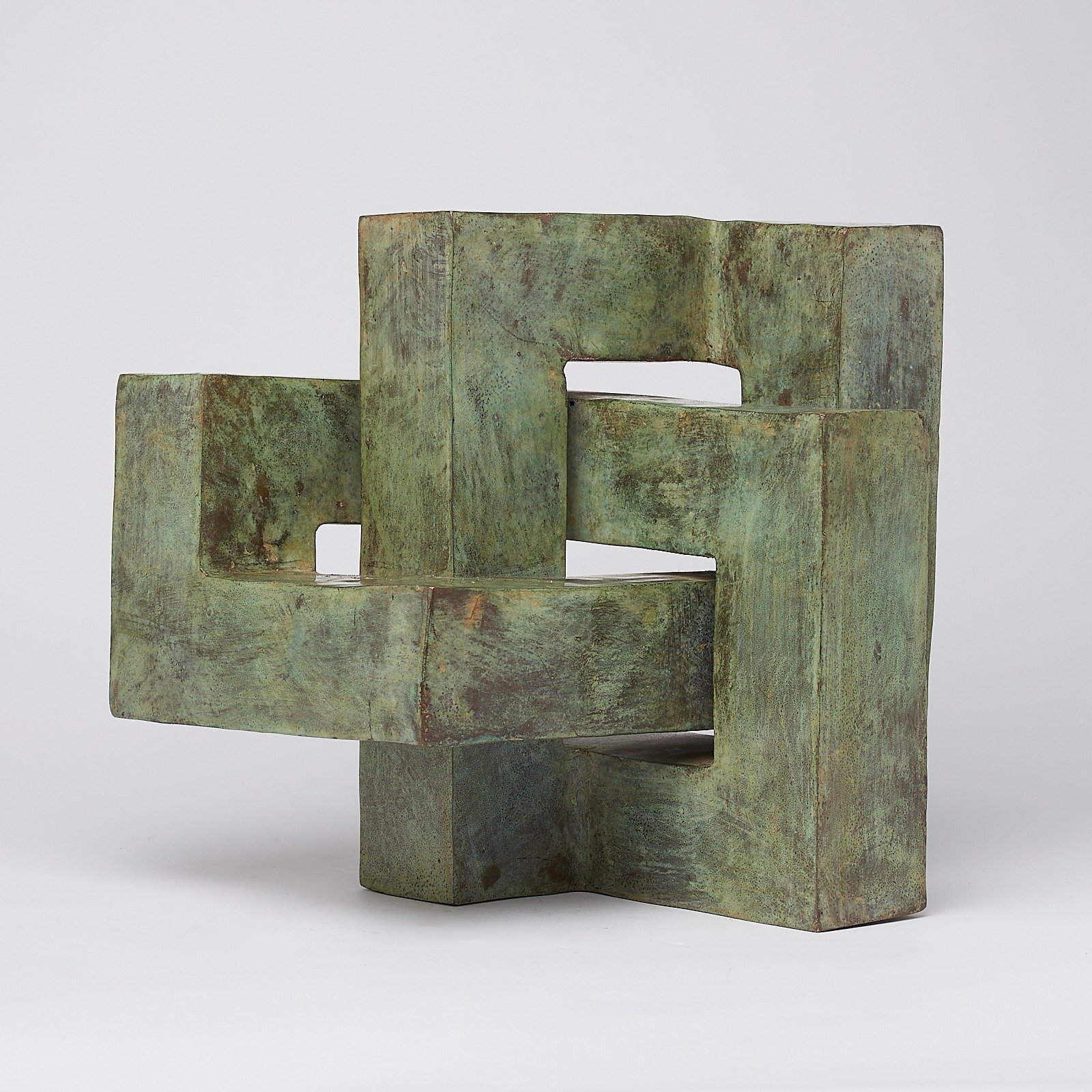
Apitel Gauna - Candelabrum El Escorial Monastery (2) - Ceramic


05
days
21
hours
47
minutes
44
seconds

No bids placed
Catawiki Buyer Protection
Your payment’s safe with us until you receive your object.View details
Trustpilot 4.4 | 132990 reviews
Rated Excellent on Trustpilot.
Description from the seller
They are two candlesticks that, even though they are children of the 1970s, carry with them a nearly liturgical presence, as if conceived for a space where light held a meaning deeper than mere function. Coming from the Monastery of El Escorial, they already carry a historical and symbolic charge that sets them apart, but their Scandinavian design — so pared down, so attentive to the essential form — combines here with a clearly ceremonial intent.
The ceramic, worked with that soft, warm pink glaze, rises into a conical body that opens into a top cup where the interior of patent brass Apitel Gauna fits, a technical detail that not only guarantees durability but also speaks of careful production, designed to withstand the continual use of the altar. On the front, the relief adds identity: an almost architectural, rhythmic motif that disrupts the purity of the surface and gives it its own character, as if each piece told a small visual story.
The Scandinavian design of the 70s, when applied to liturgical objects, was precisely aiming for this: sobriety, clean lines, honest materials, and a balance between tradition and modernity. These candlesticks are a perfect example of that philosophy. They do not compete with the space; they accompany it. They do not seek protagonism, but they achieve it through the quality of their presence.
Regarding their exclusivity, there are several elements that reinforce it:
• Monastic provenance, which always adds historical and emotional value.
• Original liturgical use, implying that they are not mere decorative pieces but objects with ritual function.
• Interior of patent brass, an indication of specialized and not industrial manufacturing.
• Unique front relief, which sets them apart from mass-produced items and brings them closer to a designer piece.
• Scandinavian design applied to a Spanish context, an uncommon and highly attractive combination for collectors.
Taken together, they form a rare, elegant pair with a silent story behind them. They are pieces that not only illuminate but also tell where they come from.
Insured shipping and careful packaging.
Seller's Story
Translated by Google TranslateThey are two candlesticks that, even though they are children of the 1970s, carry with them a nearly liturgical presence, as if conceived for a space where light held a meaning deeper than mere function. Coming from the Monastery of El Escorial, they already carry a historical and symbolic charge that sets them apart, but their Scandinavian design — so pared down, so attentive to the essential form — combines here with a clearly ceremonial intent.
The ceramic, worked with that soft, warm pink glaze, rises into a conical body that opens into a top cup where the interior of patent brass Apitel Gauna fits, a technical detail that not only guarantees durability but also speaks of careful production, designed to withstand the continual use of the altar. On the front, the relief adds identity: an almost architectural, rhythmic motif that disrupts the purity of the surface and gives it its own character, as if each piece told a small visual story.
The Scandinavian design of the 70s, when applied to liturgical objects, was precisely aiming for this: sobriety, clean lines, honest materials, and a balance between tradition and modernity. These candlesticks are a perfect example of that philosophy. They do not compete with the space; they accompany it. They do not seek protagonism, but they achieve it through the quality of their presence.
Regarding their exclusivity, there are several elements that reinforce it:
• Monastic provenance, which always adds historical and emotional value.
• Original liturgical use, implying that they are not mere decorative pieces but objects with ritual function.
• Interior of patent brass, an indication of specialized and not industrial manufacturing.
• Unique front relief, which sets them apart from mass-produced items and brings them closer to a designer piece.
• Scandinavian design applied to a Spanish context, an uncommon and highly attractive combination for collectors.
Taken together, they form a rare, elegant pair with a silent story behind them. They are pieces that not only illuminate but also tell where they come from.
Insured shipping and careful packaging.
Seller's Story
Translated by Google TranslateDetails
Era
1900-2000
Manufacturer/brand
Apitel Gauna
Number of objects
2
Country of origin
Spain
Material
Ceramic
Model
El Escorial Monastery
Style
Scandinavian design
Colour
Pink
Condition
Good condition - used with small signs of aging & blemishes
Height
17 cm
Width
11 cm
Depth
11 cm
Estimated period
1970-1980
Sold by