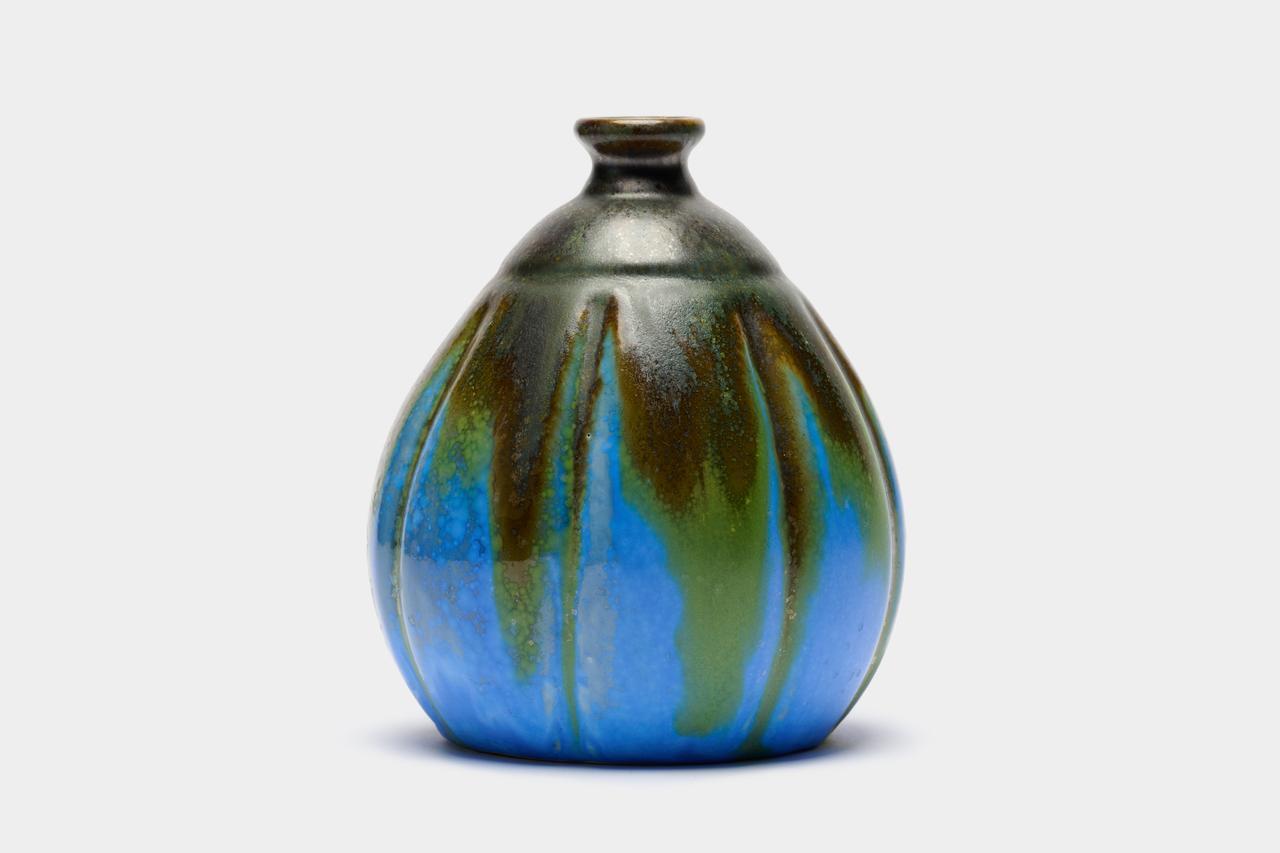
Vase - Porcelain


Starting bid
€ 1
Add to your favourites to get an alert when the auction starts.

Expert
Selected by Florentin Brunz Gaborieau
Holds a master’s in Art History, specialising in Second French Empire and Dutch Golden Age.
Estimate € 150 - € 180
Catawiki Buyer Protection
Your payment’s safe with us until you receive your object.View details
Trustpilot 4.4 | 138300 reviews
Rated Excellent on Trustpilot.
Description from the seller
This is a small octagonal-section vase (or porter's vase/inkstand) in hard-patent porcelain, perfectly aligned with the great tradition of Paris Porcelain (Vieux Paris) from the late Louis XVI period or the very early Directory/Empire era (around 1790–1805).
The level of detail, the alternation of decoration, and the richness of the palette indicate a piece of high quality, produced in a premier Paris workshop.
1. Stylistic analysis of the decoration
This vase is an excellent witness to the transition between the refinement of the 18th century and the geometric rigor that settled in at the beginning of the 19th:
The faces with “grisaille” or “monochrome” decoration (Photos 1 and 4): These bouquets of roses and foliage painted only in shades of black, gray, and sepia within a circular medallion are typical of the Neoclassical taste of the late 18th century. The vivid yellow background surrounding the medallion (often called the “serin yellow background”) was a very luxurious color and difficult to master in firing.
The polychrome faces (Photos 2 and 3): They feature a gilt basin or cup from which a very colorful bouquet of flowers (roses, carnations) bursts forth. The garland of hanging pearls beneath the basin and the blue lozenge motifs at the corners are direct reminiscences of the Louis XVI style.
The upper part (the flared neck): It is adorned with superb palmette and stylized fretwork motifs painted in black on an apricot/salmon background, enhanced with pearls. This ornamental repertoire draws its sources directly from Antiquity (Heraclean and Pompeian), very fashionable under the Directory and the Empire.
Gold decoration: Very prominent, worn in places in a completely natural way (which confirms its age), it underscores the edges of the octagonal form and the geometric friezes of the base.
2. The link with the “P” mark
The analysis of the object decisively confirms the hypothesis of a mark painted in brown under the base. Such a high level of craftsmanship on a geometrically elaborate form strongly points to a few prestigious Parisian manufactories of this pivotal period:
The Pinhas route (Jacob Pinhas): A painter and decorator active at the end of the 18th century and the early 19th century, known for extremely delicate decors often inspired by naturalistic motifs and influences from Central or Eastern Europe reinterpreted for Parisian aristocracy. His pieces are characterized by bright color touches (like this yellow or apricot) and miniature-level precision in the bouquets.
The Courtille Manufacture (Rue de la Fontaine-au-Roi) or Clignancourt: These Parisian workshops sometimes used painted monograms or marks of specific painters for their most refined pièces d’apparat.
An independent decorating workshop: At that time, Paris overflowed with small workshops of “gilders and porcelain painters” who purchased complex forms in white from Limoges or local manufactories, then applied these sumptuous décor in their own style.
3. Condition and rarity
The overall state of preservation appears remarkable for a piece over 220 years old. The slight wear on the gilding at the upper edges is normal and part of the charm of antique porcelain. The finesse of the details (the little gold wolf’s teeth, the delicate scrolls as fine hair on the neck) make it a magnificent collectible object, very representative of the know-how of Parisian porcelain makers of the time.
Estimation range
On the public auction market and among specialized antique dealers:
Expert value / Low estimate (auction sale): €250 to €400
Market value / Gallery price: €500 to €800
Note on attribution: If a thorough in-hand appraisal decisively confirms the signature of Jacob Pinhas (or a leading manufactory like Courtille) rather than an independent painter of the era, the value could immediately sit at the higher end of the range, perhaps slightly beyond, due to the rarity of signed pieces from this hand.
This is a small octagonal-section vase (or porter's vase/inkstand) in hard-patent porcelain, perfectly aligned with the great tradition of Paris Porcelain (Vieux Paris) from the late Louis XVI period or the very early Directory/Empire era (around 1790–1805).
The level of detail, the alternation of decoration, and the richness of the palette indicate a piece of high quality, produced in a premier Paris workshop.
1. Stylistic analysis of the decoration
This vase is an excellent witness to the transition between the refinement of the 18th century and the geometric rigor that settled in at the beginning of the 19th:
The faces with “grisaille” or “monochrome” decoration (Photos 1 and 4): These bouquets of roses and foliage painted only in shades of black, gray, and sepia within a circular medallion are typical of the Neoclassical taste of the late 18th century. The vivid yellow background surrounding the medallion (often called the “serin yellow background”) was a very luxurious color and difficult to master in firing.
The polychrome faces (Photos 2 and 3): They feature a gilt basin or cup from which a very colorful bouquet of flowers (roses, carnations) bursts forth. The garland of hanging pearls beneath the basin and the blue lozenge motifs at the corners are direct reminiscences of the Louis XVI style.
The upper part (the flared neck): It is adorned with superb palmette and stylized fretwork motifs painted in black on an apricot/salmon background, enhanced with pearls. This ornamental repertoire draws its sources directly from Antiquity (Heraclean and Pompeian), very fashionable under the Directory and the Empire.
Gold decoration: Very prominent, worn in places in a completely natural way (which confirms its age), it underscores the edges of the octagonal form and the geometric friezes of the base.
2. The link with the “P” mark
The analysis of the object decisively confirms the hypothesis of a mark painted in brown under the base. Such a high level of craftsmanship on a geometrically elaborate form strongly points to a few prestigious Parisian manufactories of this pivotal period:
The Pinhas route (Jacob Pinhas): A painter and decorator active at the end of the 18th century and the early 19th century, known for extremely delicate decors often inspired by naturalistic motifs and influences from Central or Eastern Europe reinterpreted for Parisian aristocracy. His pieces are characterized by bright color touches (like this yellow or apricot) and miniature-level precision in the bouquets.
The Courtille Manufacture (Rue de la Fontaine-au-Roi) or Clignancourt: These Parisian workshops sometimes used painted monograms or marks of specific painters for their most refined pièces d’apparat.
An independent decorating workshop: At that time, Paris overflowed with small workshops of “gilders and porcelain painters” who purchased complex forms in white from Limoges or local manufactories, then applied these sumptuous décor in their own style.
3. Condition and rarity
The overall state of preservation appears remarkable for a piece over 220 years old. The slight wear on the gilding at the upper edges is normal and part of the charm of antique porcelain. The finesse of the details (the little gold wolf’s teeth, the delicate scrolls as fine hair on the neck) make it a magnificent collectible object, very representative of the know-how of Parisian porcelain makers of the time.
Estimation range
On the public auction market and among specialized antique dealers:
Expert value / Low estimate (auction sale): €250 to €400
Market value / Gallery price: €500 to €800
Note on attribution: If a thorough in-hand appraisal decisively confirms the signature of Jacob Pinhas (or a leading manufactory like Courtille) rather than an independent painter of the era, the value could immediately sit at the higher end of the range, perhaps slightly beyond, due to the rarity of signed pieces from this hand.
Details
Era
1400-1900
Weight
1000 g
Country of origin
France
Material
Porcelain
Condition
Good condition - used with small signs of aging & blemishes
Height
20 cm
Width
10 cm
Depth
10 cm
Estimated period
1850-1900
Sold by