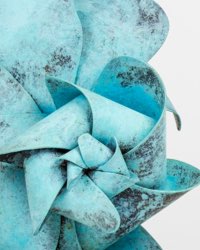
Joan Riera Ferrari (1942-2017) - Cala Mallorca


01
day
13
hours
56
minutes
37
seconds

6 other people are watching this object
 | €100 | |
|---|---|---|
| €50 | |
| €1 |
Catawiki Buyer Protection
Your payment’s safe with us until you receive your object.View details
Trustpilot 4.4 | 134281 reviews
Rated Excellent on Trustpilot.
Joan Riera Ferrari (1942-2017) presents Cala Mallorca, an oil painting of a seascape, in an original edition signed artwork from the 1980s, measuring 92 x 73 cm, sold with frame, originating from Spain.
AI-assisted summary
Description from the seller
Joan Riera Ferrari (1942-2017)
Joan Riera Ferrari (Manacor, 1942 - 2017)
Joan Riera was born in Manacor and very soon would experience what would become his most traumatic moment when his mother died in 1950, just as he was about to turn eight. Then he was given a box of felt-tip pens and with them he made his first drawings. He would have to move to Barcelona 12 years later to continue his studies in order to begin to take off again. He trained at the Real Academia de Bellas Artes de San Jordi, where he shared a classroom with Xim Torrens, Daniel Codorniu and Castanyer. In 1967 he returned to Mallorca and settled in Manacor, where he held his first exhibition and soon afterwards traveled to Helsinki to exhibit. These early years of his professional career were spent working as a teacher at the Escuela Industrial de Manacor. An avant-garde artist, in 1969 he created an installation in the church of Manacor placing a Christ on the cross upside down; this provoked fierce protests in the town. In the 1970s he established his residence in Cala d’Or, where he devoted a large part of his time to interior art design, working for major hotel chains. In that same decade he opened his own gallery, 'Picarol', to promote young artists, among whom was a young artist from Felanitx named Miquel Barceló Artigues. He traveled to several European cities, to Venice and Basel; in Basel he inaugurated the series Fasnacht, which would later be exhibited at the Museum of Mallorca. In the mid-80s he signed a contract with the Maneu gallery; Joan Oliver 'Maneu' took him to the best international art fairs, achieving continuous critical success (Vienna, Hamburg, Brussels, Egypt (from a visit to this last city arose his series 'Nubios' in black and white). In 1992-93, in a new workspace reinstalled in Manacor, 'L'Auba' began his explorations with mixed techniques, seeking to confront the beginning and the end of things (life and death) and to find his own language, which would precede him from then on wherever he went, presenting his series 'Tramuntana' as the beginning that would lead to the series 'Roques', the most popularly known. In the mid-90s he presented the first robust landscape exhibitions of mixed technique with thick textures based on marmolinas and sands with oils; in Los Angeles, an exhibition that would bring him great success and inevitably mark his artistic career. In 1996 he experienced the worst year of his adult life when several close family members and friends died within a few years. This led him to inaugurate the exhibition titled 'Som la mort' (We are the death), whose centerpiece is the installation of a door painted with the names of the deceased and the phrase
Joan Riera Ferrari (1942-2017)
Joan Riera Ferrari (Manacor, 1942 - 2017)
Joan Riera was born in Manacor and very soon would experience what would become his most traumatic moment when his mother died in 1950, just as he was about to turn eight. Then he was given a box of felt-tip pens and with them he made his first drawings. He would have to move to Barcelona 12 years later to continue his studies in order to begin to take off again. He trained at the Real Academia de Bellas Artes de San Jordi, where he shared a classroom with Xim Torrens, Daniel Codorniu and Castanyer. In 1967 he returned to Mallorca and settled in Manacor, where he held his first exhibition and soon afterwards traveled to Helsinki to exhibit. These early years of his professional career were spent working as a teacher at the Escuela Industrial de Manacor. An avant-garde artist, in 1969 he created an installation in the church of Manacor placing a Christ on the cross upside down; this provoked fierce protests in the town. In the 1970s he established his residence in Cala d’Or, where he devoted a large part of his time to interior art design, working for major hotel chains. In that same decade he opened his own gallery, 'Picarol', to promote young artists, among whom was a young artist from Felanitx named Miquel Barceló Artigues. He traveled to several European cities, to Venice and Basel; in Basel he inaugurated the series Fasnacht, which would later be exhibited at the Museum of Mallorca. In the mid-80s he signed a contract with the Maneu gallery; Joan Oliver 'Maneu' took him to the best international art fairs, achieving continuous critical success (Vienna, Hamburg, Brussels, Egypt (from a visit to this last city arose his series 'Nubios' in black and white). In 1992-93, in a new workspace reinstalled in Manacor, 'L'Auba' began his explorations with mixed techniques, seeking to confront the beginning and the end of things (life and death) and to find his own language, which would precede him from then on wherever he went, presenting his series 'Tramuntana' as the beginning that would lead to the series 'Roques', the most popularly known. In the mid-90s he presented the first robust landscape exhibitions of mixed technique with thick textures based on marmolinas and sands with oils; in Los Angeles, an exhibition that would bring him great success and inevitably mark his artistic career. In 1996 he experienced the worst year of his adult life when several close family members and friends died within a few years. This led him to inaugurate the exhibition titled 'Som la mort' (We are the death), whose centerpiece is the installation of a door painted with the names of the deceased and the phrase
Details
Artist
Joan Riera Ferrari (1942-2017)
Sold with frame
Yes
Sold by
Owner or reseller
Edition
Original
Title of artwork
Cala Mallorca
Technique
Oil painting
Signature
Signed
Country of origin
Spain
Condition
Fair condition
Colour
Blue, Brown, Green, Multicolour
Height
92 cm
Width
73 cm
Weight
10 kg
Depiction/theme
Seascape
Style
Impressionism
Period
1980-1990
Sold by