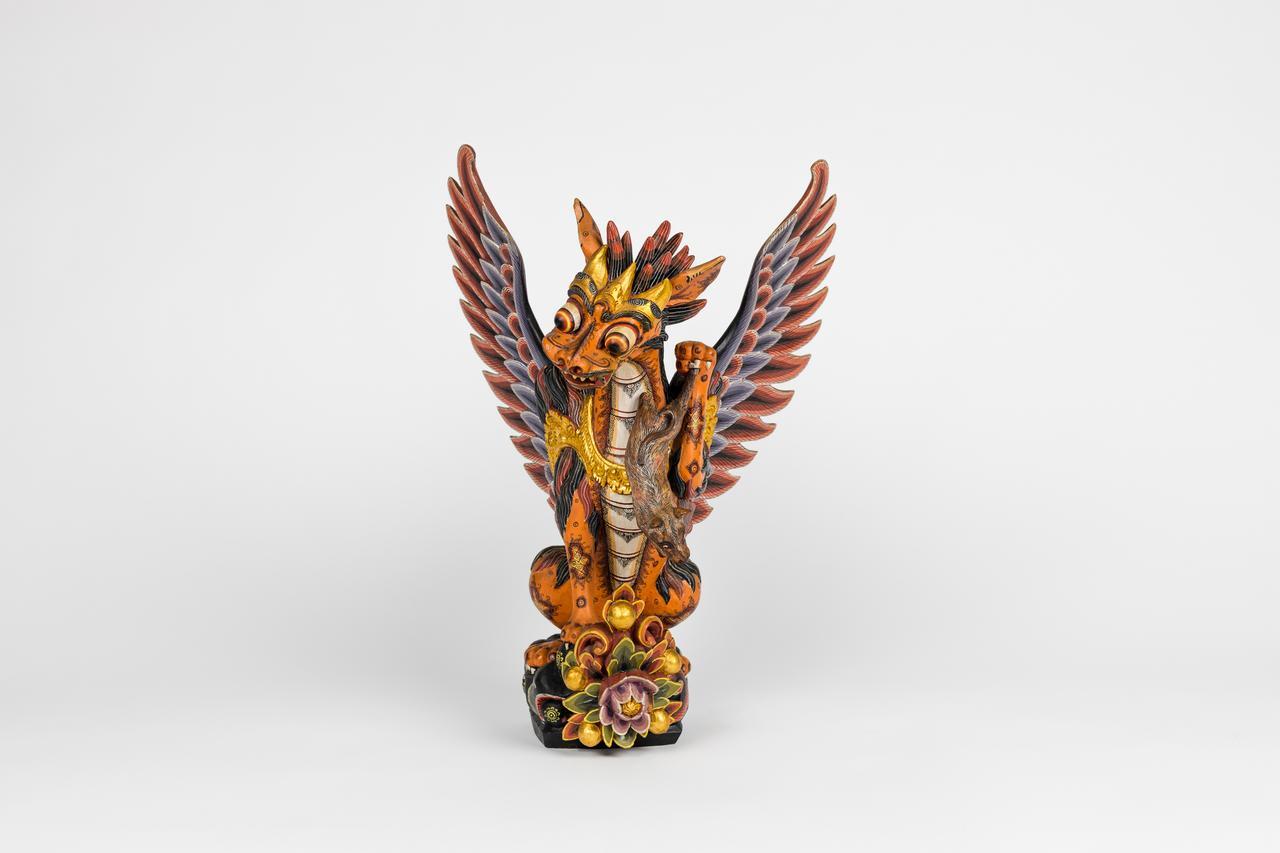
Pot with lid - Hopi - U.S.


07
days
06
hours
20
minutes
57
seconds
Starting bid
€ 1
Reserve price not met

Expert
Selected by Surya Rutten
Has over 25 years' experience in Asian art and owned an art gallery.
Estimate € 350 - € 430
No bids placed
Catawiki Buyer Protection
Your payment’s safe with us until you receive your object.View details
Trustpilot 4.4 | 134364 reviews
Rated Excellent on Trustpilot.
Hopi ceramic pot with lid from the USA, dating to the mid-20th century (circa 1930s–1940s), with a diameter of 17 cm, height 22 cm, width 17 cm, depth 17 cm, and a weight of 1350 g; authenticity is original and provenance from a private collection.
AI-assisted summary
Description from the seller
The Hopi (abbreviation of Hopituh Shinumu – “peaceful people”) are the westernmost group of the Pueblo Indians. They live in northeastern Arizona in the southwestern United States, the majority of the Hopi being part of the Hopi Tribe of Arizona, whose 12,600 sq km reserve today lies in the midst of the Navajo Nation Reservation of the Navajo (Diné) at the edge of the Painted Desert. More Hopi have been part of the Colorado River Indian Tribes (Mohave, Chemehuevi, Hopi, and Navajo) since 1945 in the border region of Arizona and California.
Historically they were also called Moki or Moqui by the Spaniards, probably a rendition of the Zuni designation for the Hopi as Mu:kwi.
The Hopi call their traditional tribal territory at the southwestern rim of Black Mesa Tuuwanasave (“the center / the middle of the universe”). Most of their Pueblo settlements lie on three high mesas (First, Second and Third Mesa), which rise from the Colorado Plateau; in addition they inhabit several villages and settlements beyond that, all located within an area of 56 kilometers in circumference.
The land of the Hopi is a dry high plateau. The Hopi succeed in coaxing many agricultural products from this inhospitable ground, especially corn of various varieties. Since the turn of the millennium, the supply of water and electricity in the residential areas has been expanded. The Oraibi Pueblo on Third Mesa is probably the oldest continuously inhabited settlement in the USA.
Some of the finest ceramics, jewelry, and basketry of the Southwest come from the Hopi, and they are also known for their Kachina carving and silversmithing. Today Hopi artists also express themselves through painting, glassmaking, photography, and the visual arts (sculpture) and other contemporary art forms.
The offered pot with lid was produced around 1930/40, has a diameter of about 17 cm and stands 22 cm high.
The Hopi (abbreviation of Hopituh Shinumu – “peaceful people”) are the westernmost group of the Pueblo Indians. They live in northeastern Arizona in the southwestern United States, the majority of the Hopi being part of the Hopi Tribe of Arizona, whose 12,600 sq km reserve today lies in the midst of the Navajo Nation Reservation of the Navajo (Diné) at the edge of the Painted Desert. More Hopi have been part of the Colorado River Indian Tribes (Mohave, Chemehuevi, Hopi, and Navajo) since 1945 in the border region of Arizona and California.
Historically they were also called Moki or Moqui by the Spaniards, probably a rendition of the Zuni designation for the Hopi as Mu:kwi.
The Hopi call their traditional tribal territory at the southwestern rim of Black Mesa Tuuwanasave (“the center / the middle of the universe”). Most of their Pueblo settlements lie on three high mesas (First, Second and Third Mesa), which rise from the Colorado Plateau; in addition they inhabit several villages and settlements beyond that, all located within an area of 56 kilometers in circumference.
The land of the Hopi is a dry high plateau. The Hopi succeed in coaxing many agricultural products from this inhospitable ground, especially corn of various varieties. Since the turn of the millennium, the supply of water and electricity in the residential areas has been expanded. The Oraibi Pueblo on Third Mesa is probably the oldest continuously inhabited settlement in the USA.
Some of the finest ceramics, jewelry, and basketry of the Southwest come from the Hopi, and they are also known for their Kachina carving and silversmithing. Today Hopi artists also express themselves through painting, glassmaking, photography, and the visual arts (sculpture) and other contemporary art forms.
The offered pot with lid was produced around 1930/40, has a diameter of about 17 cm and stands 22 cm high.
Details
Number of objects
1
Ethnic group/ culture
Hopi
Country of Origin
U.S.
Period
Mid 20th century
Material
Ceramic
Condition
Fair condition
Title of artwork
Pot with lid
Height
22 cm
Width
17 cm
Depth
17 cm
Weight
1350 g
Provenance
Private collection
Authenticity
Original/official
Sold by