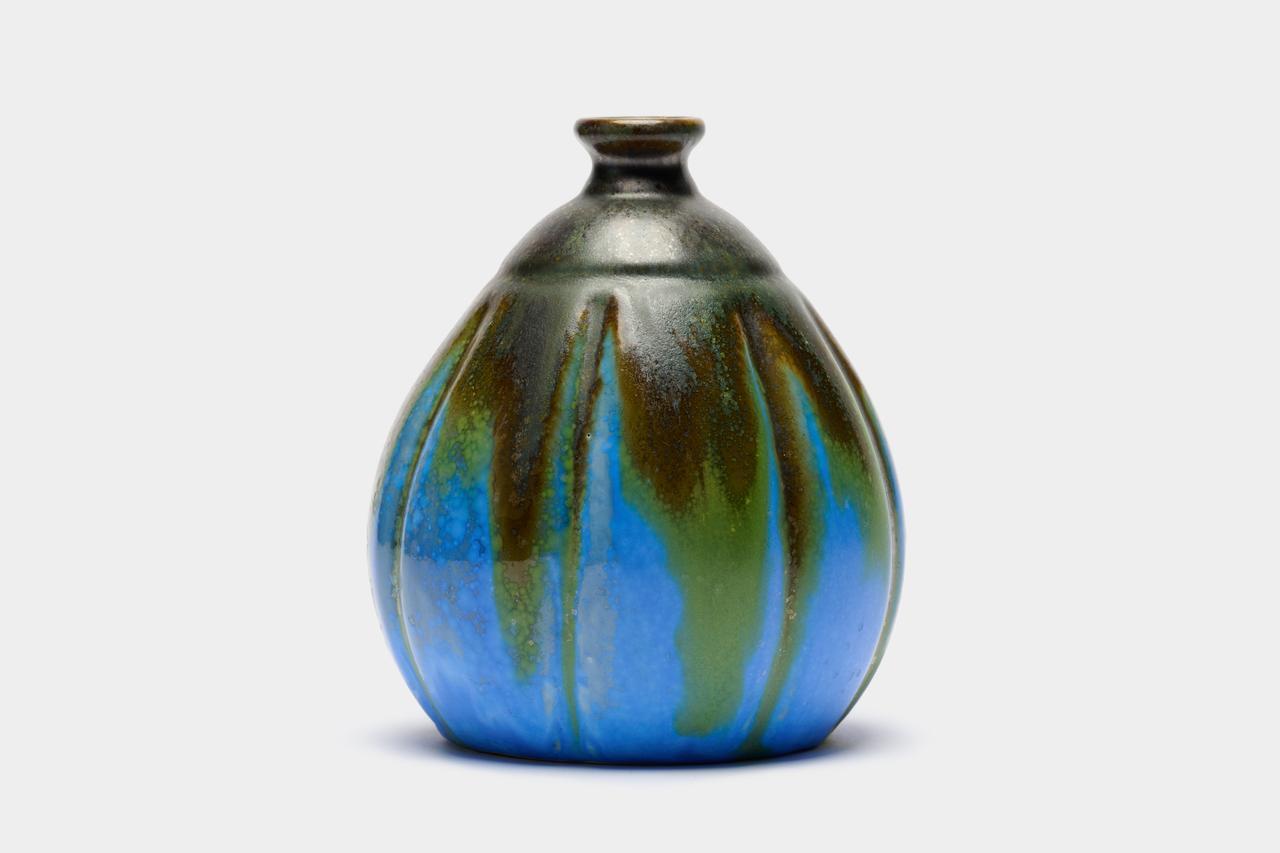
alvaro cartei - Figura classica


Starting bid
€ 1
Add to your favourites to get an alert when the auction starts.

Expert
Selected by Florentin Brunz Gaborieau
Holds a master’s in Art History, specialising in Second French Empire and Dutch Golden Age.
Estimate € 350 - € 400
Catawiki Buyer Protection
Your payment’s safe with us until you receive your object.View details
Trustpilot 4.4 | 135773 reviews
Rated Excellent on Trustpilot.
Description from the seller
Colorful ceramic plate by Alvaro Cartei, large size, made for Tigre Ceramics
He was born into a poor family to Mario and Adelaide Michelagnoli, the first of four children. Among the first to notice his drawing talent was his elementary school teacher, who often let him skip lessons to sit at the back drawing, only to have his drawings copied later. It was precisely the teacher who urged the young Alvaro to deepen his passion.
Cartei entered the workshop of Giuseppe Santelli, also from Signa, in the mid-twenties. His master gave him some of his early works which the apprentice Cartei copied. The first subjects of his drawings were his family: his mother, his grandmother, and his brother Danilo; later he would create vivid portraits of the Signa landscape.
In the following years he reached an artistic maturity that led him to work with Santelli as a church fresco painter in Tuscany and in Rome; these were the thirties. Simultaneously he began his activity as a ceramic decorator in Signa and Montelupo. This work would be his economic sustenance for years.
The war years spared him the front (he was drafted out of the army) and coincided with a period of crisis about his role as a town artist.
In January 1944 he enrolled in the Scuola Libera del Nudo of the Academy of Fine Arts in Florence. During his train journeys he had the opportunity to draw in real time a bombing of the city. He attended the nude school intermittently until 1957, but this experience had a strong impact. On the eve of his forties, he met Anna, whom he married in 1960.
In the early years after the war, Cartei joined the PCI and was politically active with his works. In accordance with socialist realism he created for May Day parades a series of manifesto paintings, including The Dream of the Agrarians and The Balance No Longer Adds Up. His greatest commitment, however, was for the Festa de L’Unità of Signa in 1946, when he represented four large portraits of Lenin, Stalin, Togliatti, and Gramsci.
Starting from the fifties, his evolving path began. The first changes concerned color: his representations of reality appeared with purer, more pronounced colors. The main work of this period is Le magliaie, which depicts two women workers at the loom. This change was the prelude to the revolution of the sixties, when he abandoned formal perfection in favor of a deeper representation of reality and of people. Faces and bodies appear stylized and are painted without a model.
Cartei’s life suffered a sudden trauma: the death of his wife in 1980. The despair of those years materialized in one of his most peculiar works: Ricordo. Painted in oil on plywood, and when finished Cartei, overwhelmed by despair, scraped off all the paint, but the shapes remained imprinted in the wood, almost like a faded photograph, a perpetual memory of his partner.
Colorful ceramic plate by Alvaro Cartei, large size, made for Tigre Ceramics
He was born into a poor family to Mario and Adelaide Michelagnoli, the first of four children. Among the first to notice his drawing talent was his elementary school teacher, who often let him skip lessons to sit at the back drawing, only to have his drawings copied later. It was precisely the teacher who urged the young Alvaro to deepen his passion.
Cartei entered the workshop of Giuseppe Santelli, also from Signa, in the mid-twenties. His master gave him some of his early works which the apprentice Cartei copied. The first subjects of his drawings were his family: his mother, his grandmother, and his brother Danilo; later he would create vivid portraits of the Signa landscape.
In the following years he reached an artistic maturity that led him to work with Santelli as a church fresco painter in Tuscany and in Rome; these were the thirties. Simultaneously he began his activity as a ceramic decorator in Signa and Montelupo. This work would be his economic sustenance for years.
The war years spared him the front (he was drafted out of the army) and coincided with a period of crisis about his role as a town artist.
In January 1944 he enrolled in the Scuola Libera del Nudo of the Academy of Fine Arts in Florence. During his train journeys he had the opportunity to draw in real time a bombing of the city. He attended the nude school intermittently until 1957, but this experience had a strong impact. On the eve of his forties, he met Anna, whom he married in 1960.
In the early years after the war, Cartei joined the PCI and was politically active with his works. In accordance with socialist realism he created for May Day parades a series of manifesto paintings, including The Dream of the Agrarians and The Balance No Longer Adds Up. His greatest commitment, however, was for the Festa de L’Unità of Signa in 1946, when he represented four large portraits of Lenin, Stalin, Togliatti, and Gramsci.
Starting from the fifties, his evolving path began. The first changes concerned color: his representations of reality appeared with purer, more pronounced colors. The main work of this period is Le magliaie, which depicts two women workers at the loom. This change was the prelude to the revolution of the sixties, when he abandoned formal perfection in favor of a deeper representation of reality and of people. Faces and bodies appear stylized and are painted without a model.
Cartei’s life suffered a sudden trauma: the death of his wife in 1980. The despair of those years materialized in one of his most peculiar works: Ricordo. Painted in oil on plywood, and when finished Cartei, overwhelmed by despair, scraped off all the paint, but the shapes remained imprinted in the wood, almost like a faded photograph, a perpetual memory of his partner.
Details
Artist
alvaro cartei
Sold with frame
No
Sold by
Owner or reseller
Edition
Original
Title of artwork
Figura classica
Technique
Mixed technique
Signature
Signed
Country of origin
Italy
Condition
Good condition
Height
85 cm
Width
85 cm
Weight
11 g
Style
Classical
Period
1950-1960
Sold by