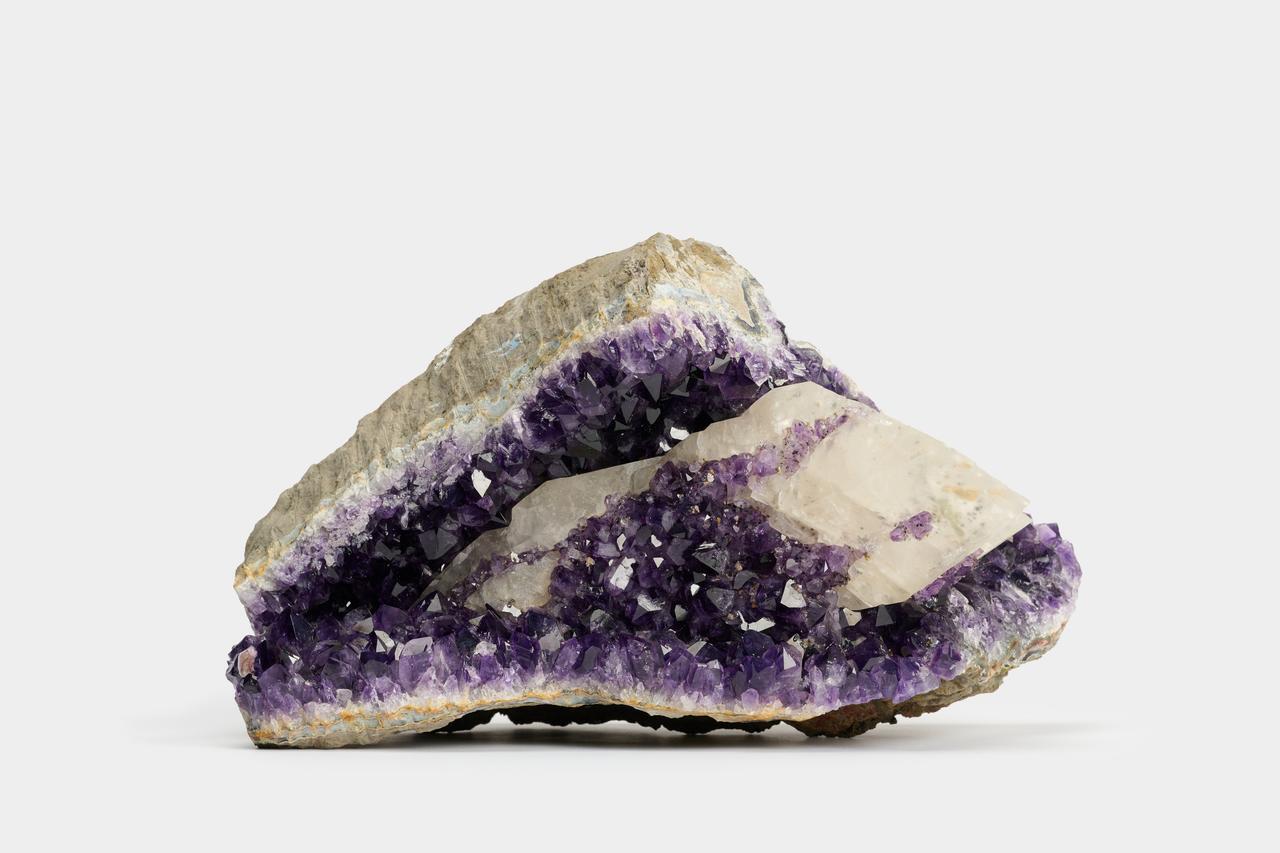
SEYMCHAN Meteorite Polished part - 2 kg


05
days
20
hours
15
minutes
13
seconds
Starting bid
€ 1
Reserve price not met

Expert
Selected by Francesco Moser
Over 20 years collecting meteorites; former museum curator and experienced restorer.
Estimate € 2,800 - € 3,100
No bids placed
Catawiki Buyer Protection
Your payment’s safe with us until you receive your object.View details
Trustpilot 4.4 | 135253 reviews
Rated Excellent on Trustpilot.
The Seymchan meteorite, a polished piece from Magadanskaya oblast, Russia, weighing 2 kg, primarily iron with Widmanstätten lines and a natural crust.
AI-assisted summary
Description from the seller
Beautiful pallasite piece, only the metallic part, in which you can appreciate different Widmanstätten structures.
Polished and treated for conservation.
The Widmanstätten lines are the result of the intergrowth of bands of taenite and kamacite, which are two iron-nickel alloys. To produce this pattern of lines, a very slow cooling is required, at least 1 degree Celsius per million years.
Pallasites contain approximately 50% metal (iron and nickel) and 50% silicates (in the form of olivine). They originate from the interiors of large asteroids. Pallasites are one of the most beautiful types of meteorites that exist. Their name comes from the German zoologist and botanist Peter Simon Pallas, who discovered, in 1772, the first specimen of this type of meteorite in Siberia, Russia.
At Expometeoritos, we are in charge of outreach, talks, workshops, analyses, classification, and exhibitions of meteorites.
At Expometeoritos, we are in charge of outreach, talks, workshops, analyses, classification, and exhibitions of meteorites.
We are members of:
.- IMCA (International Meteorite Collectors Association) #8187
.- Meteoritical Society
.- American Meteor Society
All our pieces are certified and, in addition, we provide the chemical composition analysis if the piece’s value exceeds €300, performed at our facilities by X-ray spectroscopy.
Seller's Story
We search for pieces of the cosmos
to put the universe in your hands.
At Expometeoritos we are dedicated to visiting the most inhospitable corners of the planet in search of meteorites and all those elements (Impactites, Suevites, Tektites, etc.) that attest to what the universe around us is like and how it works.
We are adventurous, curious and restless by nature and thanks to this project we can bring the secrets of the cosmos closer to all of you in a different way.
We organize informative talks, exhibitions, we analyze and classify, cut and polish meteorites and, in addition, we offer you the best pieces so that you can get hold of them and have a piece of the universe in your own home.
Our commitment is complete and we want you to have all the guarantees and confidence, that is why all our pieces are certified and an analysis of their chemical composition is also included if the value of the piece exceeds €300. The analysis is carried out in our facilities by X-ray spectrography.
The pieces will be sent by express service UPS 24/48 hours
We are members of:
.- IMCA (International Association of Meteorite Collectors) #8187
.- GMA (Global Meteorite Association) #0078
.- Meteorical Society
.-American Meteor Society
Collegiate Nº 8187 authorized by IMCA for the issuance of official certificates
Translated by Google TranslateBeautiful pallasite piece, only the metallic part, in which you can appreciate different Widmanstätten structures.
Polished and treated for conservation.
The Widmanstätten lines are the result of the intergrowth of bands of taenite and kamacite, which are two iron-nickel alloys. To produce this pattern of lines, a very slow cooling is required, at least 1 degree Celsius per million years.
Pallasites contain approximately 50% metal (iron and nickel) and 50% silicates (in the form of olivine). They originate from the interiors of large asteroids. Pallasites are one of the most beautiful types of meteorites that exist. Their name comes from the German zoologist and botanist Peter Simon Pallas, who discovered, in 1772, the first specimen of this type of meteorite in Siberia, Russia.
At Expometeoritos, we are in charge of outreach, talks, workshops, analyses, classification, and exhibitions of meteorites.
At Expometeoritos, we are in charge of outreach, talks, workshops, analyses, classification, and exhibitions of meteorites.
We are members of:
.- IMCA (International Meteorite Collectors Association) #8187
.- Meteoritical Society
.- American Meteor Society
All our pieces are certified and, in addition, we provide the chemical composition analysis if the piece’s value exceeds €300, performed at our facilities by X-ray spectroscopy.
Seller's Story
We search for pieces of the cosmos
to put the universe in your hands.
At Expometeoritos we are dedicated to visiting the most inhospitable corners of the planet in search of meteorites and all those elements (Impactites, Suevites, Tektites, etc.) that attest to what the universe around us is like and how it works.
We are adventurous, curious and restless by nature and thanks to this project we can bring the secrets of the cosmos closer to all of you in a different way.
We organize informative talks, exhibitions, we analyze and classify, cut and polish meteorites and, in addition, we offer you the best pieces so that you can get hold of them and have a piece of the universe in your own home.
Our commitment is complete and we want you to have all the guarantees and confidence, that is why all our pieces are certified and an analysis of their chemical composition is also included if the value of the piece exceeds €300. The analysis is carried out in our facilities by X-ray spectrography.
The pieces will be sent by express service UPS 24/48 hours
We are members of:
.- IMCA (International Association of Meteorite Collectors) #8187
.- GMA (Global Meteorite Association) #0078
.- Meteorical Society
.-American Meteor Society
Collegiate Nº 8187 authorized by IMCA for the issuance of official certificates
Translated by Google TranslateDetails
Name of meteorite
SEYMCHAN Meteorite
Type of meteorite
Polished part
Supplement
Iron with Widmanstätten patterns and natural crust.
Weight
2 kg
Origin (region/city)
Magadan Oblast
Country of origin
Russia
Sold by