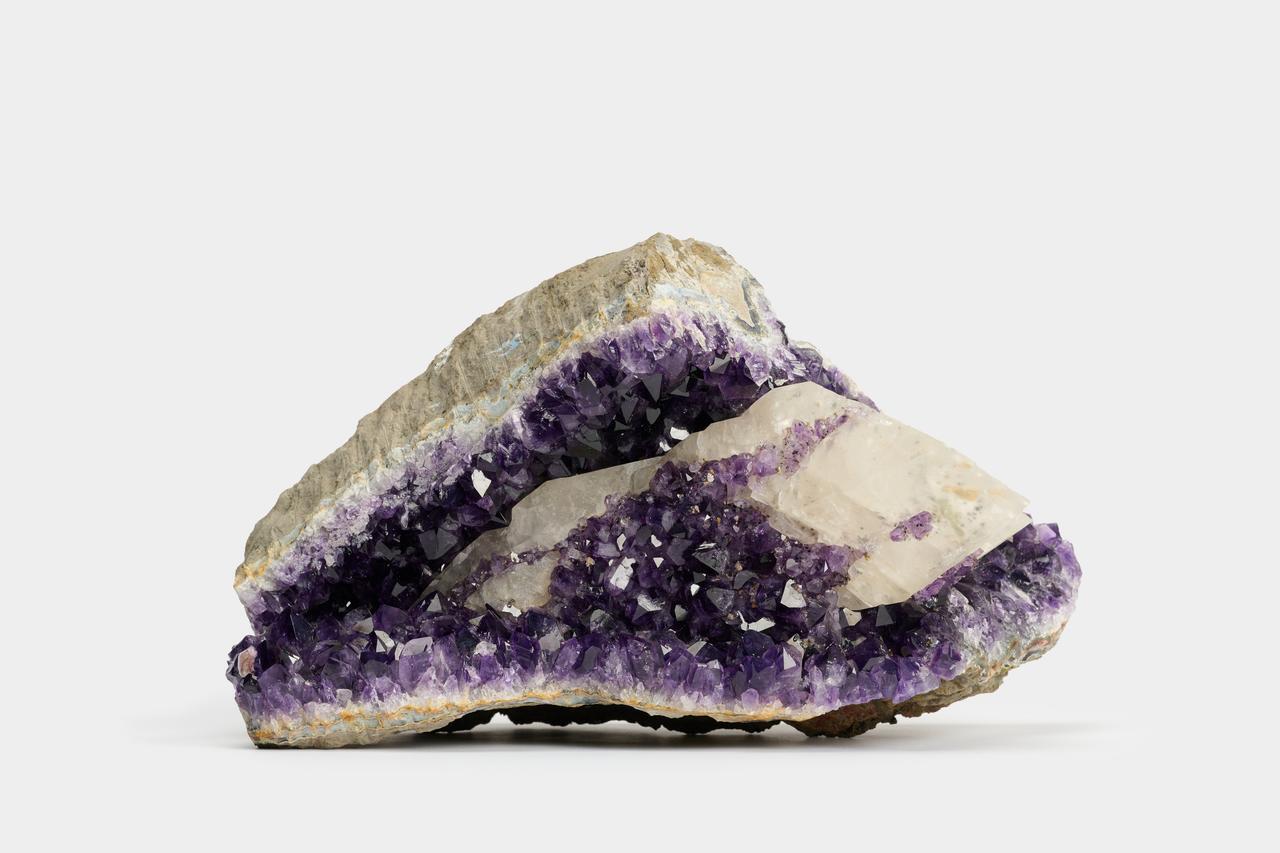
AUBRITE DJOUA 001, new classification Achondrite EXTREMELY RARE, End Cut - 22 g


05
days
11
hours
22
minutes
26
seconds
Starting bid
€ 1
Reserve price not met

Expert
Selected by Francesco Moser
Over 20 years collecting meteorites; former museum curator and experienced restorer.
Estimate € 450 - € 550
No bids placed
Catawiki Buyer Protection
Your payment’s safe with us until you receive your object.View details
Trustpilot 4.4 | 135253 reviews
Rated Excellent on Trustpilot.
AUBRITE DJOUA 001, nueva clasificación, is an extremely rare achondrite meteorite from Argelia in Northwest Africa, weighing 22 g and described as End Cut.
AI-assisted summary
Description from the seller
An amazing fragment of Aubrite achondrite meteorite
Its igneous origin separates them from primitive enstatite chondrites and indicates that they originated on an asteroid.
Aubrites are composed mainly of large white crystals of Mg-rich orthopyroxene, or enstatite.
Around this matrix, they have minor phases of olivine, nickel-iron metal and troilite, which indicate magmatic formation under extremely reducing conditions.
The great brecciation of most aubrites testifies to a violent history in their parent body.
Spectral comparisons of aubrites with asteroid spectra have revealed surprising similarities between the aubrite group and the E-type asteroids of the Nysa family.
A small near-Earth object, (3103) Eger, is often suggested as the parent body of the aubrites
We are members of:
-. IMCA (International Meteorite Collectors Association) #8187
-. Meteoritical Society
-. American Meteor Society
All our pieces are certified and, moreover, we provide the chemical composition analysis if the piece’s value exceeds €300, performed at our facilities by X-ray spectroscopy.
Seller's Story
We search for pieces of the cosmos
to put the universe in your hands.
At Expometeoritos we are dedicated to visiting the most inhospitable corners of the planet in search of meteorites and all those elements (Impactites, Suevites, Tektites, etc.) that attest to what the universe around us is like and how it works.
We are adventurous, curious and restless by nature and thanks to this project we can bring the secrets of the cosmos closer to all of you in a different way.
We organize informative talks, exhibitions, we analyze and classify, cut and polish meteorites and, in addition, we offer you the best pieces so that you can get hold of them and have a piece of the universe in your own home.
Our commitment is complete and we want you to have all the guarantees and confidence, that is why all our pieces are certified and an analysis of their chemical composition is also included if the value of the piece exceeds €300. The analysis is carried out in our facilities by X-ray spectrography.
The pieces will be sent by express service UPS 24/48 hours
We are members of:
.- IMCA (International Association of Meteorite Collectors) #8187
.- GMA (Global Meteorite Association) #0078
.- Meteorical Society
.-American Meteor Society
Collegiate Nº 8187 authorized by IMCA for the issuance of official certificates
Translated by Google TranslateAn amazing fragment of Aubrite achondrite meteorite
Its igneous origin separates them from primitive enstatite chondrites and indicates that they originated on an asteroid.
Aubrites are composed mainly of large white crystals of Mg-rich orthopyroxene, or enstatite.
Around this matrix, they have minor phases of olivine, nickel-iron metal and troilite, which indicate magmatic formation under extremely reducing conditions.
The great brecciation of most aubrites testifies to a violent history in their parent body.
Spectral comparisons of aubrites with asteroid spectra have revealed surprising similarities between the aubrite group and the E-type asteroids of the Nysa family.
A small near-Earth object, (3103) Eger, is often suggested as the parent body of the aubrites
We are members of:
-. IMCA (International Meteorite Collectors Association) #8187
-. Meteoritical Society
-. American Meteor Society
All our pieces are certified and, moreover, we provide the chemical composition analysis if the piece’s value exceeds €300, performed at our facilities by X-ray spectroscopy.
Seller's Story
We search for pieces of the cosmos
to put the universe in your hands.
At Expometeoritos we are dedicated to visiting the most inhospitable corners of the planet in search of meteorites and all those elements (Impactites, Suevites, Tektites, etc.) that attest to what the universe around us is like and how it works.
We are adventurous, curious and restless by nature and thanks to this project we can bring the secrets of the cosmos closer to all of you in a different way.
We organize informative talks, exhibitions, we analyze and classify, cut and polish meteorites and, in addition, we offer you the best pieces so that you can get hold of them and have a piece of the universe in your own home.
Our commitment is complete and we want you to have all the guarantees and confidence, that is why all our pieces are certified and an analysis of their chemical composition is also included if the value of the piece exceeds €300. The analysis is carried out in our facilities by X-ray spectrography.
The pieces will be sent by express service UPS 24/48 hours
We are members of:
.- IMCA (International Association of Meteorite Collectors) #8187
.- GMA (Global Meteorite Association) #0078
.- Meteorical Society
.-American Meteor Society
Collegiate Nº 8187 authorized by IMCA for the issuance of official certificates
Translated by Google TranslateDetails
Name of meteorite
AUBRITE DJOUA 001, new classification
Type of meteorite
Achondrite EXTREMELY RARE, End Cut
Supplement
part
Weight
22 g
Origin (region/city)
Northwest Africa
Country of origin
Algeria
Sold by