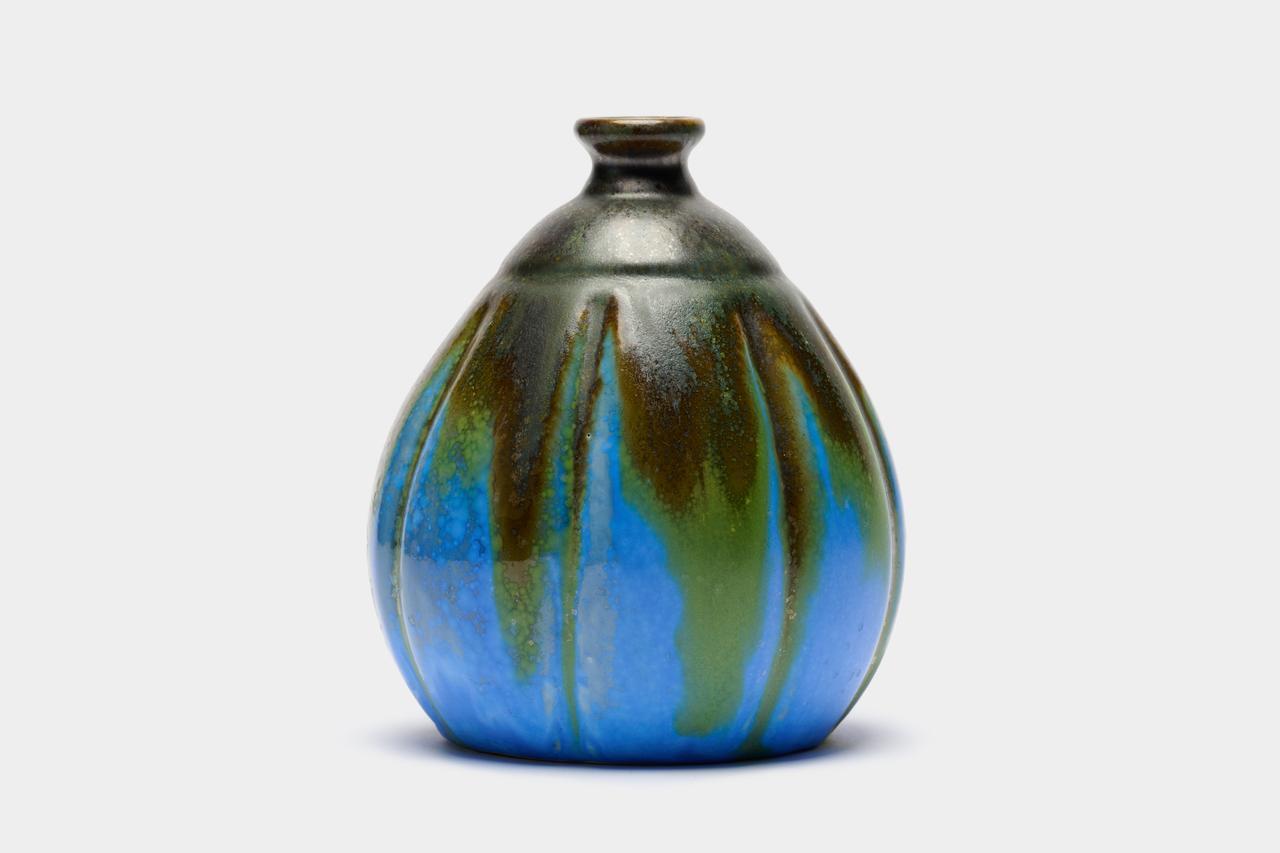
Lidded vase (2) - copper and glass paste

00
days
07
hours
29
minutes
05
seconds
Current bid
€ 75
Reserve price not met
Florentin Brunz Gaborieau
Expert
Selected by Florentin Brunz Gaborieau

Holds a master’s in Art History, specialising in Second French Empire and Dutch Golden Age.

Estimate  € 400 - € 450
19 other people are watching this object
FR
€75
FR
€70
FR
€65

Catawiki Buyer Protection

Your payment’s safe with us until you receive your object.View details

Trustpilot 4.4 | 136196 reviews

Rated Excellent on Trustpilot.

Pair of Qing Dynasty cloisonné vases in copper and glass paste, with a leiwen grid on a black background and central floral decoration of pink, white and yellow peonies and lotuses, dating to 1850–1900 in China; dimensions 10.5 cm wide, 21.5 cm high and 10.5 cm deep, in good used condition with minor signs of aging and spots, provenance Veilinghuis, sold without a stand.

AI-assisted summary

Description from the seller

This elegant pair of vases bears witness to the refined Chinese metalworking tradition. The vases are executed in the classic cloisonné technique, in which fine copper wires form a complex geometric lattice on a deep black background. This pattern, also known as the 'thunder pattern' (leiwen), creates a rich contrast with the vibrant floral decorations. The central ornament consists of a rich composition of peonies and lotus flowers in various shades of pink, white, and yellow. In Chinese symbolism, these flowers signify wealth, honor, and spiritual purity. The detailing of the leaves, rendered in various shades of green and turquoise, emphasizes the high-quality finish of this pair.

Cloisonné is an ancient technique for decorating metal objects with colored vitreous enamel. Although the technique originally came from the Byzantine Empire, the craftsmanship in China reached an unparalleled level of perfection during the Ming and Qing dynasties. The making of a cloisonné object such as these lidded vases is an extremely labor-intensive process that consists of several stages. The craft begins with a copper base on which fine metal wires outline the contours of the design. These resulting cells are repeatedly filled with colored glass paste and fired at high temperature until a solid layer forms. After firing, the surface is polished smooth and the visible metal wires are often gilded for a luxurious, gleaming finish.

This elegant pair of vases bears witness to the refined Chinese metalworking tradition. The vases are executed in the classic cloisonné technique, in which fine copper wires form a complex geometric lattice on a deep black background. This pattern, also known as the 'thunder pattern' (leiwen), creates a rich contrast with the vibrant floral decorations. The central ornament consists of a rich composition of peonies and lotus flowers in various shades of pink, white, and yellow. In Chinese symbolism, these flowers signify wealth, honor, and spiritual purity. The detailing of the leaves, rendered in various shades of green and turquoise, emphasizes the high-quality finish of this pair.

Cloisonné is an ancient technique for decorating metal objects with colored vitreous enamel. Although the technique originally came from the Byzantine Empire, the craftsmanship in China reached an unparalleled level of perfection during the Ming and Qing dynasties. The making of a cloisonné object such as these lidded vases is an extremely labor-intensive process that consists of several stages. The craft begins with a copper base on which fine metal wires outline the contours of the design. These resulting cells are repeatedly filled with colored glass paste and fired at high temperature until a solid layer forms. After firing, the surface is polished smooth and the visible metal wires are often gilded for a luxurious, gleaming finish.

Details

Era
1400-1900
Number of objects
2
Country of origin
China
Material
copper and glass paste
Dynastic style/period
Qing Dynasty (1644-1911)
Provenance
Auction house
Condition
Good condition - used with small signs of aging & blemishes
Height
21.5 cm
Sold with stand
No
Width
10.5 cm
Depth
10.5 cm
Estimated period
1850-1900
BelgiumVerified
44
Objects sold
100%
pro

Similar objects

For you in

Ceramics & Glass