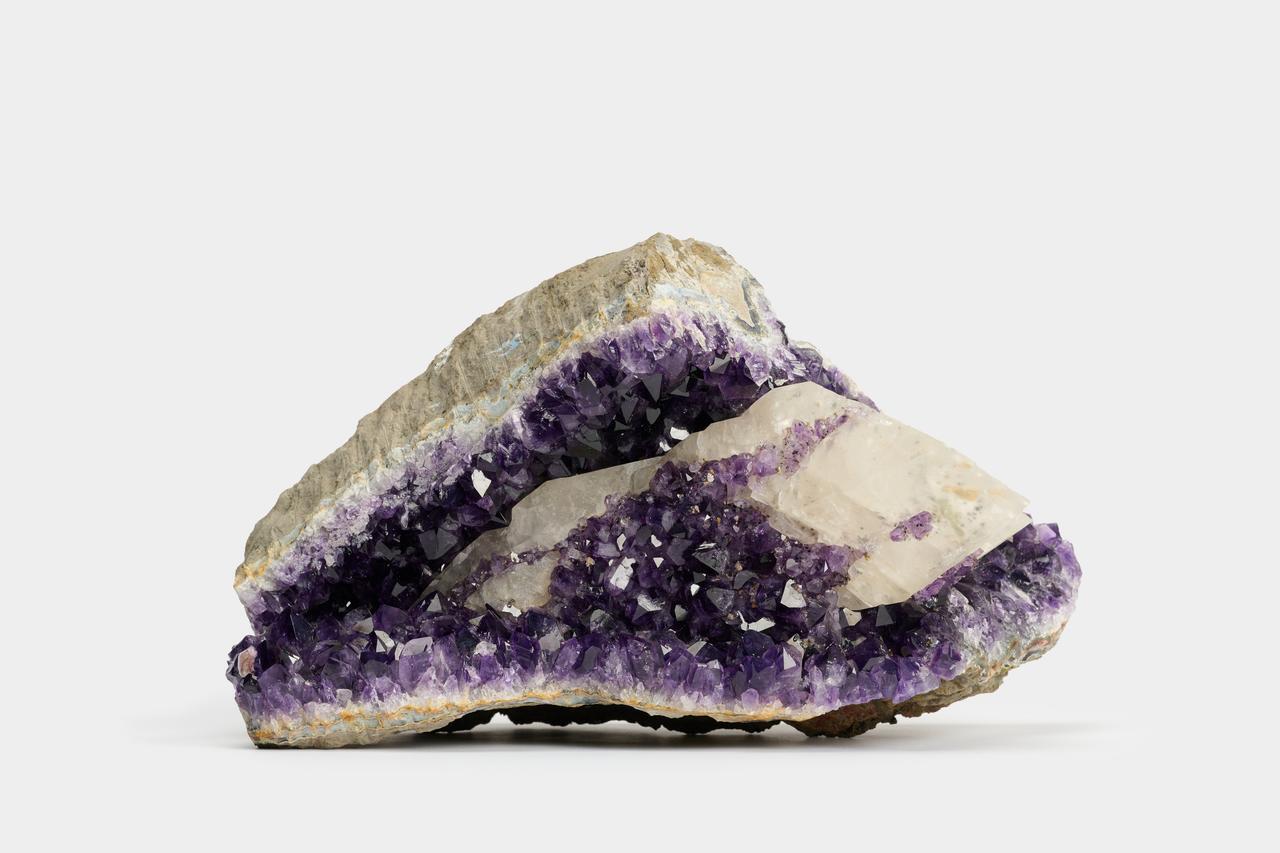
septarian Egg - Height: 15 cm- 2.2 kg


02
days
03
hours
51
minutes
31
seconds
Current bid
€ 100
Reserve price met

Expert
Selected by Georgia Foteinou
Holds BSc in geology and post-graduate qualifications in geochemistry.
Estimate € 150 - € 200
 | €100 |
|---|
Catawiki Buyer Protection
Your payment’s safe with us until you receive your object.View details
Trustpilot 4.4 | 137313 reviews
Rated Excellent on Trustpilot.
Septarian egg from Madagascar, a 2.2 kg display specimen measuring about 15 cm high with dark aragonite veins and a crystalline interior evident in the cut and polished exterior.
AI-assisted summary
Description from the seller
This stunning septarian egg specimen showcases the timeless beauty of nature’s design. Cut and polished to reveal its striking internal structure, the piece displays a captivating contrast between smooth, earthy exterior tones and a breathtaking, dark crystalline core. The intricate web of dark aragonite veins creates a sharp, eye-catching pattern reminiscent of a mythical dragon egg, making it perfect for home décor, a collector’s cabinet, or as a unique gift for mineral lovers.
The specimen comes complete with a beautifully matched display base that elegantly supports the egg, creating a sophisticated museum-quality display that enhances its natural beauty and unique geometric form.
Scientific Background
This unique formation is a septarian nodule (or septarian geode), a fascinating sedimentary concretion that originated during the Cretaceous period, approximately 50 to 70 million years ago. These nodules began as balls of clay and organic matter on ancient seafloors. As the oceans receded and the moisture evaporated, the internal clay dried out and shrank, creating a distinctive network of angular cracks and hollow cavities (known as "septaria," from the Latin word for partition).
Over millions of years, mineral-rich waters seeped into these internal fractures, gradually depositing layers of minerals. The dark brown or black structural veins are formed by aragonite, while the crystalline interior lining the hollow geode chamber is typically composed of calcite or quartz druzy. The resulting specimen provides a remarkable geological record of ancient marine environments, beautifully freezing millions of years of chemical precipitation and crystal growth into a single, dramatic form.
This stunning septarian egg specimen showcases the timeless beauty of nature’s design. Cut and polished to reveal its striking internal structure, the piece displays a captivating contrast between smooth, earthy exterior tones and a breathtaking, dark crystalline core. The intricate web of dark aragonite veins creates a sharp, eye-catching pattern reminiscent of a mythical dragon egg, making it perfect for home décor, a collector’s cabinet, or as a unique gift for mineral lovers.
The specimen comes complete with a beautifully matched display base that elegantly supports the egg, creating a sophisticated museum-quality display that enhances its natural beauty and unique geometric form.
Scientific Background
This unique formation is a septarian nodule (or septarian geode), a fascinating sedimentary concretion that originated during the Cretaceous period, approximately 50 to 70 million years ago. These nodules began as balls of clay and organic matter on ancient seafloors. As the oceans receded and the moisture evaporated, the internal clay dried out and shrank, creating a distinctive network of angular cracks and hollow cavities (known as "septaria," from the Latin word for partition).
Over millions of years, mineral-rich waters seeped into these internal fractures, gradually depositing layers of minerals. The dark brown or black structural veins are formed by aragonite, while the crystalline interior lining the hollow geode chamber is typically composed of calcite or quartz druzy. The resulting specimen provides a remarkable geological record of ancient marine environments, beautifully freezing millions of years of chemical precipitation and crystal growth into a single, dramatic form.
Details
Main mineral
septarian
Mineral form
Egg
Weight
2.2 kg
Origin (region/city)
Madagascar
Country of origin
Madagascar
Height
15 cm