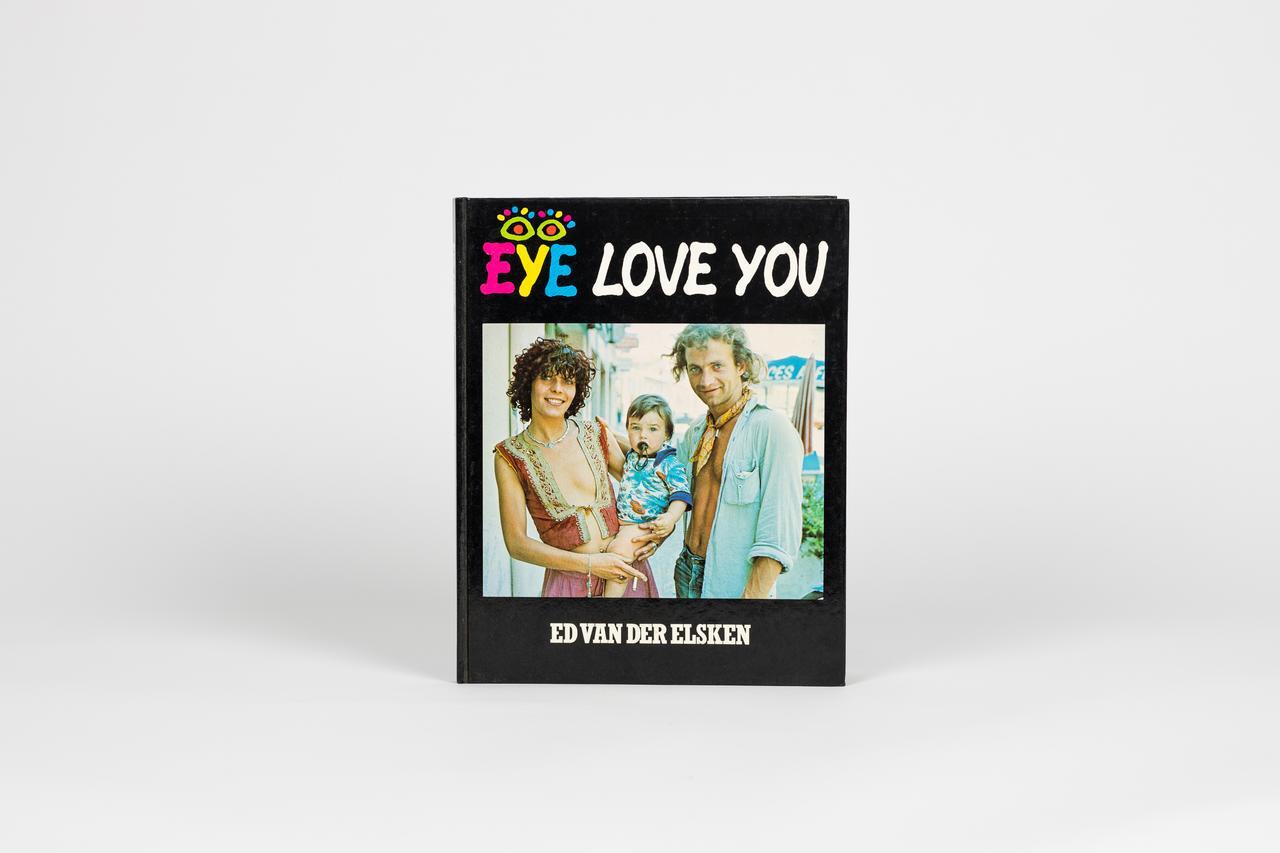
Ed van der Elsken - Jazz - 2007


14
days
17
hours
11
minutes
12
seconds

 | €1 |
|---|
Catawiki Buyer Protection
Your payment’s safe with us until you receive your object.View details
Trustpilot 4.4 | 137727 reviews
Rated Excellent on Trustpilot.
Jazz by Ed van der Elsken, Steidl, 2007 reprint hardcover, 116 pages, Dutch text, 178 x 168 mm, 109 black and white plates, Fine condition.
AI-assisted summary
Description from the seller
This is the NEW EDITION of the VERY SUCCESSFUL SINGLE-SELLER AUCTION by 5Uhr30.com
(Ecki Heuser, Cologne, Germany).
Fantastic reprint of the original Dutch edition from 1959 (Martin Parr, The Photobook vol 1, page 246).
PHOTOBOOK AND JAZZ BOOK CLASSIC by famous Dutch photographer Ed van der Elsken ("Love on the Left Banki").
Originally published in 1959, Jazz has become one of the most collectible photography books from the mid-twentieth century. Like William Claxton’s Jazzlife and Dennis Stock’s Jazz Street, Van Der Elsken’s entry in the niche of jazz photography was published just prior to the moment when rock’n’roll cemented its place as the popular music of choice for young people. This book is perhaps the most successful of numerous attempts to capture photographically the essence of jazz because it is more than just a succession of musicians’ portraits, but a book that visually echoes the music itself.
EXCELLENT, VERY FRESH CONDITION.
5Uhr30.com guarantees detailed and accurate descriptions, 100% protection,
100% insurance and combined shipping worldwide.
Steidl, 7L. 2007. First Steidl edition, first printing.
Hardcover (as issued) with loose text sheet in French. 168 x 178 mm. 116 pages. 109 black and white plates. Photos: Ed van der Elsken. Texts by Jan Vrijman, Hugo Claus, Simon Carmiggelt, Friso Endt and Michiel de Ruyter. Text in Dutch.
Condition:
Inside excellent, like new and unread. Outside very fresh; light trace of use. Overall very fine condition.
Great photobook - in wonderful fresh condition.
"In the mid-1950s, Ed van der Elsken's first book ‘Love in Saint Germain des Prés’ was not only one of the most unconventional, personal and innovative Paris books of the decade. With regard to the genre as a whole, the young author broke new ground in terms of form and content to such an extent that the comparatively slim volume is now considered one of the most important photo books of all time. The title, wrapped in sturdy black efalin and provided with a dust jacket, was published at roughly the same time in 1956 by de Bezige Bi (Amsterdam) in a Dutch version, by Rowohlt (Hamburg) in a German version and by André Deutsch (London) in an - albeit toned-down - English version.
There was never a French one. The reaction in Holland was initially divided, fluctuating between indignation and ‘enthusiastic hymns of praise.’
The volume is now undisputedly considered ‘one of the most important photo books of the 20th century’, a ‘milestone in the evolution of the photo book’, a ‘particularly characteristic example’ of the young genre of the ‘photo novel’ or ‘one of the first photo books in which a fictional story is told by means of documentary photos’ and a ‘highlight’ in Ed van der Elsken's bibliographical oeuvre. In the canon of outstanding photo books defined more recently by Andrew Roth, Martin Parr/Gerry Badger or Michèle and Michel Auers, the title is prominently represented in each case.
Already in the often overlooked first survey of important Dutch illustrated books - ‘Foto in omslag
‘Foto in omslag’ - it was the subject of profound analysis. More recently, the book has been reprinted several times in facsimile.’ It is as much an object of scholarly observation as it is an intelligently produced, historical-critical exhibition - possibly the most highly regarded Paris book of all.
Elsken, essentially self-taught as a photographer, a friend of Emmy Andriesse and Cas Oorthuys and a member of the left-wing GKf (Gebonden Kunsten in de Federatie), came to Paris in 1950, where he stayed until January 1955, living in very modest circumstances but photographing with all the more commitment. A book published posthumously in the early 1990s opened up the broad cosmos of his Parisian years, which also included journalistically interesting portraits of celebrities (Piaf, Trenet, Fernandel), street photographs in the spirit of humanist photography and even fashion shots commissioned by the Dutch women's magazine Margriet.
A book as an extract of his time in Paris could therefore have looked very different. However, the rebellious, sometimes depressive but always non-conformist van der Elsken was unlikely to have been interested in panelled volumes of a conventional design. Moreover, he quickly joined a group of young outsiders who lived that extreme between material misery and the pursuit of freedom, for which the decade with Sartre's existentialism offered a plausible explanation. Van der Elsken followed the youthful gang, more bohemians than intellectuals, on their nightly strolls through cafés or bars such as La Chope Gauloise, La Pergole, Chez Moineau or Café Le Mabillon. What emerged over time was a kind of visual diary with the attractive, red-haired Australian Vali Myers at the centre.
Leica and Rolleicord, black and white film and available light are the technical parameters of his photography. But more important is the fact that van der Elsken photographed as a member of the group - at all times and without hindrance. As ‘the unbeaten master of eye contact’, he is part of the action, always close at hand, which gives his photographs the immediacy and authenticity that must have impressed Edward Steichen.
In 1953, Steichen was in Paris to collect photos for the planned exhibition ‘The Family of Man’. He would not only include van der Elsken in his 1953 exhibition ‘Post War European Photography’ at the Museum of Modern Art and two years later in ‘The Family of Man’.
It was also Steichen who came up with the idea of a photo novel and advised a narrative treatment of the subject: ‘Make a story, Ed.’
Ed van der Elsken is said to have started writing his story even before he returned to the Netherlands. It depicts the brief and ultimately disappointing love affair between the Mexican Manuel (alias Roberto Inignez-Morelosy) and an Australian woman named Ann (alias Vali Myers) in Paris in the 1950s. Pessimism, nihilism and a decidedly anti-bourgeois attitude guide the behaviour of the young people, whose meagre living conditions are in clear opposition to the economic awakening of the post-war era.
Back in Holland, van der Elsken set to work on his first book dummy. Two more followed, the third and last in collaboration with the graphic designer Jurriaan Schrofer, whom van der Elsken had met at the GKf. Both Schrofer and van der Elsken were vehemently interested in cinema. Accordingly, they used the dramaturgical means of film to give their story pace and a visual rhythm. Long shots and close-ups, shots and counter-shots, pictorial rows and sequences, action and suspense characterise the layout with its repeatedly cropped pages, the flashing white space, the interspersed text passages that sometimes read like silent film titles.
Even the black endpaper looks like the prelude to an evening at the cinema. But the zooming in on motifs, the sequencing of moments and the editing together of different scenic moments also give the work a decidedly cinematic feel. The visual language itself is sombre, in keeping with the pessimistic tone of the narrative; on the other hand, the photography is ‘full of emotion and drama, full of lust for life and enjoyment of the moment’. Vince Aletti saw the book as ‘like a beat generation update of Brassaï.’ Others see it as a photographic harbinger of the cinema of the Nouvelle Vague. With his radically subjective approach, van der Elsken certainly set a standard without which later youth-movement book projects from Larry Clark to Nan Goldin and up to Wolfgang Tillmans would be hard to imagine."
(Hans-Michael Koetzle)
Seller's Story
welcome to 5h30.
5Uhr30 is based in ehrenfeld, the trendiest neighborhood in cologne - with a shop and with a showroom for photography.
5H30 offers very rare, very beautiful, very special photobooks - sold-out, modern-antiquarian and antiquarian. we are also offering photo invitation cards, film and photo posters, photo catalogs and original photo prints.
5Uhr30 is specialized on german photo publications,
but also has an exciting range of photo books from all over europe, japan, north and south america. travel brochures, children's books, company brochures...everything that has to do with photography in the narrower or broader sense inspires us. please visit us if you are in cologne or the surrounding area. You will not regret it! :)
5:30 am always tries to offer the best condition.
5h30 is shipping worldwide, fast and safe -
with 100% protection, with full insurance and with tracking number.
please contact us by email, if you have any questions or if you are looking for something special, cause only a part of our offers are online.
Thanks for your interest.
ecki heuser and team
Translated by Google TranslateThis is the NEW EDITION of the VERY SUCCESSFUL SINGLE-SELLER AUCTION by 5Uhr30.com
(Ecki Heuser, Cologne, Germany).
Fantastic reprint of the original Dutch edition from 1959 (Martin Parr, The Photobook vol 1, page 246).
PHOTOBOOK AND JAZZ BOOK CLASSIC by famous Dutch photographer Ed van der Elsken ("Love on the Left Banki").
Originally published in 1959, Jazz has become one of the most collectible photography books from the mid-twentieth century. Like William Claxton’s Jazzlife and Dennis Stock’s Jazz Street, Van Der Elsken’s entry in the niche of jazz photography was published just prior to the moment when rock’n’roll cemented its place as the popular music of choice for young people. This book is perhaps the most successful of numerous attempts to capture photographically the essence of jazz because it is more than just a succession of musicians’ portraits, but a book that visually echoes the music itself.
EXCELLENT, VERY FRESH CONDITION.
5Uhr30.com guarantees detailed and accurate descriptions, 100% protection,
100% insurance and combined shipping worldwide.
Steidl, 7L. 2007. First Steidl edition, first printing.
Hardcover (as issued) with loose text sheet in French. 168 x 178 mm. 116 pages. 109 black and white plates. Photos: Ed van der Elsken. Texts by Jan Vrijman, Hugo Claus, Simon Carmiggelt, Friso Endt and Michiel de Ruyter. Text in Dutch.
Condition:
Inside excellent, like new and unread. Outside very fresh; light trace of use. Overall very fine condition.
Great photobook - in wonderful fresh condition.
"In the mid-1950s, Ed van der Elsken's first book ‘Love in Saint Germain des Prés’ was not only one of the most unconventional, personal and innovative Paris books of the decade. With regard to the genre as a whole, the young author broke new ground in terms of form and content to such an extent that the comparatively slim volume is now considered one of the most important photo books of all time. The title, wrapped in sturdy black efalin and provided with a dust jacket, was published at roughly the same time in 1956 by de Bezige Bi (Amsterdam) in a Dutch version, by Rowohlt (Hamburg) in a German version and by André Deutsch (London) in an - albeit toned-down - English version.
There was never a French one. The reaction in Holland was initially divided, fluctuating between indignation and ‘enthusiastic hymns of praise.’
The volume is now undisputedly considered ‘one of the most important photo books of the 20th century’, a ‘milestone in the evolution of the photo book’, a ‘particularly characteristic example’ of the young genre of the ‘photo novel’ or ‘one of the first photo books in which a fictional story is told by means of documentary photos’ and a ‘highlight’ in Ed van der Elsken's bibliographical oeuvre. In the canon of outstanding photo books defined more recently by Andrew Roth, Martin Parr/Gerry Badger or Michèle and Michel Auers, the title is prominently represented in each case.
Already in the often overlooked first survey of important Dutch illustrated books - ‘Foto in omslag
‘Foto in omslag’ - it was the subject of profound analysis. More recently, the book has been reprinted several times in facsimile.’ It is as much an object of scholarly observation as it is an intelligently produced, historical-critical exhibition - possibly the most highly regarded Paris book of all.
Elsken, essentially self-taught as a photographer, a friend of Emmy Andriesse and Cas Oorthuys and a member of the left-wing GKf (Gebonden Kunsten in de Federatie), came to Paris in 1950, where he stayed until January 1955, living in very modest circumstances but photographing with all the more commitment. A book published posthumously in the early 1990s opened up the broad cosmos of his Parisian years, which also included journalistically interesting portraits of celebrities (Piaf, Trenet, Fernandel), street photographs in the spirit of humanist photography and even fashion shots commissioned by the Dutch women's magazine Margriet.
A book as an extract of his time in Paris could therefore have looked very different. However, the rebellious, sometimes depressive but always non-conformist van der Elsken was unlikely to have been interested in panelled volumes of a conventional design. Moreover, he quickly joined a group of young outsiders who lived that extreme between material misery and the pursuit of freedom, for which the decade with Sartre's existentialism offered a plausible explanation. Van der Elsken followed the youthful gang, more bohemians than intellectuals, on their nightly strolls through cafés or bars such as La Chope Gauloise, La Pergole, Chez Moineau or Café Le Mabillon. What emerged over time was a kind of visual diary with the attractive, red-haired Australian Vali Myers at the centre.
Leica and Rolleicord, black and white film and available light are the technical parameters of his photography. But more important is the fact that van der Elsken photographed as a member of the group - at all times and without hindrance. As ‘the unbeaten master of eye contact’, he is part of the action, always close at hand, which gives his photographs the immediacy and authenticity that must have impressed Edward Steichen.
In 1953, Steichen was in Paris to collect photos for the planned exhibition ‘The Family of Man’. He would not only include van der Elsken in his 1953 exhibition ‘Post War European Photography’ at the Museum of Modern Art and two years later in ‘The Family of Man’.
It was also Steichen who came up with the idea of a photo novel and advised a narrative treatment of the subject: ‘Make a story, Ed.’
Ed van der Elsken is said to have started writing his story even before he returned to the Netherlands. It depicts the brief and ultimately disappointing love affair between the Mexican Manuel (alias Roberto Inignez-Morelosy) and an Australian woman named Ann (alias Vali Myers) in Paris in the 1950s. Pessimism, nihilism and a decidedly anti-bourgeois attitude guide the behaviour of the young people, whose meagre living conditions are in clear opposition to the economic awakening of the post-war era.
Back in Holland, van der Elsken set to work on his first book dummy. Two more followed, the third and last in collaboration with the graphic designer Jurriaan Schrofer, whom van der Elsken had met at the GKf. Both Schrofer and van der Elsken were vehemently interested in cinema. Accordingly, they used the dramaturgical means of film to give their story pace and a visual rhythm. Long shots and close-ups, shots and counter-shots, pictorial rows and sequences, action and suspense characterise the layout with its repeatedly cropped pages, the flashing white space, the interspersed text passages that sometimes read like silent film titles.
Even the black endpaper looks like the prelude to an evening at the cinema. But the zooming in on motifs, the sequencing of moments and the editing together of different scenic moments also give the work a decidedly cinematic feel. The visual language itself is sombre, in keeping with the pessimistic tone of the narrative; on the other hand, the photography is ‘full of emotion and drama, full of lust for life and enjoyment of the moment’. Vince Aletti saw the book as ‘like a beat generation update of Brassaï.’ Others see it as a photographic harbinger of the cinema of the Nouvelle Vague. With his radically subjective approach, van der Elsken certainly set a standard without which later youth-movement book projects from Larry Clark to Nan Goldin and up to Wolfgang Tillmans would be hard to imagine."
(Hans-Michael Koetzle)
Seller's Story
welcome to 5h30.
5Uhr30 is based in ehrenfeld, the trendiest neighborhood in cologne - with a shop and with a showroom for photography.
5H30 offers very rare, very beautiful, very special photobooks - sold-out, modern-antiquarian and antiquarian. we are also offering photo invitation cards, film and photo posters, photo catalogs and original photo prints.
5Uhr30 is specialized on german photo publications,
but also has an exciting range of photo books from all over europe, japan, north and south america. travel brochures, children's books, company brochures...everything that has to do with photography in the narrower or broader sense inspires us. please visit us if you are in cologne or the surrounding area. You will not regret it! :)
5:30 am always tries to offer the best condition.
5h30 is shipping worldwide, fast and safe -
with 100% protection, with full insurance and with tracking number.
please contact us by email, if you have any questions or if you are looking for something special, cause only a part of our offers are online.
Thanks for your interest.
ecki heuser and team
Translated by Google TranslateDetails
Number of books
1
Subject
Art, Photography
Book title
Jazz
Author/ Illustrator
Ed van der Elsken
Condition
Fine
Publication year oldest item
2007
Height
178 mm
Edition
Reprint
Width
168 mm
Language
Dutch
Original language
Yes
Publisher
Steidl, 7L, Göttingen
Binding/ Material
Hardback
Number of pages
116
Sold by
GermanyVerified
protop
Rechtliche Informationen des Verkäufers
- Unternehmen:
- 5Uhr30.com
- Repräsentant:
- Ecki Heuser
- Adresse:
- 5Uhr30.com
Thebäerstr. 34
50823 Köln
GERMANY - Telefonnummer:
- +491728184000
- Email:
- photobooks@5Uhr30.com
- USt-IdNr.:
- DE154811593
AGB
AGB des Verkäufers. Mit einem Gebot auf dieses Los akzeptieren Sie ebenfalls die AGB des Verkäufers.
Widerrufsbelehrung
- Frist: 14 Tage sowie gemäß den hier angegebenen Bedingungen
- Rücksendkosten: Käufer trägt die unmittelbaren Kosten der Rücksendung der Ware
- Vollständige Widerrufsbelehrung