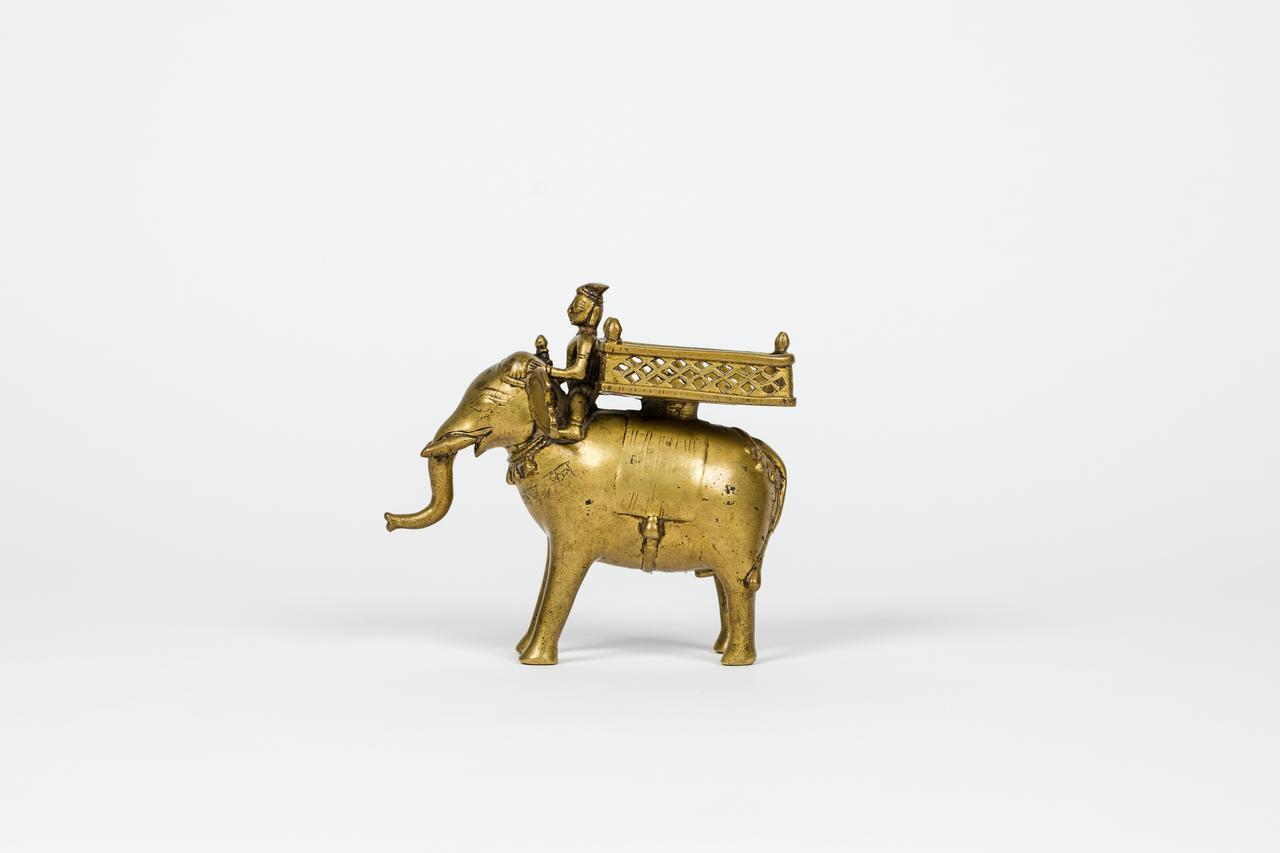
Balakrishna - Bronze - India - late 18th century


Has over 25 years' experience in Asian art and owned an art gallery.
Catawiki Buyer Protection
Your payment’s safe with us until you receive your object.View details
Trustpilot 4.4 | 137313 reviews
Rated Excellent on Trustpilot.
Bronze Balakrishna sculpture from India, dating to the late 18th century, 7 x 5.2 x 6.1 cm, 210 g, from private collection, in good condition.
Description from the seller
This authentic bronze figurine comes from India and very likely dates to the 19th century (or possibly the late 18th century). The statue originates from India, where it was made for use on a home altar (puja). The iconography is that of Bala Krishna (also known as Bal Gopal or Laddu Gopal), the god Krishna as a crawling child holding a ball of butter (laddu). The specific style and the solid casting often point to origins in South India (such as Tamil Nadu) or the Rajasthan region. The figure is estimated to be 150 to 200 years old (18th or 19th century). The details on the knees, hands, belly, and face have become soft and smooth over time, a result of generations of intensive ritual use (abhisheka), during which the statue was repeatedly washed with water, milk, or oil and rubbed by hand. The base shows a rough, solid finish characteristic of the traditional cire perdue (lost-wax) method. The weight of 210 grams for these compact dimensions confirms that it is solid bronze and not a modern, hollow replica. The deep dark color with subtle traces of greenish copper corrosion (verdigris) in the deeper grooves developed naturally over a long period.
Dimensions: 7x5.2x6.1 cm
Weight: 210 g
This authentic bronze figurine comes from India and very likely dates to the 19th century (or possibly the late 18th century). The statue originates from India, where it was made for use on a home altar (puja). The iconography is that of Bala Krishna (also known as Bal Gopal or Laddu Gopal), the god Krishna as a crawling child holding a ball of butter (laddu). The specific style and the solid casting often point to origins in South India (such as Tamil Nadu) or the Rajasthan region. The figure is estimated to be 150 to 200 years old (18th or 19th century). The details on the knees, hands, belly, and face have become soft and smooth over time, a result of generations of intensive ritual use (abhisheka), during which the statue was repeatedly washed with water, milk, or oil and rubbed by hand. The base shows a rough, solid finish characteristic of the traditional cire perdue (lost-wax) method. The weight of 210 grams for these compact dimensions confirms that it is solid bronze and not a modern, hollow replica. The deep dark color with subtle traces of greenish copper corrosion (verdigris) in the deeper grooves developed naturally over a long period.
Dimensions: 7x5.2x6.1 cm
Weight: 210 g