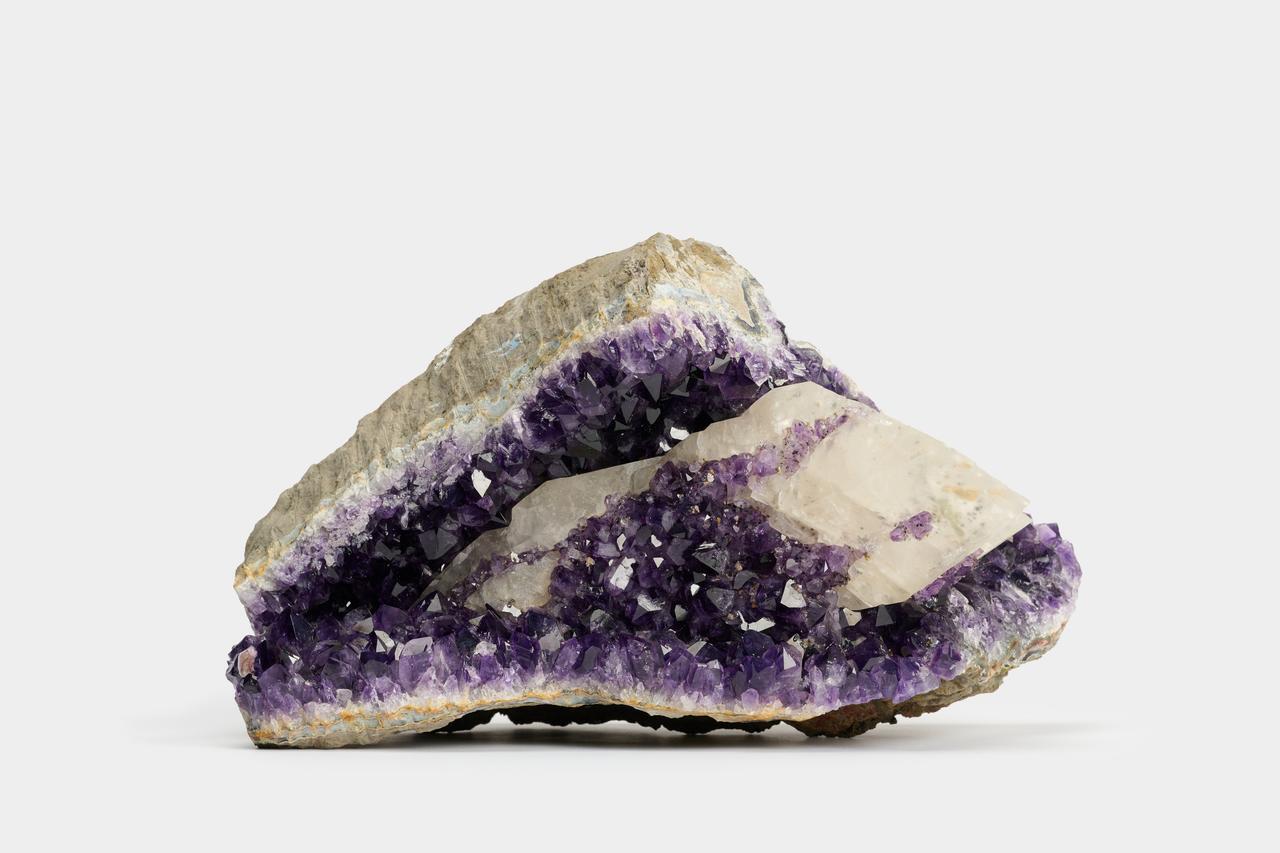
SEYMCHAN Meteorite Polished part - 2 kg


Over 20 years collecting meteorites; former museum curator and experienced restorer.
€10 |
|---|
Catawiki Buyer Protection
Your payment’s safe with us until you receive your object.View details
Trustpilot 4.4 | 137024 reviews
Rated Excellent on Trustpilot.
SEYMCHAN meteorite, a polished iron–nickel meteorite specimen from Magadanskaya oblast, Russia, weighing 2 kg, featuring Widmanstätten lines and a natural crust.
Description from the seller
Beautiful piece of pallasite, only the metallic part, in which one can appreciate different Widmanstätten structures.
Polished and treated for conservation.
The Widmanstätten lines are the result of the intergrowth of bands of Taenite and Kamacite, which are two iron-nickel alloys. To produce this pattern, an extremely slow cooling is required, at least 1 degree Celsius per million years.
The pallasites contain approximately 50% metal (iron and nickel) and 50% silicates (in the form of olivine). They originate from the interior of large asteroids. Pallasites are one of the most beautiful types of meteorites that exist. Their name comes from the German zoologist and botanist Peter Simon Pallas, who discovered, in 1772, the first specimen of this type of meteorite in Siberia, Russia.
At Expometeoritos, we handle the outreach, talks, workshops, analyses, classification, and exhibitions of Meteorites.
We are members of:
.- IMCA (International Meteorite Collectors Association) #8187
.- Meteoritical Society
.- American Meteor Society
All our pieces are certified and in addition, we provide the chemical composition analysis if the piece’s value exceeds €300, performed at our facilities by X-ray Spectroscopy.
Seller's Story
Beautiful piece of pallasite, only the metallic part, in which one can appreciate different Widmanstätten structures.
Polished and treated for conservation.
The Widmanstätten lines are the result of the intergrowth of bands of Taenite and Kamacite, which are two iron-nickel alloys. To produce this pattern, an extremely slow cooling is required, at least 1 degree Celsius per million years.
The pallasites contain approximately 50% metal (iron and nickel) and 50% silicates (in the form of olivine). They originate from the interior of large asteroids. Pallasites are one of the most beautiful types of meteorites that exist. Their name comes from the German zoologist and botanist Peter Simon Pallas, who discovered, in 1772, the first specimen of this type of meteorite in Siberia, Russia.
At Expometeoritos, we handle the outreach, talks, workshops, analyses, classification, and exhibitions of Meteorites.
We are members of:
.- IMCA (International Meteorite Collectors Association) #8187
.- Meteoritical Society
.- American Meteor Society
All our pieces are certified and in addition, we provide the chemical composition analysis if the piece’s value exceeds €300, performed at our facilities by X-ray Spectroscopy.