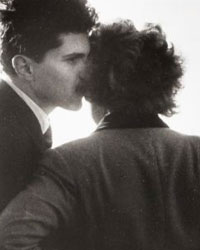
Enrique Meneses - Guerrilleros en descanso


04
days
01
hour
44
minutes
33
seconds
Current bid
€ 100
Reserve price not met

Expert
Selected by Kai Brückner
Over 35 years' experience; former gallery owner and Museum Folkwang curator.
Estimate € 400 - € 500
 | €100 |
|---|
Catawiki Buyer Protection
Your payment’s safe with us until you receive your object.View details
Trustpilot 4.4 | 138242 reviews
Rated Excellent on Trustpilot.
Description from the seller
Enrique Meneses - Fidel Castro in Sierra Maestra
Photographic portrait, Baritated paper - Artist's seal - 1/1
This photo is a true jewel, created by Enrique Meneses Miniaty between December 1957 and March 1958.
It is a unique photo in that measure of 58 cm x 39 cm.
The photograph is mounted on a professional-grade rigid panel to ensure dimensional stability. The finish, conceived under criteria of contemporary aesthetics, prioritizes flatness and visual neutrality, allowing the photograph to maintain its exhibition integrity under high-demand conditions.
As a signature it bears the seal of the foundation that bears the same name as the author of the photograph.
Description
Moment of the Pino del Agua battle. Fidel and Che Guevara listen to the explanations of "Maracaibo," who had come to spy on Batista's troops. At the far left, Camilo Cienfuegos, in one of the few photos that exist of him in Sierra Maestra.
Enrique Meneses Miniaty (1929-2013)
Journalist and photographer
His career truly began when, in the early 1950s, he went to Cairo with only a one-way ticket and there he rubbed shoulders with the best photographers and journalists of the moment: Sharok Hatami, Jean Roy, David Seymour, René Burri of Magnum and Howard Sochurek of Life, among others. From this period are his superb photos of Abu Simbel chosen by UNESCO for the campaign to save the temples.
In the summer of '56 he decides to undertake, with his friend Jaime Cavero, the journey by hitchhiking to Cape Town,
an account that he would put into his book Africa from Cairo to Cape.
On his return, in autumn, the Suez Crisis explodes with the expulsion of the Franco-British press. It is then the great opportunity for Meneses, who, thanks to his perfect command of French and his Spanish passport, can stay and clandestinely transmit his chronicles of the conflict to Europa Número 1 and to the great magazine Paris-Match. The weekly then officially hires him and in 1957 sends him to see what was happening in Cuba where a few bearded men entrenched in the mountains were fighting against the government. He would stay eleven months on the island, managing to live four months with Fidel and Raúl Castro, with Che Guevara and his handful of men. His Sierra Maestra photos, which he manages to smuggle clandestinely sewn into the skirts of a young woman flying to Miami, will make history and will be published on the cover of the magazine for several weeks: a world exclusive with resale to publications around the world!
He is the only journalist to manage to go up and stay in Sierra Maestra. His photos are the only existing ones of the incipient revolution.
He then decides that he prefers to be a freelancer and first sets up a photographic agency in Paris, Delta Press, before making the big leap to the United States. During the years lived in New York he would witness first-hand all the great exciting events of the early 60s: the civil rights struggle, the missile crisis, the visit of the Mona Lisa, Kennedy's funeral, etc.... From these years are his photos of the divine Dalí, a young Aznavour at Carnegie Hall, Martin Luther King on the day of I Have a Dream, Marlon Brando, Paul Newman, Joan Baez, Bob Dylan, Pete Seeger, Harry Belafonte, Sidney Poitier at the March on Washington and also Hitchcock with Tippi Hedren, Peter O'Toole with David Niven.
Highlights include his interviews with the Sha and Farah Diba, King Hussein of Jordan, King Fahd of Saudi Arabia, his investigations into the Ku Klux Klan or Native Americans.
Enrique Meneses is the author of several books:
* Fidel Castro (1966), with editions in Spain, the US, Britain, Germany and Japan.
* Nasser, the Last Pharaoh (1968), essential for understanding the Middle East
* The Naked Witch (1976), essay on witchcraft
* Brain and Sex (1979), on the interaction between brain and sex
* Nostalgia is a mistake, José Luis de Vilallonga (1980)
* Written in Flesh (1981), the backstage of his great reports. A tribute to the profession and essential reading for a future journalist
A human experience... Robinson in Africa (1984)
* Castro, the revolution begins (1995)
* Africa from Cairo to Cape (1998) His incredible expedition across the continent before decolonization
* This far we have come (2006), Meneses's extensive memoirs
* In June 2013, La Fábrica published a large posthumous photo book: Meneses, the Life of a Reporter.
He received prestigious awards:
* Anigp-TV 2005 for his career as a war correspondent
* Cirilo Rodríguez Honorary 2010 for best correspondent or special envoy
* Rodríguez Santamaría 2010 (APM) in honor of his 60 years in the field
Two films have narrated his rich professional life: Cien miradas de Enrique Meneses
Enrique Meneses - Fidel Castro in Sierra Maestra
Photographic portrait, Baritated paper - Artist's seal - 1/1
This photo is a true jewel, created by Enrique Meneses Miniaty between December 1957 and March 1958.
It is a unique photo in that measure of 58 cm x 39 cm.
The photograph is mounted on a professional-grade rigid panel to ensure dimensional stability. The finish, conceived under criteria of contemporary aesthetics, prioritizes flatness and visual neutrality, allowing the photograph to maintain its exhibition integrity under high-demand conditions.
As a signature it bears the seal of the foundation that bears the same name as the author of the photograph.
Description
Moment of the Pino del Agua battle. Fidel and Che Guevara listen to the explanations of "Maracaibo," who had come to spy on Batista's troops. At the far left, Camilo Cienfuegos, in one of the few photos that exist of him in Sierra Maestra.
Enrique Meneses Miniaty (1929-2013)
Journalist and photographer
His career truly began when, in the early 1950s, he went to Cairo with only a one-way ticket and there he rubbed shoulders with the best photographers and journalists of the moment: Sharok Hatami, Jean Roy, David Seymour, René Burri of Magnum and Howard Sochurek of Life, among others. From this period are his superb photos of Abu Simbel chosen by UNESCO for the campaign to save the temples.
In the summer of '56 he decides to undertake, with his friend Jaime Cavero, the journey by hitchhiking to Cape Town,
an account that he would put into his book Africa from Cairo to Cape.
On his return, in autumn, the Suez Crisis explodes with the expulsion of the Franco-British press. It is then the great opportunity for Meneses, who, thanks to his perfect command of French and his Spanish passport, can stay and clandestinely transmit his chronicles of the conflict to Europa Número 1 and to the great magazine Paris-Match. The weekly then officially hires him and in 1957 sends him to see what was happening in Cuba where a few bearded men entrenched in the mountains were fighting against the government. He would stay eleven months on the island, managing to live four months with Fidel and Raúl Castro, with Che Guevara and his handful of men. His Sierra Maestra photos, which he manages to smuggle clandestinely sewn into the skirts of a young woman flying to Miami, will make history and will be published on the cover of the magazine for several weeks: a world exclusive with resale to publications around the world!
He is the only journalist to manage to go up and stay in Sierra Maestra. His photos are the only existing ones of the incipient revolution.
He then decides that he prefers to be a freelancer and first sets up a photographic agency in Paris, Delta Press, before making the big leap to the United States. During the years lived in New York he would witness first-hand all the great exciting events of the early 60s: the civil rights struggle, the missile crisis, the visit of the Mona Lisa, Kennedy's funeral, etc.... From these years are his photos of the divine Dalí, a young Aznavour at Carnegie Hall, Martin Luther King on the day of I Have a Dream, Marlon Brando, Paul Newman, Joan Baez, Bob Dylan, Pete Seeger, Harry Belafonte, Sidney Poitier at the March on Washington and also Hitchcock with Tippi Hedren, Peter O'Toole with David Niven.
Highlights include his interviews with the Sha and Farah Diba, King Hussein of Jordan, King Fahd of Saudi Arabia, his investigations into the Ku Klux Klan or Native Americans.
Enrique Meneses is the author of several books:
* Fidel Castro (1966), with editions in Spain, the US, Britain, Germany and Japan.
* Nasser, the Last Pharaoh (1968), essential for understanding the Middle East
* The Naked Witch (1976), essay on witchcraft
* Brain and Sex (1979), on the interaction between brain and sex
* Nostalgia is a mistake, José Luis de Vilallonga (1980)
* Written in Flesh (1981), the backstage of his great reports. A tribute to the profession and essential reading for a future journalist
A human experience... Robinson in Africa (1984)
* Castro, the revolution begins (1995)
* Africa from Cairo to Cape (1998) His incredible expedition across the continent before decolonization
* This far we have come (2006), Meneses's extensive memoirs
* In June 2013, La Fábrica published a large posthumous photo book: Meneses, the Life of a Reporter.
He received prestigious awards:
* Anigp-TV 2005 for his career as a war correspondent
* Cirilo Rodríguez Honorary 2010 for best correspondent or special envoy
* Rodríguez Santamaría 2010 (APM) in honor of his 60 years in the field
Two films have narrated his rich professional life: Cien miradas de Enrique Meneses
Details
Artist
Enrique Meneses
Sold by
Owner or reseller
Title of artwork
Guerrilleros en descanso
Condition
Extremely fine
Technique
Gelatin-silver print
Height
58 cm
Width
39 cm
Signature
Stamped
Genre
Photojournalism
Sold by