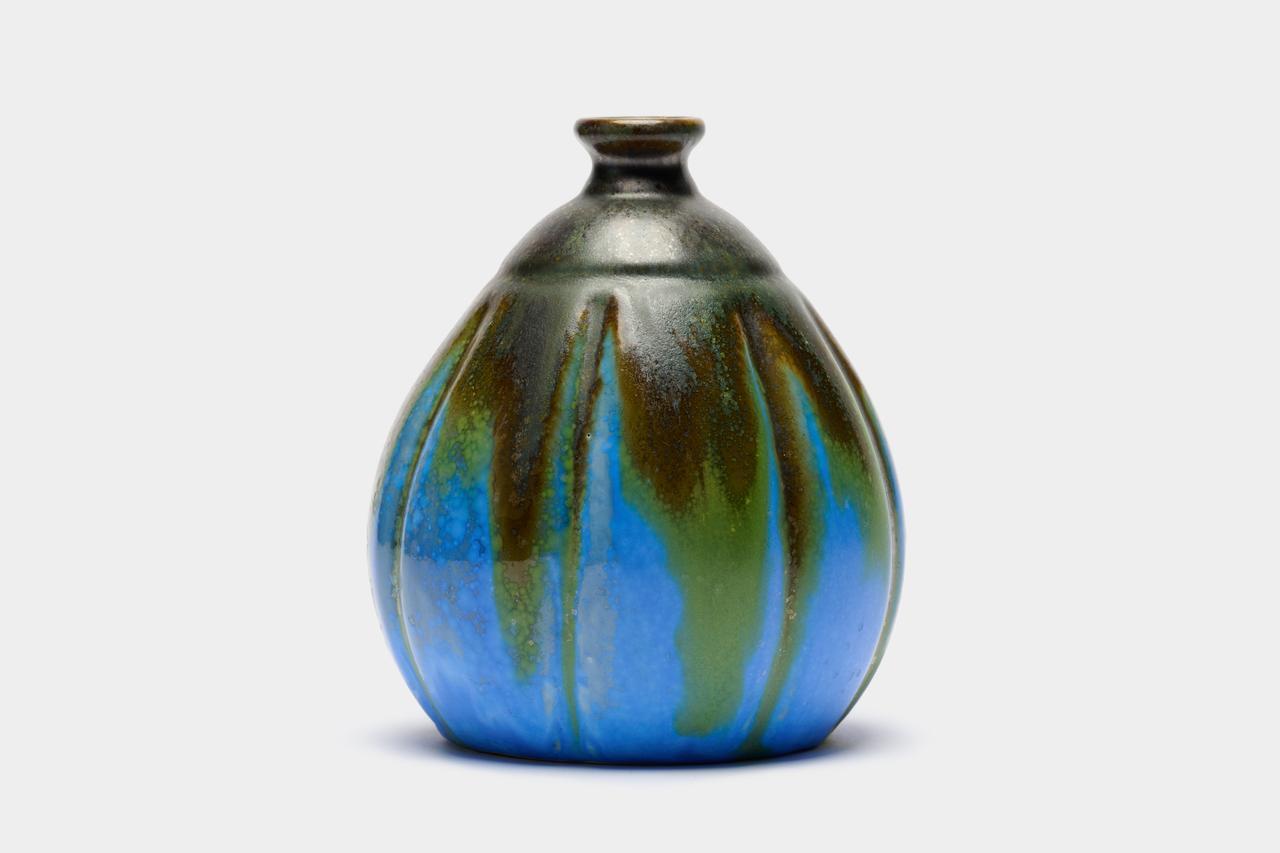
Lidded vase (2) - Majolica


Starting bid
€ 1
Add to your favourites to get an alert when the auction starts.

Expert
Selected by Florentin Brunz Gaborieau
Holds a master’s in Art History, specialising in Second French Empire and Dutch Golden Age.
Estimate € 200 - € 220
Catawiki Buyer Protection
Your payment’s safe with us until you receive your object.View details
Trustpilot 4.4 | 138705 reviews
Rated Excellent on Trustpilot.
Description from the seller
Pair of tin-glazed earthenware vases with interlaced handles and decorated lids, Italian Renaissance style
These tin-glazed ceramic vases represent the Italian ceramic tradition that flourished during the Renaissance and continued through the following centuries.
Italian maiolica, particularly that produced in centers such as Deruta, Faenza, and Florence, is renowned for its elaborate polychrome decorations and for the tin glaze technique (stanniferous glaze).
Floral and grotesque motifs, together with the gilded snake handles and decorative lions, evoke the style of the great manufactories of the 18th and 19th centuries.
These vases are particularly valued by collectors of historic Italian ceramics and by enthusiasts of decorative art. Their value lies in the craftsmanship, the richness of the polychrome decoration, and the presence of sculptural elements such as the interlaced handles and the gilded lion heads.
Such pieces are highly sought after by museums, art galleries, and private collectors who value the cultural heritage of Italian ceramics and its role in the history of European decorative art.
Seller's Story
Welcome to our profile. We are antique enthusiasts with a deep passion for art, history, and the charm of the past, cultivated through years of research and dedication. On Catawiki we offer a careful and curated selection of antiques: from period furniture to refined objets d'art, up to paintings and sculptures of quality.
Our goal is to offer collectors and lovers of beauty authentic pieces, selected rigorously for their quality, rarity, and condition. We guarantee maximum transparency in descriptions, detailed photographs, and secure and professional packaging, so that these wonders of the past can reach your homes intact to continue their story.
Translated by Google TranslatePair of tin-glazed earthenware vases with interlaced handles and decorated lids, Italian Renaissance style
These tin-glazed ceramic vases represent the Italian ceramic tradition that flourished during the Renaissance and continued through the following centuries.
Italian maiolica, particularly that produced in centers such as Deruta, Faenza, and Florence, is renowned for its elaborate polychrome decorations and for the tin glaze technique (stanniferous glaze).
Floral and grotesque motifs, together with the gilded snake handles and decorative lions, evoke the style of the great manufactories of the 18th and 19th centuries.
These vases are particularly valued by collectors of historic Italian ceramics and by enthusiasts of decorative art. Their value lies in the craftsmanship, the richness of the polychrome decoration, and the presence of sculptural elements such as the interlaced handles and the gilded lion heads.
Such pieces are highly sought after by museums, art galleries, and private collectors who value the cultural heritage of Italian ceramics and its role in the history of European decorative art.
Seller's Story
Welcome to our profile. We are antique enthusiasts with a deep passion for art, history, and the charm of the past, cultivated through years of research and dedication. On Catawiki we offer a careful and curated selection of antiques: from period furniture to refined objets d'art, up to paintings and sculptures of quality.
Our goal is to offer collectors and lovers of beauty authentic pieces, selected rigorously for their quality, rarity, and condition. We guarantee maximum transparency in descriptions, detailed photographs, and secure and professional packaging, so that these wonders of the past can reach your homes intact to continue their story.
Translated by Google TranslateDetails
Era
1400-1900
Weight
6.3 kg
Style subtype
Renaissance Style
Ceramics type
Majolica
Number of objects
2
Country of origin
Italy
Material
Ceramic
Style
Antique
Condition
Excellent condition: barely used with minimal signs of wear
Height
40 cm
Width
26 cm
Depth
21 cm
Estimated period
1850-1900
Sold by